
Czechia Architecture
Explore Czechia Architecture: Architectural Styles & UNESCO World Heritage Sites
Czechia architecture begins with Romanesque and Gothic churches, castles, and civic buildings, then moves through Renaissance sgraffito and Baroque churches and palaces. Later cities add Czech Cubism, Functionalism, industrial planning, and purpose-built spa districts.
Start with Prague for the broadest range of styles, Karlovy Vary for colonnades, bathhouses, grand hotels, villas, and a valley-shaped spa town, or Brno for Functionalist houses and early-20th-century modernism.
We spent a month in Prague, another month in Český Krumlov, a month in Karlovy Vary, and two full weeks in Kutná Hora while traveling through Czechia. Those stays gave us extended time in four very different Bohemian settings, while further research broadened the comparison to Moravia, UNESCO sites, architectural styles, and routes across the country.
Czechia Architecture at a Glance
Czechia works particularly well for architecture trips because medieval towns, Renaissance castle centers, Baroque religious sites, spa districts, and major early-20th-century buildings can all become separate stops on the same country route.
Key architecture points:
- Best starting points: Prague for the widest style range, Karlovy Vary for spa architecture, and Brno for Functionalism and modernism
- Core architecture identity: Historic town plans, Gothic churches, Renaissance sgraffito, Baroque religious and palace architecture, spa urbanism, Czech Cubism, and Functionalism
- Smaller historic towns: Český Krumlov for a castle-and-river townscape, Kutná Hora for Gothic architecture shaped by medieval silver wealth, and Telč for an arcaded Renaissance square
- UNESCO anchors: Prague, Český Krumlov, Kutná Hora, the Czech spa towns, Villa Tugendhat, Lednice-Valtice, Telč, Litomyšl, and Zelená Hora
- Regional contrast: Bohemia gives you royal cities, mining towns, castle towns, and spas; Moravia adds Baroque cities, designed landscapes, Functionalism, and industrial planning
- How to see it: Walk the historic cities and towns independently, then plan separate time for castle interiors, villas, gardens, cultural landscapes, and rural heritage sites
Prague gives you the broadest first look, but adding Karlovy Vary, Kutná Hora, Český Krumlov, or Brno changes the trip much more than spending every architecture day in the capital.
Architectural Styles in Czechia
Czech architecture developed through medieval royal centers, noble residences, Catholic rebuilding, industrialization, and the design experiments of the early 20th century. Stone and plastered masonry dominate older towns, while sgraffito, stucco, brick, glass, steel, and reinforced concrete mark later periods.

Romanesque and Gothic Architecture
Romanesque architecture survives in rotundas, basilicas, crypts, palace foundations, and thick-walled stone churches from the 11th and 12th centuries. Prague’s Rotunda of the Holy Cross, St. George’s Basilica, and the Rotunda of St. Martin at Vyšehrad provide compact examples with rounded arches, small openings, apses, and heavy masonry.
Gothic construction expanded from the 13th through 15th centuries through cathedrals, monasteries, castles, bridges, town halls, and fortified gates. St. Vitus Cathedral, Charles Bridge and its towers, St. Barbara’s Church in Kutná Hora, Karlštejn Castle, and Vladislav Hall show pointed arches, ribbed vaults, tracery, flying buttresses, tall windows, and complex roof structures.
Renaissance Architecture and Sgraffito
Renaissance design spread through Bohemia and Moravia during the 16th century. Châteaux and townhouses adopted symmetrical façades, classical portals, arcaded courtyards, broad rooflines, and sgraffito cut or scratched through contrasting plaster layers.
Telč and Slavonice are strong town-based examples, while Litomyšl Castle and the Český Krumlov castle complex show how Italianate arcades and painted façades were adapted to local noble residences. Older Gothic walls often remain behind the later surfaces.
Baroque and Baroque-Gothic Architecture
Seventeenth- and 18th-century Baroque rebuilding reshaped churches, monasteries, pilgrimage sites, palaces, gardens, plague columns, and town façades. Curved walls, oval plans, domes, layered stucco, frescoes, sculptural stairways, axial gardens, and dramatic interior light appear across Prague, Olomouc, Kroměříž, and other religious and noble centers.
Jan Blažej Santini-Aichel developed a distinct Baroque-Gothic approach that combined Gothic geometry with Baroque spatial movement. The Pilgrimage Church of St John of Nepomuk at Zelená Hora and the Cathedral of Our Lady at Sedlec are the clearest route anchors.
Historicism and Spa Architecture
Western Bohemia developed a different architectural pattern around mineral springs and spa travel. Karlovy Vary, Mariánské Lázně, and Františkovy Lázně combine colonnades, drinking halls, bath buildings, grand hotels, villas, theatres, parks, promenades, and landscaped surroundings into complete spa districts rather than isolated monuments.
Karlovy Vary is the strongest first stop for this architecture because the Teplá valley pulls the main spa buildings into a long, walkable sequence. Look at how colonnades, hotels, villas, river crossings, slopes, parks, and viewpoints work together rather than judging each building separately. The three Czech spa towns form part of UNESCO’s Great Spa Towns of Europe.
Art Nouveau, Czech Cubism, and Rondocubism
Art Nouveau, known locally as Secese, appeared around 1900 in apartment houses, railway stations, hotels, cafés, theaters, and civic buildings. Curved plant forms, stained glass, ceramic panels, painted decoration, wrought iron, and symbolic sculpture are concentrated in Prague, with additional examples in Brno and spa towns.
Czech Cubism turned faceted geometry into façades, staircases, windows, furniture, and interiors before the First World War. Prague’s House of the Black Madonna, Kovařovic Villa, Diamant House, and Cubist lamp post show the style at several scales. Rondocubism followed after 1918, replacing sharper forms with circles, arches, and national decorative motifs.
Functionalism, Industrial Planning, and Later Modernism
Functionalism introduced flat roofs, clear structural grids, ribbon windows, open interiors, reinforced concrete, steel frames, and minimal ornament. Brno has the strongest concentration, led by Villa Tugendhat, Hotel Avion, Café Era, and the exhibition grounds; Prague adds Müller Villa and interwar civic buildings.
Zlín applies similar principles at city scale through standardized brick factories, worker housing, schools, and the Baťa administration building. Later socialist development added housing estates, cultural buildings, transport infrastructure, hotels, memorials, and large public complexes around Czech cities.
Architecture by Region in Czechia
Architecture varies across Czechia with former political centers, mining and industrial economies, noble estates, religious institutions, and regional construction traditions. Prague and Central Bohemia hold the largest royal and urban concentration; South Bohemia and Vysočina emphasize preserved towns and village plans; Moravia adds Baroque, Functionalist, and landscape architecture; western and northern routes include spas, mines, and industry.
Prague and Central Bohemia
Prague contains the country’s widest architectural sequence, from Romanesque churches and Gothic New Town planning to Baroque palaces, Art Nouveau streets, Cubist houses, and modern civic buildings. Central Bohemia adds Kutná Hora’s mining-based town plan, Karlštejn Castle, noble estates, and smaller royal towns reached on day trips from the capital.
South Bohemia and Vysočina
Český Krumlov combines a castle ridge, river-bend street plan, Gothic churches, Renaissance façades, and Baroque interiors. Telč is organized around a long arcaded square, while Holašovice preserves farmsteads arranged around a village green. Třebíč and Zelená Hora add Jewish, Romanesque-Gothic, and Baroque-Gothic architecture.
Moravia
Brno is the principal base for Functionalism and early modern architecture, but its center also retains Gothic, Renaissance, and Baroque layers. Olomouc is defined by churches, palaces, fountains, and the Holy Trinity Column; Kroměříž and Lednice-Valtice extend the route through formal gardens, châteaux, follies, and designed landscapes. Zlín provides the strongest industrial-planning comparison.
West, North, and Czech Silesia
Western Bohemia is defined most clearly by spa architecture. Karlovy Vary, Mariánské Lázně, and Františkovy Lázně developed around mineral springs with colonnades, bath buildings, hotels, villas, parks, promenades, and carefully planned relationships between buildings and landscape. Karlovy Vary is the strongest base when you want to spend several days walking that architecture rather than treating a spa town as a short excursion.
Farther north, Žatec combines an older town center with hop warehouses and processing buildings, while Krušnohoří preserves mining settlements, technical structures, and working landscapes. Liberec adds Historicist and industrial buildings, and Ostrava shifts the emphasis toward mining, steel production, worker settlements, and large industrial complexes.
UNESCO World Heritage Sites in Czechia
UNESCO currently lists 17 World Heritage properties in Czechia: 16 cultural properties and one natural property. The cultural properties range from complete historic towns and individual churches to castles, spa districts, designed landscapes, industrial areas, and agricultural settlements.
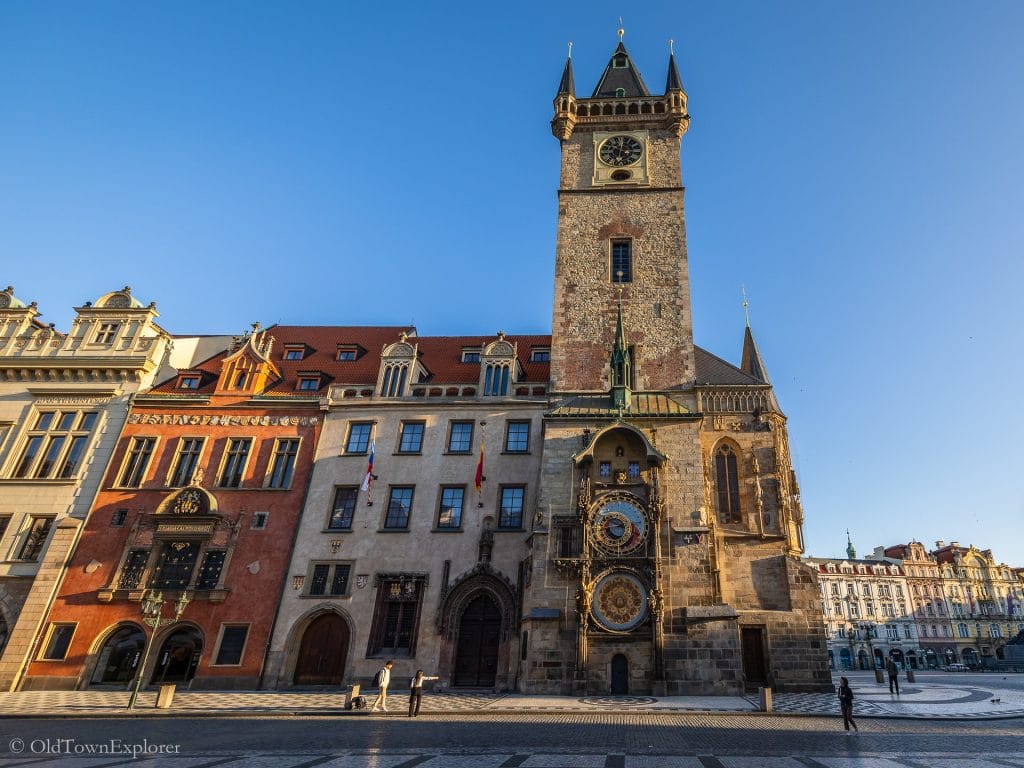
Historic Centre of Prague
Prague brings the widest architectural sequence into one UNESCO property, including Old Town, Lesser Town, New Town, Prague Castle, St Vitus Cathedral, Charles Bridge, churches, palaces, squares, and medieval street plans. Continue with Prague Architecture when you want to separate that large ensemble into individual districts, styles, and buildings.
Historic Centre of Český Krumlov
Český Krumlov works as a complete townscape rather than a collection of isolated monuments. The castle ridge, Latrán, river crossings, old-town streets, Gothic churches, Renaissance painted façades, courtyards, and later Baroque additions all respond to the tight bends of the Vltava. Český Krumlov Architecture follows those areas building by building.
Kutná Hora: Historical Town Centre with the Church of St Barbara and the Cathedral of Our Lady at Sedlec
Kutná Hora shows what medieval silver wealth could build. St Barbara’s Church, royal and civic buildings, merchant houses, narrow streets, and mining infrastructure shape the historic center, while the Cathedral of Our Lady at Sedlec belongs to a separate religious precinct. Kutná Hora Architecture compares the historic center, Sedlec, and the town’s later architectural layers.
The Great Spa Towns of Europe
The Czech components are Karlovy Vary, Mariánské Lázně, and Františkovy Lázně. Their importance lies in the complete spa-town system: mineral springs, colonnades, drinking halls, baths, hotels, villas, parks, promenades, and supporting infrastructure arranged around health, leisure, and landscape. UNESCO explains that wider urban pattern in its Great Spa Towns of Europe listing.
Historic Centre of Telč
Telč is built around a long central square lined by arcaded houses with Renaissance and later Baroque façades. The château, covered arcades, narrow plots, decorated gables, and relationship between the square and surrounding ponds make the town especially easy to understand on foot.
Žatec and the Landscape of Saaz Hops
Žatec connects an older town with the architecture of hop production. Warehouses, drying and processing buildings, commercial structures, and the surrounding agricultural landscape show how one crop changed both the town and its working buildings.
Erzgebirge/Krušnohoří Mining Region
The Czech-German mining property is architectural at a landscape scale. Mining towns, extraction sites, water systems, processing areas, transport infrastructure, and settlements show how centuries of mining reorganized both buildings and terrain along the Ore Mountains.
Landscape for Breeding and Training of Ceremonial Carriage Horses at Kladruby nad Labem
Kladruby is a deliberately organized working landscape of stables, farm buildings, pastures, avenues, water systems, and fields created around ceremonial carriage horses. Come here for landscape planning and agricultural architecture rather than a conventional historic-town visit.
Jewish Quarter and St Procopius' Basilica in Třebíč
Třebíč pairs the narrow streets, houses, synagogues, and community buildings of a Jewish quarter with the Romanesque-Gothic Basilica of St Procopius. The contrast between the dense residential quarter and the much larger religious complex is the main architectural reason to include Třebíč.
Tugendhat Villa in Brno
Villa Tugendhat moves the Czech architecture route firmly into twentieth-century modernism. Ludwig Mies van der Rohe used an open interior plan, large areas of glass, a structural frame, and carefully selected materials to create a house that is radically different from the medieval and Baroque buildings elsewhere on this route.
Holy Trinity Column in Olomouc
The Holy Trinity Column is a concentrated Baroque monument rather than an entire district. Its architecture and sculpture turn a civic square into a monumental religious composition, making it most rewarding when seen together with Olomouc’s surrounding churches, fountains, palaces, and historic streets.
Litomyšl Castle
Litomyšl Castle is one of the clearest Czech examples of Renaissance château architecture. Look for its arcaded courtyard, long façades, repeated sgraffito decoration, and the way an Italianate palace form was adapted to a Bohemian setting.
Gardens and Castle at Kroměříž
Kroměříž combines an archiepiscopal residence with formal garden design. The castle, Flower Garden, avenues, geometric planting, pavilions, water features, and long sight lines make the landscape as important as the palace itself.
Holašovice Historic Village
Holašovice shifts the architecture route away from palaces and major cities. Farmhouses, barns, decorated gables, enclosed farmyards, and the broad village green preserve the scale and organization of a South Bohemian rural settlement.
Lednice-Valtice Cultural Landscape
Lednice-Valtice spreads architecture across a large designed landscape. Châteaux, parkland, avenues, ponds, garden structures, follies, and distant sight lines were planned as parts of one aristocratic estate, so the property makes more sense as a landscape route than as a single-building visit.
Pilgrimage Church of St John of Nepomuk at Zelená Hora (1994)
Jan Blažej Santini-Aichel’s pilgrimage church stands apart from conventional Czech Baroque buildings. The star-shaped plan, repeated geometry, pointed forms, curved walls, and surrounding cloister combine Gothic references with Baroque spatial design, making the plan itself one of the main things to notice.
How to See Czechia Architecture
The best approach changes with the destination. Prague rewards several district walks, Český Krumlov and Kutná Hora work through compact historic areas, Karlovy Vary follows a long spa valley, and Brno requires more movement between the center and modernist buildings outside it.
City Architecture Routes
In Prague, divide the architecture by district rather than trying to join every major building into one walk. Prague Architecture separates Old Town, Josefov, Malá Strana, the castle district, New Town, Vinohrady, Cubist buildings, and Vyšehrad into more practical groups.
In Český Krumlov, follow the relationship between the castle ridge, Latrán, river crossings, and the old town. In Kutná Hora, treat the historic center and Sedlec as separate architectural areas rather than assuming the major churches stand beside one another.
Karlovy Vary is different again. Follow the Teplá through the main spa district, compare the colonnades and hotels along the valley, then look uphill toward villas, churches, parks, and viewpoints. Brno needs a central walk plus separate time for Functionalist villas and other twentieth-century buildings beyond the core.
Guided Architecture Tours
A guide adds the most value where several building phases overlap or where the architecture is easier to understand with historical context. Prague’s medieval cores and early-20th-century buildings, Brno’s Functionalist architecture, Kutná Hora’s mining-shaped Gothic town, and large castle or monastery complexes are the clearest cases.
Independent Architecture Walks
Prague, Český Krumlov, Kutná Hora, Karlovy Vary, Brno, Olomouc, and Telč all give you substantial architecture from public streets and squares. Look beyond headline monuments at street width, rooflines, courtyards, portals, sgraffito, stone carving, ironwork, colonnades, bridges, garden walls, and how buildings respond to rivers, slopes, or squares.
Interiors, Landscapes, and Route Planning
Some of Czechia’s strongest architecture depends on interiors or landscapes rather than façades alone. Castle rooms, Villa Tugendhat, churches, synagogues, spa buildings, gardens, and theatres can change what belongs in the day, so check the official site for any interior that matters enough to shape your route.
Trains and buses work well between many of the main architecture towns. A car becomes more valuable for cultural landscapes, rural villages, mining areas, scattered châteaux, and several smaller heritage sites in one regional route.
FAQs About Czechia Architecture
What architecture is Czechia known for?
Czechia is known for Gothic churches and civic buildings, Renaissance sgraffito and arcaded towns, Baroque churches and palaces, historic spa architecture, Art Nouveau, Czech Cubism, Functionalism, and industrial planning. Prague gives you the widest range, while smaller towns and regional routes make individual architectural traditions easier to isolate.
What are the main architectural styles in Czechia?
The main sequence runs from Romanesque and Gothic architecture through Renaissance and Baroque building, followed by Historicism, Art Nouveau, Czech Cubism, Rondocubism, Functionalism, and later modern architecture. Spa towns and industrial cities add building types and urban plans that do not fit neatly into a single style label.
What are the best cities and towns for architecture in Czechia?
Start with Prague for the broadest range of periods. Český Krumlov is strongest for a compact castle-and-river townscape, Kutná Hora for Gothic architecture shaped by silver mining, Karlovy Vary for spa architecture, and Brno for Functionalism. Telč, Olomouc, Kroměříž, and Zlín become stronger choices when a specific style or type of urban planning matters more than overall variety.
Why is Czech Cubism distinctive?
Czech architects translated Cubist geometry into actual buildings, façades, windows, staircases, interiors, furniture, and street objects during the early twentieth century. Prague is the main place to see it, especially around the House of the Black Madonna and the Cubist buildings near Vyšehrad.
Which UNESCO sites in Czechia are most important for architecture?
Prague, Český Krumlov, Kutná Hora, Telč, Villa Tugendhat, Litomyšl Castle, Zelená Hora, Lednice-Valtice, and the Czech components of the Great Spa Towns of Europe cover particularly different architectural questions. The official UNESCO Czechia list currently contains 17 properties in total: 16 cultural and one natural.
Where should I start with Czechia architecture?
Start in Prague when you want the widest architectural sequence in one base. Add Karlovy Vary when spa urbanism interests you, Kutná Hora for Gothic and mining architecture, Český Krumlov for a compact Renaissance and Baroque castle town, or Brno when Functionalism is a priority.
Can you see Czechia architecture without a car?
Yes. Prague, Brno, Olomouc, Český Krumlov, Kutná Hora, Karlovy Vary, and several other major architecture stops can be reached by public transport and explored largely on foot. A car becomes more valuable for Lednice-Valtice, rural villages, mining landscapes, scattered castles, and routes linking several small heritage sites.
Which old towns in Czechia are best for architecture?
Prague has the greatest architectural range, while Český Krumlov gives you a compact castle town shaped by the Vltava and Kutná Hora gives you a medieval mining town dominated by Gothic religious and civic architecture. Telč is the strongest smaller comparison when Renaissance and Baroque façades around one long arcaded square are the main interest.
For building-by-building planning, continue with Prague Architecture for the widest city inventory, Český Krumlov Architecture for the castle ridge and river townscape, or Kutná Hora Architecture for Gothic, mining, Sedlec, and later city architecture.