
Prague Food
Explore Prague Food: What to Eat & Where to Eat It
Prague puts traditional Czech pub and café food beside a newer generation of restaurants cooking Czech ingredients in modern bistros and tasting menus. Svíčková, roast pork with dumplings and cabbage, goulash, fried cheese, and other Czech staples are easy to find, but the city also has restaurants that reinterpret the same cooking traditions in lighter or more refined ways.
Old Town and New Town are the easiest places to start because many traditional pubs, historic cafés, and modern Czech restaurants sit within walking distance of the main sights. Vinohrady, Holešovice, and Smíchov add neighborhood restaurants and some of Prague's more useful food markets when you have time to leave the historic center.
We spent a month in Prague tasting traditional dishes, visiting restaurants, and exploring food markets. Our time in the city shaped the practical advice here, while further research broadened the restaurant and market choices. The main decisions are what to order first, where to eat, which market fits your dates, and whether a guided food tour belongs in your trip.
This page contains affiliate links. We may earn a small commission at no extra cost to you.
Prague Food at a Glance
Prague is easiest to approach by choosing one traditional Czech meal first, then deciding whether the rest of your food stops should stay in the historic center or take you into the surrounding neighborhoods.
These are the main choices to make before you start booking restaurants or planning market stops:
- What to order first: Svíčková or vepřo-knedlo-zelo gives you a clear introduction to the meat, sauces, cabbage, and dumplings that appear across traditional Czech menus.
- Best starting area: Old Town and New Town put traditional pubs, historic cafés, and modern Czech restaurants close enough to combine with sightseeing.
- Traditional meal: Start with a Czech pub such as Lokál Dlouhááá or U Pinkasů, or choose Café Imperial when you want classic dishes in a more formal restaurant setting.
- Modern Czech meal: Central Prague ranges from approachable modernized classics at Mincovna and 420 to the tasting-menu format at La Degustation Bohême Bourgeoise.
- Market choice: Náplavka is strongest for a Saturday riverside market, Jiřák works well from Vinohrady, and Hall 22 gives you a year-round covered produce market in Holešovice.
- Beyond the center: Vinohrady, Holešovice, and Smíchov are worth the trip when restaurants such as Výčep, The Eatery, Na Kopci, or Bockem are part of your food plans.
- Food-focused stay: The Old Town–New Town area keeps the largest share of the central restaurant choices within walking distance.
If this is your first Prague visit, keep your first Czech meal in the center and add a neighborhood restaurant or farmers' market only when it gives you something different rather than another version of the same meal.
What to Eat in Prague
For a first traditional meal in Prague, start with svíčková or vepřo-knedlo-zelo rather than trying to work through a long list of Czech dishes at once. Prague is a national dining center, so many foods you will see are Czech rather than uniquely Prague specialties. Czechia Food gives the wider national background behind these dishes.
Traditional Dishes on Prague Menus
These are the main names worth recognizing when you read a Czech menu:
- Svíčková na smetaně: beef with a creamy root-vegetable sauce, usually served with bread dumplings, cranberries, and lemon. It is one of the clearest first orders if you want a classic Czech restaurant meal.
- Vepřo-knedlo-zelo: roast pork with dumplings and cabbage. Choose it when you want the straightforward combination behind many Czech pub meals.
- Czech goulash: usually a beef stew built around onions and seasoning and commonly served with dumplings or bread.
- Smažený sýr: breaded fried cheese, often served as a simpler casual meal rather than a long restaurant dinner.
- Kulajda: a creamy soup associated with potatoes, mushrooms, dill, and egg. Look for it when you want a soup rather than another meat-and-dumpling main course.
- Chlebíčky: small open-faced sandwiches that work better for a snack or light meal than as a substitute for a traditional Czech dinner.
Svíčková and vepřo-knedlo-zelo make the most useful first comparison: one is built around a creamy sauce and dumplings, while the other gives you roast pork, cabbage, and dumplings in a more direct pub-style format.
Sweets and Pastries to Recognize
You will see trdelník throughout Prague's visitor center, usually rolled in sugar and sometimes filled or topped with other sweets. It is easy to associate with Prague because it is so visible there, but its roots are not specifically Prague or even originally Czech; VisitCzechia traces the pastry back toward Transylvania before it spread through Central Europe. Treat it as a sweet you can try in Prague, not as the city's defining historic pastry.
Where to Eat in Prague
Central Prague is the practical starting point for a first food-focused visit because Old Town and New Town contain both traditional Czech restaurants and modern kitchens. The neighborhoods beyond the historic center become more valuable once a particular restaurant or market gives you a reason to make the trip.
Old Town and New Town
Old Town works well when meals need to fit around Old Town Square, the Jewish Quarter, or walks toward Charles Bridge. New Town extends the central dining area south and east, with useful restaurant clusters around Jungmannovo náměstí, Na Poříčí, and the streets between Wenceslas Square and the river. Stay within these two areas if you want your first traditional and modern Czech meals without building the day around transport.
Vinohrady
Vinohrady makes more sense when food is one of the reasons for leaving the historic center. The neighborhood adds contemporary Czech cooking and the Jiřák farmers' market, so it can support both a restaurant reservation and a market stop rather than a single detour.
Holešovice and Smíchov
Holešovice pairs contemporary restaurants with the year-round produce market in Hall 22 and the smaller Heřmaňák farmers' market. Smíchov has fewer reasons to wander without a plan, but several destination restaurants make the trip worthwhile when you have chosen them in advance.
Traditional Restaurants in Central Prague
These central restaurants keep Czech dishes at the center of the meal rather than treating them as a token local option. They range from casual pub cooking to a more polished historic café meal.
Lokál Dlouhááá
- Address: Dlouhá 33, 110 00 Praha 1.
Lokál Dlouhááá is a Czech pub in the Old Town area built around Czech cooking and carefully poured Pilsner. The menu changes, but the format stays close to the foods people expect from a Czech hospoda: soups, meat dishes, sauces, dumplings, and pub snacks.
Choose Lokál when you want your first Czech meal to feel like a pub meal rather than a formal restaurant dinner. It is also one of the easiest traditional choices to combine with an evening in Old Town.
U Pinkasů
- Address: Jungmannovo náměstí 756/16, 110 00 Praha 1.
U Pinkasů centers its food menu on Czech and Old Bohemian dishes, including meat dishes, soups, and food meant to accompany Pilsner. Its location just off Wenceslas Square keeps it convenient without requiring a trip outside New Town.
Pick U Pinkasů when beer and traditional pub food matter equally. It is a better match for a casual Czech lunch or dinner than for a contemporary tasting-menu experience.
Café Imperial
- Address: Na Poříčí 15, 110 00 Praha 1.
Café Imperial serves Czech favorites alongside other European dishes in its historic café-restaurant setting. Its broader lunch and dinner role makes it more than a breakfast café, even though breakfast, coffee, and desserts are also part of the restaurant.
Choose Café Imperial when you want recognizable Czech cooking with full restaurant service and a more formal atmosphere than a pub. It works especially well for travelers who want a traditional meal without making beer the center of dinner.
Modern Restaurants in Central Prague
Modern Czech cooking in central Prague ranges from familiar classics presented more lightly to long tasting menus built around Czech ingredients. The useful distinction is not price or décor but how far you want the kitchen to move away from a traditional pub meal.
Mincovna
- Address: Staroměstské náměstí 930/7, 110 00 Praha 1 – Staré Město.
Mincovna cooks traditional Czech cuisine in a modern style directly on Old Town Square. Duck, goulash, sirloin, smoked meat, and other familiar Central European dishes keep the menu tied to Czech food even when the presentation is more contemporary.
Mincovna is a practical middle ground if one person wants recognizable Czech classics and another wants a restaurant that feels more current than a traditional pub.
420 Restaurant
- Address: Staroměstské náměstí 480/24, 110 00 Praha 1.
420 Restaurant cooks Czech food on Old Town Square with a lighter, contemporary approach. House-made bread, smoked meats, Czech ingredients, and reworked familiar dishes keep the connection to national cooking clear.
Choose 420 when you want modern Czech food without committing to a long tasting menu. Its Old Town Square location also makes it easy to place between central sightseeing stops.
La Degustation Bohême Bourgeoise
- Address: Haštalská 18, 110 00 Praha 1.
La Degustation Bohême Bourgeoise builds a multi-course tasting menu around Czech ingredients and Central European cooking. The format moves much further from the pub experience than the other central restaurants on this list.
Book it when the meal itself is one of the main events of the day and you want to see Czech cooking through a tasting-menu format rather than choose individual traditional dishes à la carte.
Next Door by Imperial
- Address: Zlatnická 3, 110 00 Praha 1.
Next Door by Imperial is a modern Czech bistro near Café Imperial. Its menu keeps classic Czech flavors and seasonal ingredients in a more contemporary bistro format.
Next Door works well when you want modern Czech cooking but prefer an à la carte restaurant over the longer tasting-menu experience at La Degustation.
Restaurants Beyond Central Prague
Prague's historic center is enough for a first round of Czech meals, but several restaurants outside it justify a specific trip. These four existing OldTownExplorer choices remain because each gives you a different reason to leave Old Town and New Town.
Výčep
- Address: Korunní 1304/92, 101 00 Praha 10 – Vinohrady.
Výčep is a modern Czech pub with a Wallachian influence, serving lunch, dinner, and tasting-menu formats from a kitchen focused on Czech ingredients and contemporary pub cooking.
Head to Výčep when you want the energy of a pub but a more inventive meal than a traditional hospoda. Pairing it with Vinohrady or the Jiřák market gives the trip beyond the center a stronger reason.
The Eatery
- Address: U Uranie 18, 170 00 Praha 7 – Holešovice.
The Eatery serves contemporary Czech cuisine from an open-kitchen restaurant in Holešovice, with separate lunch and dinner menus.
Choose The Eatery when Holešovice is already part of the day or when you specifically want contemporary Czech cooking away from the visitor-heavy center. Hall 22 can turn the same trip into a market-and-restaurant outing.
Na Kopci
- Address: K Závěrce 2774/20, 150 00 Praha 5.
Na Kopci is a family restaurant drawing on both Czech and French cooking. Its current menus mix regional and classic dishes with seasonal European cooking, and diners can choose à la carte or a multi-course format.
Na Kopci suits a deliberate restaurant trip rather than an incidental meal between sights. Choose it when Czech and French influences together sound more interesting than a strictly traditional Czech menu.
Bockem
- Address: Elišky Peškové 1095/5, 150 00 Praha 5.
Bockem has a substantial breakfast role, but its evening service independently earns its place here: dinner centers on a multi-course menu that treats Czech tradition with a modern approach.
Choose Bockem for a planned evening meal in Smíchov rather than simply because it serves breakfast. The set-menu format makes it a different decision from the casual pubs and à la carte restaurants elsewhere on the page.
Markets in Prague
Prague’s markets are easiest to choose by day and neighborhood. Havel Market is the convenient Old Town stop, Náplavka and Kulaťák work well for a Saturday morning, Jiřího z Poděbrad and Kubánské Square run several days a week, and Hall 22 gives you a covered food market throughout the year. Anděl and Heřmaňák fit naturally into days spent in Smíchov or Holešovice.
For seasonal events and updates on Prague’s food markets, check the official Prague City Tourism website.
Havel Market
- Address: Havelská 13, 110 00 Staré Město, Praha 1.
- Opening times: Year-round; Monday–Saturday 7:00–19:00; Sunday 8:00–18:30.
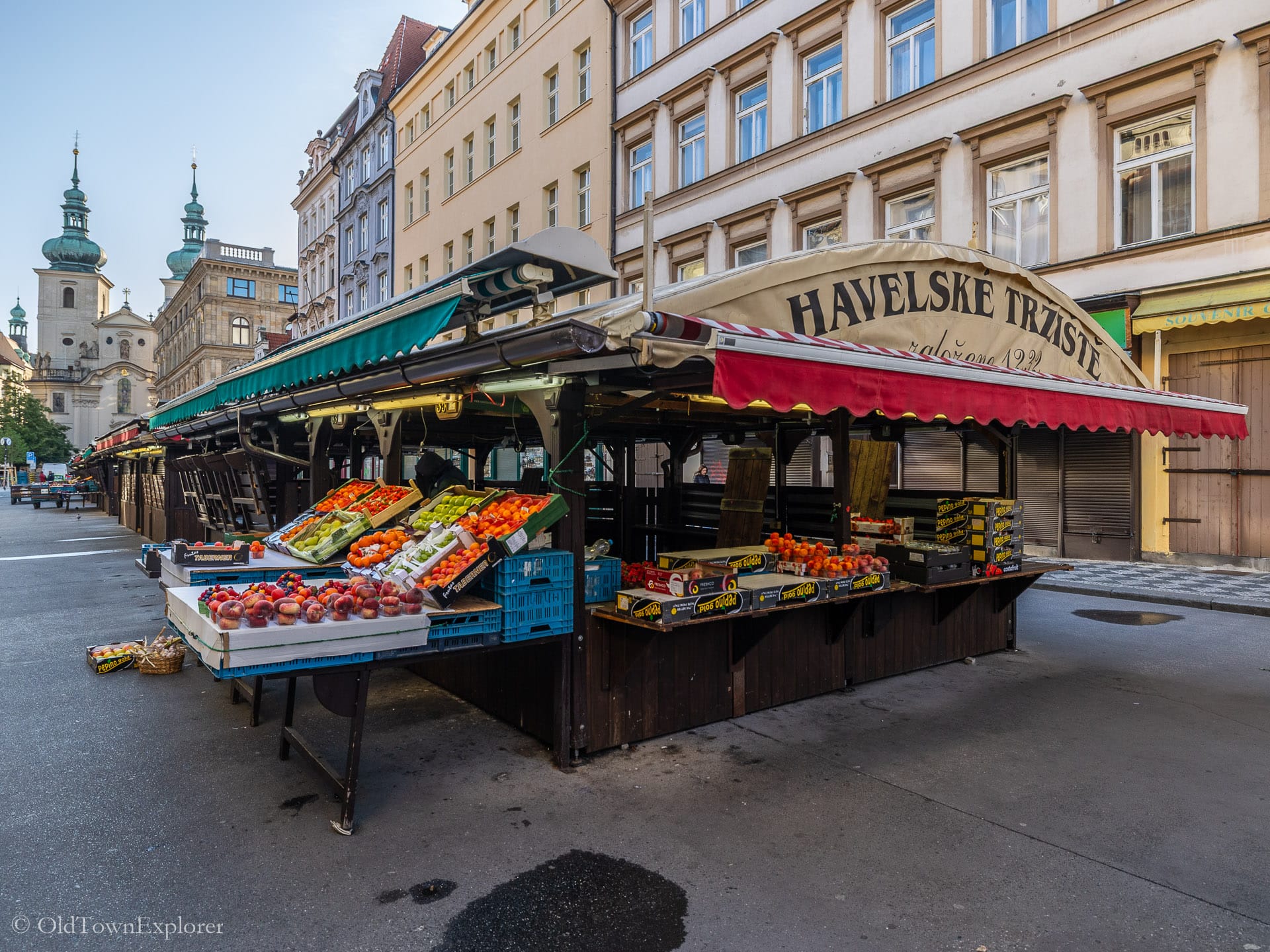
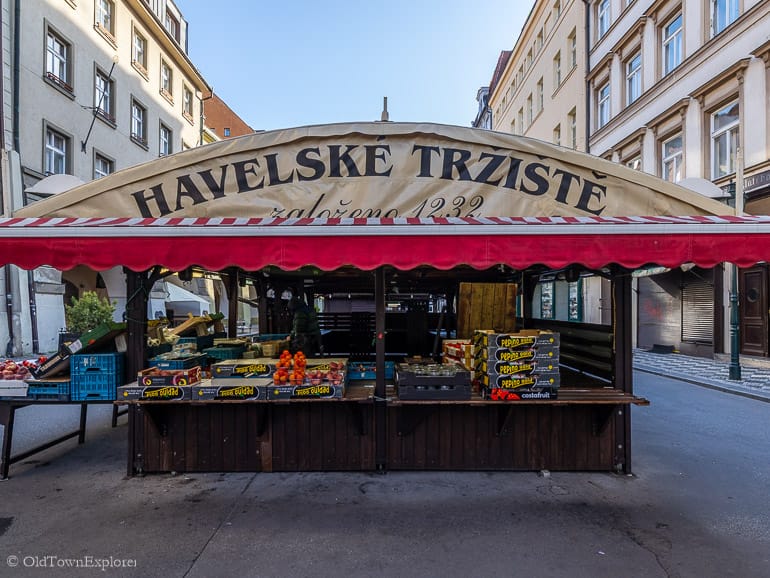
Havel Market (Havelské tržiště) is the surviving Old Town marketplace with roots dating to 1232. The stalls sell fresh fruit and vegetables alongside souvenirs and other tourist goods, which become more prominent on weekends.
Choose Havel Market when you want to see a historic market while walking through Old Town. It is easy to combine with central sightseeing, while Prague’s farmers’ markets are better choices when fresh food and local producers are the main reason for going.
Náplavka Farmers’ Market
- Address: Rašínovo nábřeží, 128 00 Nové Město, Prague.
- Opening times: February–December; Saturday 8:00–14:00.
Náplavka Farmers’ Market (Farmářské tržiště Náplavka) runs along the Vltava on Rašínovo nábřeží. More than 90 stalls can appear on market Saturdays, with seasonal fruit and vegetables, pastries, mushrooms, fresh fish, cheese, eggs, prepared food, and other goods from growers and producers.
Choose Náplavka when you have Saturday morning free and want the market itself to be part of the outing. You can browse the stalls, eat by the river, and continue along the embankment. Large events can move the market to nearby Palackého náměstí, so check the current listing before going.
Jiřího z Poděbrad Farmers’ Market
- Address: náměstí Jiřího z Poděbrad, 130 00 Vinohrady, Prague.
- Opening times: February–December; Wednesday–Friday 8:00–18:00; Saturday 8:00–14:00.
Jiřího z Poděbrad Farmers’ Market (Trhy na Jiřáku) brings Czech growers and food producers to náměstí Jiřího z Poděbrad. Fruit, vegetables, herbs, bread, pastries, cheese, and other seasonal products fill the stalls.
Jiřího z Poděbrad is one of the easiest farmers’ markets to fit around other plans because it runs four days a week. It is especially convenient if you are staying or eating in Vinohrady.
Anděl Farmers’ Market
- Address: Nádražní, Anděl pedestrian zone, 150 00 Smíchov, Praha 5.
- Opening times: April–November; Tuesday 8:00–18:00; Friday 8:00–19:00.
Anděl Farmers’ Market (Trhy Anděl) brings Czech farmers, growers, and food producers to the pedestrian area beside Anděl metro station. Seasonal vegetables, meat, cheese, dairy products, bread, preserves, herbs, eggs, honey, and other foods appear among the stalls.
Anděl works best if you are staying in Smíchov or already spending time on this side of the Vltava. Its Tuesday and Friday schedule also gives you a weekday alternative to Prague’s Saturday markets.
Heřmaňák Farmers’ Market
- Address: Řezáčovo náměstí, 170 00 Holešovice, Prague.
- Opening times: February and December, Saturday 9:00–13:00; March–November, Saturday 8:30–13:30. From April–October, no farmers’ market is held on the final Saturday of the month.
Heřmaňák Farmers’ Market (Farmářský trh Heřmaňák) is a small neighborhood market on Řezáčovo náměstí in Holešovice. Around 20–25 stalls sell fruit and vegetables, bread and pastries, meat, flowers, and other foods, with a strong emphasis on reducing disposable packaging.
Choose Heřmaňák when you want a smaller neighborhood market rather than a large Saturday outing. From April through October, a flea market takes its place on the final Saturday of each month.
Holešovice Hall 22 Market
- Address: Bubenské nábř. 306/13, 170 00 Holešovice, Praha 7.
- Opening times: Year-round; Monday–Friday 7:30–17:00; Saturday 7:30–14:00; Sunday closed.
Holešovice Hall 22 Market (HALA 22 — Zeleninový trh v Holešovické tržnici) is the covered food market inside Holešovice Market. More than 80 vendors sell fruit and vegetables, bread, eggs, dairy products, herbs, fish, meat, honey, mushrooms, flowers, and other groceries.
Hall 22 is the practical choice when you want to shop for food rather than simply browse a weekend market. Its year-round schedule also makes it dependable when Prague’s seasonal outdoor farmers’ markets are closed.
Kulaťák Farmers’ Market
- Address: Vítězné náměstí, 160 00 Dejvice, Prague.
- Opening times: March–December; Saturday 8:00–14:00.
Kulaťák Farmers’ Market (Farmářské trhy na Kulaťáku) fills Vítězné náměstí in Dejvice with Czech growers and producers on Saturdays. Seasonal produce and other foods from Czech producers make it one of Prague’s larger regular farmers’ markets.
Choose Kulaťák when you want a substantial Saturday market and do not mind traveling out to Dejvice. It takes more effort to reach from Old Town than Havel Market or Náplavka, so the market itself should be part of the plan.
Kubánské Square Farmers’ Market
- Address: Kubánské náměstí, Vršovice, Praha 10.
- Opening times: February–December; Tuesday and Thursday 8:00–16:00; Saturday 8:00–14:00.
Kubánské Square Farmers’ Market (Farmářský trh Kubáň) brings farmers and food producers to Kubánské náměstí three days a week. Around 35 stalls can sell seasonal fruit and vegetables, herbs, meat and dairy products, bread, cakes, coffee, and other food from Czech producers.
Kubánské Square is mainly a neighborhood choice. Go when you are staying in Vršovice, already exploring this part of Prague, or want a farmers’ market on Tuesday or Thursday instead of Saturday.
Tylák Farmers’ Market
- Address: Tylovo náměstí, 120 00 Vinohrady, Praha 2.
- Opening times: Closed throughout 2026 because of the planned reconstruction of Tylovo náměstí. In normal operating years, the market runs March–December, Monday–Friday 8:00–18:00, and closes on public holidays.
Tylák Farmers’ Market (Trhy na Tyláku) is a small weekday farmers’ market on Tylovo náměstí in Vinohrady. In operating years, producers and growers from across Czechia sell farm products here from Monday through Friday, making it one of Prague’s more convenient markets for travelers whose dates do not include a Saturday.
The market will not operate at all in 2026 because of the planned reconstruction of Tylovo náměstí. If you are staying in Vinohrady this year, Jiřího z Poděbrad Farmers’ Market is the more practical nearby choice.
Food Tours in Prague
A guided food tour makes the most sense early in a Prague stay if you want someone to put Czech dish names, pub food, drinks, markets, and restaurant areas into context before you start choosing meals on your own.
Guided Tours
Compare the meeting point, neighborhoods covered, walking distance, number and type of food stops, market or coffeehouse visits, beer or wine inclusions, meal format, dietary information, and cancellation terms before booking. A central tasting walk and a neighborhood-focused tour can solve very different food-planning questions even when both are sold as Prague food tours.
Best Places to Stay in Prague for Food
The Old Town–New Town area is the simplest food base for most first-time visitors because the central restaurant choices above spread from Dlouhá and Old Town Square to Jungmannovo náměstí, Na Poříčí, and Zlatnická. Vinohrady is a stronger alternative when Jiřák market and neighborhood restaurants matter more than staying beside the main Old Town sights.
Hotels and Apartments in Prague for Food
Look around the Old Town–New Town boundary if you want traditional and modern Czech restaurants within walking distance and easy transport to Vinohrady or Holešovice. Stay in Vinohrady instead if you expect to eat there repeatedly and do not need Old Town Square outside your door. For the wider lodging decision, including sightseeing and transport, see the main Prague guide.
Use the interactive map below to compare hotels and apartments by location, dates, and current availability, then check how the property sits relative to the restaurants and markets you actually plan to visit.
FAQs About Prague Food
What food is Prague known for?
Prague is a good place to eat Czech national dishes such as svíčková, roast pork with dumplings and cabbage, goulash, and fried cheese, alongside newer restaurants that reinterpret Czech ingredients. Czechia Food covers the national cuisine in more depth.
What should I order first in Prague?
Start with svíčková if you want beef, creamy root-vegetable sauce, cranberries, and dumplings. Choose vepřo-knedlo-zelo if roast pork, cabbage, and dumplings sounds more appealing. Either gives you a clearer first look at Czech cooking than trying to sample several unrelated dishes at once.
Where should I start eating in Prague?
Old Town and New Town are the easiest starting areas because you can choose between traditional pubs, historic café-restaurants, and modern Czech cooking without making food the only purpose of the day. Add Vinohrady, Holešovice, or Smíchov when a particular restaurant or market justifies the trip.
Is trdelník traditional Prague food?
Not specifically. Trdelník is highly visible in Prague's tourist center, but VisitCzechia traces its probable roots to Transylvania before the pastry spread through other parts of Central Europe. Try it if it appeals to you, but do not treat it as the defining historic pastry of Prague.
Can vegetarians eat traditional Czech food in Prague?
Many classic Czech mains are meat-based, but fried cheese, some soups, potato dishes, and other meat-free foods do appear on Czech menus. Modern Prague restaurants can add more choices, but check the current menu before reserving if vegetarian options will determine where your group eats.
Which Prague food market should I visit?
Choose Náplavka for a Saturday riverside farmers' market, Jiřák if you are staying around Vinohrady, Kulaťák for a larger Saturday market in Dejvice, and Hall 22 when you want a covered year-round produce market. Havelský is easiest to reach from Old Town but is less food-focused on weekends.
What should I drink with Czech food in Prague?
Czech lager is an obvious match for pub dishes such as goulash and roast pork, but Prague restaurants also pour Czech and Moravian wine. For wine bars, shops, local bottles, and wine-focused decisions in the city, see Prague Wine.
For the rest of the trip, Prague covers stay areas, timing, transport, and city planning; Czechia Food gives the national background behind the dishes you will see on menus; Prague Wine covers wine bars, shops, and Czech and Moravian bottles; and Prague Architecture explains the historic streets and buildings you will pass between meals.