
Warsaw Food
Explore Warsaw Food: Old Town Restaurants, Markets & What to Eat
Warsaw food is easiest to understand through two tracks: local Warsaw names and broader Polish dishes that appear across the capital. Start with pyzy, Warsaw-style herring, Wuzetka, and Wedel chocolate, then add pierogi, żurek, borscht, tripe, pork cutlet, and duck when choosing a first traditional meal.
Most first food plans move between the Old Town, Nowy Świat, Śródmieście, Praga, and newer food halls such as Hala Koszyki, Elektrownia Powiśle, and Fabryka Norblina. Plan meals around your Warsaw base because good food stops are spread across the city, not packed into one compact old-town dining strip.
We spent a month in Warsaw eating across the Old Town, Śródmieście, Praga, food halls, cafés, milk bars, and traditional Polish restaurants. For a first food plan, choose one traditional Polish meal, one modern restaurant or wine-focused dinner, one Praga pyzy stop, and one market or food-hall visit.
This page contains affiliate links. We may earn a small commission at no extra cost to you.
Warsaw Food at a Glance
Warsaw rewards a mixed food plan: one classic Polish meal, one milk bar or casual lunch, one Praga stop, and one modern dinner or food-hall evening. The city is too spread out for a single food street, so location matters when you choose restaurants.
Key food decisions:
- What to order first: Pyzy for a Warsaw-specific dish, then żurek, pierogi, tripe, herring, pork cutlet, duck, and Wuzetka for a wider Polish meal.
- Strongest food areas: The Old Town and New Town work for traditional meals; Nowy Świat and Śródmieście work for restaurants, cafés, and wine-focused dinners; Praga matters for pyzy and east-bank food stops.
- Traditional dining: Choose the Old Town or Nowy Świat when you want Polish dishes within an easy sightseeing route.
- Modern dining: Look toward Śródmieście, Powiśle, Próżna, and Plac Trzech Krzyży for tasting menus, wine-led restaurants, and contemporary Polish cooking.
- Markets and food halls: Hala Mirowska suits produce and everyday food shopping; Hala Koszyki, Elektrownia Powiśle, and Fabryka Norblina suit mixed food-hall meals.
- Best base for food: Stay near the Old Town edge or Śródmieście if you want easy access to Polish restaurants, cafés, wine bars, trains, metro, and food halls.
- Main trade-off: Warsaw has good food across several districts, so a taxi, tram, metro ride, or longer walk often matters as much as the restaurant choice.
For a short stay, keep the first food plan simple. Eat traditional Polish food near the Old Town or Nowy Świat, cross to Praga for pyzy or an east-bank walk, and save one evening for a modern restaurant or food hall.
What to Eat in Warsaw
Warsaw menus mix local city names with dishes served across Poland. The most useful first step is to recognize which foods are specifically tied to Warsaw and which ones help you order a classic Polish meal in the capital.
Warsaw Foods to Recognize
Pyzy, Warsaw-style herring, pork knuckle in jelly, tripe, Wuzetka, Zygmuntówka, and Wedel chocolate are the clearest Warsaw food names to know before you choose a first meal or café stop. Pyzy are the strongest local dish to connect with Praga and Różycki Market, while Wuzetka and Wedel fit a café break near the Old Town, Nowy Świat, or Śródmieście.
Warsaw-style herring and pork knuckle in jelly are better as starters or small plates than as a first full meal. Tripe is a heavier winter choice, and Wuzetka gives you an easy Warsaw dessert when you do not want another long restaurant stop.

Traditional Polish Dishes on Warsaw Menus
For a classic Polish meal in Warsaw, look for żurek, borscht, pierogi, pork cutlet with potatoes and cabbage, duck, beef tartare, and gołąbki. These dishes are not all Warsaw-only, but they are common restaurant choices in the Old Town, Nowy Świat, milk bars, and traditional Polish restaurants across the centre.
Our Poland Food page explains the broader Polish dishes and ingredients behind many Warsaw menus. Use it before the trip if you want to recognize soups, dumplings, meats, cakes, dairy, pickles, and regional products before choosing restaurants in the capital.
Where to Eat in Warsaw’s Old Town and Centre
Warsaw food decisions usually start with the Old Town, but the best plan does not stay there all day. The Old Town is useful for traditional Polish meals between sightseeing stops, while Nowy Świat, Śródmieście, Powiśle, and Praga add modern restaurants, wine-led dinners, food halls, milk bars, markets, and pyzy.
Old Town and New Town Restaurants
The Old Town and New Town are the easiest areas for a first traditional Polish meal after Castle Square, the Royal Castle, the Barbican, or Old Town Market Square. Choose this area when you want pierogi, żurek, herring, duck, pork cutlet, or Wuzetka without crossing the city before dinner.
The trade-off is simple: the most convenient streets can feel visitor-heavy. Book or arrive early for sit-down meals, and keep one casual meal for another district if you have more than one night in Warsaw.
Nowy Świat, Powiśle, and Śródmieście
Nowy Świat and Śródmieście work well when you want restaurants, cafés, wine bars, milk bars, and easy transport in one day. Powiśle adds modern dining and food-hall options closer to the Vistula and the university side of the centre.
Stay or eat here if food needs to fit around Warszawa Centralna, metro rides, museums, or a later evening. This area is also better than the Old Town when you want a modern Polish dinner or a wine-focused restaurant.
Praga and the East Bank
Praga matters most for pyzy, Różycki Market, brick streets, and Koneser-area food and drink stops. It is worth crossing the Vistula when you want a food plan that feels less tied to Castle Square and the Royal Route.
For a first visit, treat Praga as a half-day or evening food area rather than your only dining base. Pair pyzy with a Praga walk, then return to the Old Town or Śródmieście if your hotel, train, or evening plan sits on the west bank.
Traditional Restaurants in Warsaw’s Old Town and Centre
These restaurants help with the classic Warsaw food decision: where to sit down for Polish dishes near the Old Town, Royal Route, or central sightseeing streets. Each entry has a verified address and a clear traditional Polish menu role.
U Fukiera
- Address: Rynek Starego Miasta 27, 00-272 Warsaw
U Fukiera sits on Old Town Market Square and presents itself as a long-running Warsaw restaurant. Its menu includes herring, żurek, borscht, Warsaw tripe, dumplings, pork knuckle, duck, and pork chop.
Save U Fukiera for an Old Town meal when setting matters as much as the dish list. It fits a classic Warsaw dinner after the Royal Castle, Old Town Market Square, or the Barbican.
Polka
- Address: ul. Świętojańska 2, Warsaw
Polka sits on Świętojańska near Castle Square and presents Polish cuisine as a traditional table with multicultural influences. The location makes it one of the easiest Polish restaurant choices during an Old Town and Royal Route day.
Start here when you want a sit-down Polish meal close to the Royal Castle without adding another tram or taxi ride to the evening. It works especially well when dinner needs to stay inside the Old Town walking plan.
Specjały Regionalne
- Address: Nowy Świat 44, 00-363 Warsaw
Specjały Regionalne is a Polish restaurant on Nowy Świat with old-Polish and regional dishes. Its menu includes herring, żurek, pierogi, bigos, gołąbki, pork shank, duck, and other Polish dishes.
Choose Specjały Regionalne when Nowy Świat is already part of your day. It is a practical option between the Old Town, the Royal Route, Śródmieście hotels, and evening cafés.
Modern Restaurants in Warsaw’s Old Town and Centre
Warsaw’s modern restaurants are strongest when they keep a Polish or Central European thread instead of becoming generic international dining. Choose these for a longer dinner, wine pairing, tasting menu, or a contemporary take on Polish ingredients.
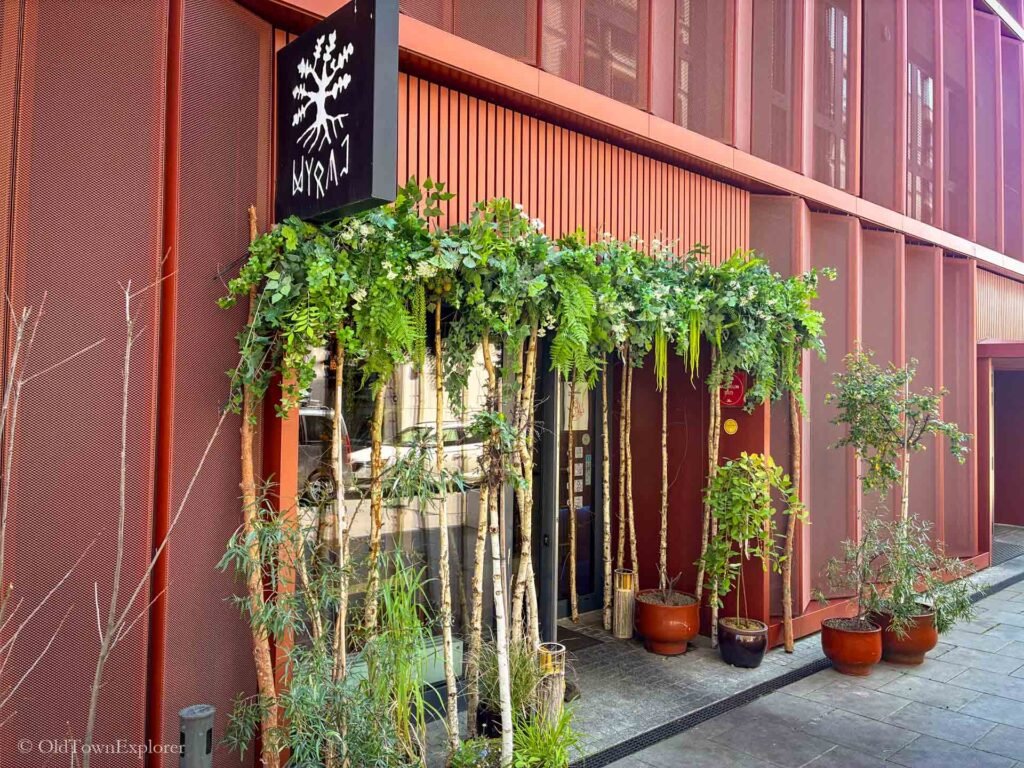
Wyraj
- Address: ul. Krochmalna 59/lok U2, 00-864 Warsaw
Wyraj is a modern Polish and Slavic restaurant in Browary Warszawskie, west of Warsaw’s historic center. Its cooking draws on older Polish and Slavic recipes, seasonal ingredients, regional cheeses, cured meats, fermented vegetables, grains, fish, poultry, and game. The menu uses these ingredients in contemporary dishes rather than trying to reproduce historic recipes exactly.
Wyraj is a strong choice for a longer dinner when the priority is creative cooking that still has a clear connection to Polish ingredients, Slavic food traditions, and the changing seasons.
WANDAL
- Address: ul. Pańska 97, 00-834 Warsaw; entrance from ul. Miedziana 16
WANDAL is a contemporary Polish restaurant in Wola, west of Warsaw’s historic center. The kitchen starts with Polish dishes, ingredients, and food traditions and changes their form, seasoning, or pairings. The current menu includes a pork-cheek doughnut with aged pork jowl and horseradish, beef tartare with smoked sprat, potato pyzy with cheese and truffle, Polish-style zander, and kopytka with raspberry, rose, and sour cream.
WANDAL fits a dinner where experimentation is the priority. Familiar Polish ingredients and dishes remain recognizable, but the kitchen uses unexpected combinations and modern techniques to take them in different directions.
Bez Gwiazdek
- Address: Wiślana 8, 00-317 Warsaw
Bez Gwiazdek focuses on Polish regional cuisine in a contemporary setting, with menus that reinterpret dishes from different parts of Poland. Michelin also describes the restaurant’s monthly menu as focused on one of Poland’s sixteen regions.
This is a strong choice when you want modern cooking but still want dinner to stay connected to Polish regional food. It fits a food-focused evening near Powiśle, the university area, or the lower Royal Route.
Kieliszki na Próżnej
- Address: Próżna 12, 00-107 Warsaw
Kieliszki na Próżnej is a wine-led restaurant on Próżna, with a kitchen built around the balance between the glass and the plate. The wine list and small-plate format make it a good bridge between Warsaw Food and Warsaw Wine.
Pick Kieliszki na Próżnej when the meal decision is really a food-and-wine decision. It suits an evening near Śródmieście, Plac Grzybowski, or a longer central walk.
Epoka
- Address: Ossolińskich 3, 00-072 Warsaw
Epoka builds modern tasting menus from historic Polish cuisine and old Polish cookbooks. Michelin lists it at Ossolińskich 3 and classifies it as innovative cooking.
Reserve Epoka for a special-occasion Warsaw dinner when a tasting menu is the point of the evening. It is better for a planned meal than for a casual first taste of Polish food.
Rozbrat 20
- Address: 20 Rozbrat Street, 00-447 Warsaw
Rozbrat 20 is a small Powiśle restaurant, and Michelin classifies it as modern cuisine. Its location makes it useful when your food plan includes Powiśle, the Vistula side of the centre, or a dinner away from the Old Town.
Choose Rozbrat 20 when you want a quieter modern dinner outside the busiest sightseeing streets. It fits travelers who have already had a traditional Polish meal and want a more contemporary second dinner.
Quick Food in Warsaw
Warsaw is not a classic street-food city for most first-time visitors, so quick food works better as milk bars, casual counters, pyzy stops, and food halls. Choose this section when you want a faster meal without turning lunch into a full restaurant reservation.
Pyzy Flaki Gorące
- Addresses: Brzeska 29/31, 03-737 Warsaw; Podwale 5, 00-252 Warsaw
Pyzy Flaki Gorące focuses on pyzy and flaki, with locations in Praga and near the Old Town. The restaurant connects pyzy with the older Różycki Market tradition and gives you a direct way to try the dish without relying on a market stall being open or easy to identify.
Start with the Praga location if the east bank is part of your day. Pick the Podwale location when pyzy need to fit into an Old Town walk.
Bar Mleczny Bambino
- Address: ul. Hoża 19, Warsaw
Bar Mleczny Bambino is a milk bar on Hoża with Polish dishes such as soups, pierogi, pork cutlet, minced cutlet, poultry cutlets, veal cutlet, pancakes, and seasonal items. Its central location makes it useful when you want a simple Polish lunch near Śródmieście rather than a long restaurant meal.
Choose Bambino for a casual daytime meal, especially if you want the milk-bar format without leaving the city centre. It works better for lunch than for a polished evening dinner.
Markets and Food Halls in Warsaw
Warsaw markets and food halls serve different food decisions. Hala Mirowska and Różycki Market connect better with older market habits and everyday food shopping, while Hala Koszyki, Elektrownia Powiśle, and Fabryka Norblina work better for mixed meals, groups, drinks, and casual evenings.
Hala Mirowska
- Location: pl. Mirowski 1, Warsaw
Hala Mirowska and the surrounding stalls are one of Warsaw’s clearest traditional market stops for produce, bread, cheese, sausage, pickles, sauerkraut, herbs, flowers, and everyday food shopping. It is a better daytime food stop than an evening restaurant plan.
Go here if you are staying in an apartment, planning a picnic-style lunch, or want to see how Warsaw residents shop beyond restaurant menus.
Różycki Market
- Location: Praga, near the Museum of Warsaw Praga
Różycki Market matters for Warsaw food because pyzy were closely tied to Praga and the market’s older street-food tradition. The practical choice today is to pair a Praga walk with pyzy nearby rather than treat the market as a full food-hall replacement.
Add Różycki Market to a Praga plan when you want food history, neighborhood context, and a reason to cross the Vistula. For a reliable meal, pair the walk with a named pyzy restaurant or another planned Praga stop.
Hala Koszyki
- Address: 63 Koszykowa Street, Warsaw
Hala Koszyki is a central food hall on Koszykowa, and Warsaw’s official tourism site describes it as an Art Nouveau market space with restaurants and bars under one roof. It works well when a group wants different cuisines or when you want an easy evening meal near Śródmieście.
Choose Hala Koszyki for convenience, variety, and atmosphere rather than a focused traditional Polish meal. It is useful when the decision is “where can everyone eat tonight?”
Elektrownia Powiśle
- Address: ul. Dobra 42, 00-312 Warsaw
Elektrownia Powiśle has a food hall and bars in Powiśle, near the Vistula side of the centre. The official venue page lists multiple dining concepts, bars, and the Dobra 42 address.
Pick Elektrownia Powiśle when your day includes the river, the university area, Copernicus Science Centre, or a casual evening outside the Old Town.
Food Town at Fabryka Norblina
- Address: 51/53 Żelazna Street, 00-841 Warsaw
Food Town sits inside Fabryka Norblina on Żelazna Street and combines food concepts with bars. It is a good choice when you want a food-hall evening west of Śródmieście rather than another Old Town or Nowy Świat dinner.
Choose Food Town when variety, drinks, and a post-industrial setting matter more than a strictly Polish menu. It can work well for a group meal or a casual night after museums, shopping, or central transport.
Self-Guided Food Walk in Warsaw
Duration: 4 to 5 hours if you include Praga; 2.5 to 3 hours for the shorter west-bank version
Area covered: Old Town, Krakowskie Przedmieście, Nowy Świat, Śródmieście, and Praga
Ideal time window: Late morning to mid-afternoon for markets, milk bars, pyzy, sweets, and an early traditional meal
This self-guided Warsaw food walk connects the city’s easiest first food stops: Old Town streets, a traditional Polish meal, Wedel chocolate, a milk bar, and Praga pyzy. Keep the walk flexible because Warsaw is spread out. The simplest version stays on the west bank; the fuller version crosses the Vistula for Praga and Różycki Market context.
Tip: For the simplest version, do the Old Town, one traditional Polish restaurant, Pijalnia Czekolady E.Wedel, and Bar Mleczny Bambino. Add Praga and Pyzy Flaki Gorące if you want the walk to include Warsaw’s strongest local dish connection.
Stop 1: Old Town and Castle Square
Start around Castle Square, Świętojańska, and Old Town Market Square.
Look for a traditional Polish meal with żurek, borscht, herring, pierogi, duck, pork cutlet, or tripe.
Keep the first stop focused. A full lunch in the Old Town works well if the rest of the walk becomes sweets, cafés, and quick food rather than another heavy restaurant meal.
Stop 2: Krakowskie Przedmieście and Nowy Świat
Walk south along Krakowskie Przedmieście toward Nowy Świat.
This stretch works well for cafés, Polish restaurants, chocolate, and a central food break between the Old Town and Śródmieście.
If you want a more formal meal, choose one restaurant on or near Nowy Świat rather than trying to add a second sit-down stop later in the walk.
Stop 3: Pijalnia Czekolady E.Wedel
Stop for hot chocolate, pralines, boxed chocolates, or a small dessert.
Wedel is one of the easiest Warsaw sweet stops to build into a walk because the city’s official tourism site highlights its chocolate cafés and chocolate stores.
This is a good reset point before deciding whether to continue toward a milk bar, a food hall, or Praga.
Stop 4: Bar Mleczny Bambino
Go to Bar Mleczny Bambino on Hoża if you want the walk to include a milk bar.
Order a simple Polish lunch dish such as soup, pierogi, pork cutlet, minced cutlet, pancakes, or another cafeteria-style plate.
Keep this stop small if you already ate in the Old Town. A milk bar works best as a daytime food experience, not as a replacement for a slower traditional dinner.
Stop 5: Praga and Różycki Market Context
Cross to Praga if you want the walk to include Warsaw’s strongest local food story.
Różycki Market matters because pyzy were closely tied to Praga and the market’s older food tradition. Treat the market area as context for the dish rather than as a guaranteed full meal stop.
Praga works better as a separate half-day food walk if you want time for brick streets, Koneser, and a less rushed east-bank plan.
Stop 6: Pyzy Flaki Gorące
Finish the Praga version with pyzy at Pyzy Flaki Gorące on Brzeska, or use the Podwale location if you want pyzy without crossing the river.
Order pyzy first if the goal is a Warsaw-specific dish. Add flaki only if you want a heavier, more traditional bowl.
Ending with pyzy gives the walk a clear Warsaw finish: Old Town and Nowy Świat for the classic visitor route, then Praga for the dish most closely tied to the city’s local food memory.
Food Tours in Warsaw
A guided food tour can help on a short Warsaw stay when you want Polish dishes, milk bars, markets, vodka or wine context, and neighborhood orientation in one plan. It is most useful at the start of the trip, before you choose later restaurants on your own.
Guided Tours
Compare guided tours by neighborhood, food focus, walking distance, market stops, drinks, meal format, meeting point, inclusions, and cancellation rules. Choose the tour that fits your first-day logistics rather than the one with the longest dish list.
Best Places to Stay in Warsaw for Food
The best food base in Warsaw depends on whether you want Old Town evenings or easier access to restaurants, food halls, metro rides, and trains. For most first-time visitors, the Old Town edge and Śródmieście give the best balance.
Hotels and Apartments in Warsaw for Food
Stay near the Old Town edge if traditional Polish restaurants, cafés, evening walks, and Castle Square are the priority. Stay in Śródmieście if you want easier access to Nowy Świat, Hala Koszyki, Powiśle, metro rides, Warszawa Centralna, and wine-focused dinners.
Praga can be rewarding for longer stays, especially if pyzy, Koneser, brick streets, and east-bank food stops matter. For a first visit, it is usually better as a half-day food area than as the default base.
Use the interactive map below to compare hotels and apartments near Warsaw’s Old Town edge, Śródmieście, Nowy Świat, Powiśle, Praga, transit stops, and other practical areas for food-focused stays.
FAQs About Warsaw Food
What food is Warsaw known for?
Warsaw is known for pyzy, Warsaw-style herring, pork knuckle in jelly, tripe, Wuzetka, Zygmuntówka, and Wedel chocolate. The city is also a good place to try Polish staples such as żurek, borscht, pierogi, pork cutlet, duck, and beef tartare.
What should I order first in Warsaw?
Order pyzy first if you want a Warsaw-specific dish, especially during a Praga food plan. For a broader Polish meal, start with żurek or borscht, then choose pierogi, pork cutlet, duck, or tripe depending on how heavy you want the meal to be.
Where should I start eating in Warsaw?
Start near the Old Town or Nowy Świat if you want a traditional Polish meal close to sightseeing. Start in Śródmieście or Powiśle if you want modern restaurants, wine-led dinners, food halls, and easier transport.
Is Warsaw good for milk bars?
Yes. Warsaw is a good city for milk bars when you want a casual Polish lunch, soups, pierogi, cutlets, pancakes, and other simple dishes. Bar Mleczny Bambino on Hoża is one central option, but milk bars are best treated as daytime meals rather than special-occasion dinners.
Which market should I visit in Warsaw?
Hala Mirowska is the best first market stop for produce, bread, cheese, sausage, pickles, herbs, flowers, and everyday food shopping. Różycki Market is better for Praga food history and the older pyzy connection than for a full modern food-hall meal.
Are food tours in Warsaw worth it?
Food tours in Warsaw can be worth it if you have a short stay and want help with dishes, milk bars, markets, drinks, and neighborhood orientation. They are less necessary if you already know Polish food and prefer to choose restaurants one meal at a time.
Where should I stay in Warsaw for food?
Stay near the Old Town edge for traditional Polish restaurants, cafés, and evening walks. Stay in Śródmieście if you want easier access to Nowy Świat, metro rides, food halls, wine-focused dinners, and Warszawa Centralna.
What dessert should I try in Warsaw?
Try Wuzetka first. It is the easiest Warsaw dessert to recognize in cafés and is tied to the W-Z route that runs near the Old Town. Wedel chocolate is the other easy Warsaw sweet stop.
For the full city plan, start with Warsaw. For broader dishes, ingredients, and Polish menu context before you arrive, use Poland Food. For dinner pairings, wine bars, and Polish bottles by the glass, continue with Warsaw Wine.