
Discover Mariatrost Basilica: Church Architecture, Art & Visit Tips
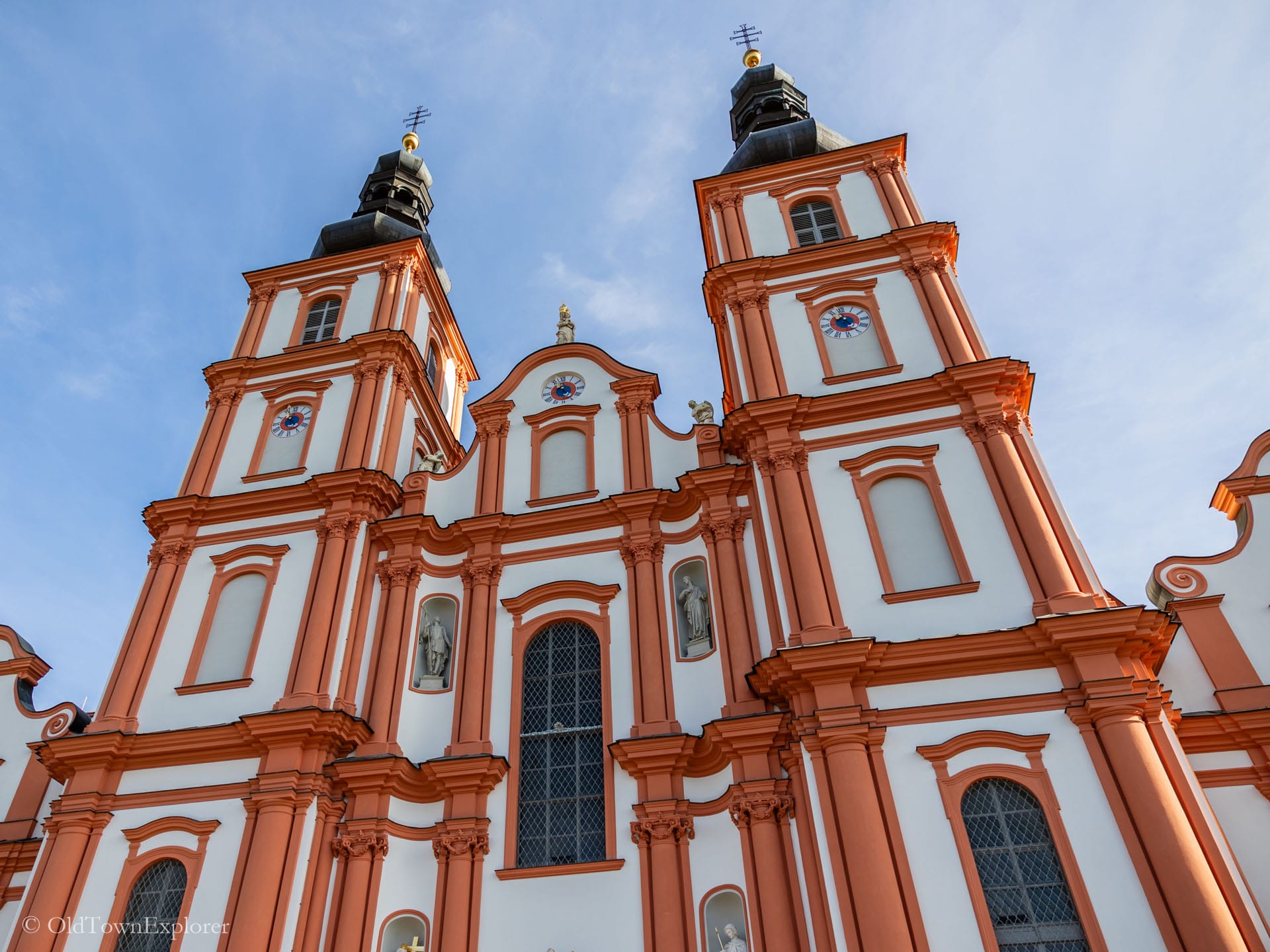
Mariatrost Basilica is a Baroque pilgrimage church on Purberg hill in the Mariatrost district of Graz. Its twin towers, hilltop setting, 216-step Angelus Staircase, and richly decorated interior make it one of the clearest church-and-viewpoint trips from the city center.
The basilica is best for travelers who want Baroque architecture, a short pilgrimage-style climb, frescoes, a major Marian shrine, and a quieter Graz stop beyond the historic center. The visit is simple, but the hill matters: decide before you go whether to climb the Angelus steps, walk up by road, arrive by taxi, or treat the church as part of a longer Mariatrost outing.
We visited Mariatrost Basilica during our month-long stay in Graz. This post focuses on the basilica’s history, architecture, what to see, how to visit, how to get there, where to stay, tips, and FAQs.
Mariatrost Basilica at a Glance
Mariatrost Basilica is not in Graz’s old center, but it is close enough to work as a short architecture and pilgrimage trip from the city. The main visit decision is whether the basilica is a quick hilltop church stop or a slower visit with the stairs, interior, views, and nearby quiet spaces.
Key Mariatrost Basilica decisions:
- What it is: A Baroque Roman Catholic pilgrimage church and minor basilica on Purberg hill.
- Where it is: Kirchplatz 9, 8044 Graz, in the Mariatrost district on the eastern edge of the city.
- Why go: Twin towers, curved Baroque façade, Angelus Staircase, frescoes, pulpit, high altar, Marian shrine, and views over the surrounding area.
- What to see first: The Angelus Staircase, main façade, high altar, miraculous statue, frescoes, pulpit, side altars, and Lourdes Grotto.
- Exterior or interior: The exterior and hilltop approach are worth seeing, but the interior gives the basilica its strongest artistic and religious detail.
- Time needed: Allow about 45–90 minutes for the climb, exterior, interior, and a few quiet minutes at the top.
- Main trade-off: The basilica is easy to reach by tram or bus, but the final approach involves a hill, steps, or a sloped road.
For a first visit, take the Angelus Staircase if the climb is comfortable. Choose the road or taxi approach when stairs, rain, heat, or mobility make the steps less appealing.
History of Mariatrost Basilica
The history of Mariatrost Basilica explains why a church outside the old center became one of Graz’s most important religious landmarks. The site moved from a hilltop religious place to a Marian pilgrimage church, then to a minor basilica.
Early Religious Use on Purberg
The Purberg site had religious importance before the Baroque basilica was built. An earlier small church stood on the hill before the later pilgrimage church reshaped the site.
Purbergschlössl and the Marian Shrine
In the 17th century, the Purbergschlössl stood on the hill with a chapel connected to the parents of Mary, Anna and Joachim. The Marian devotion that later shaped Mariatrost grew around the hill, the chapel, and the image of Mary as a source of comfort.
Pauline Monks and Baroque Construction
The Pauline order took over the property in 1709, and the foundation stone for the church was laid in 1714. The church was built in the first half of the 18th century and completed in 1746.
Parish, Pilgrimage, and Religious Orders
In 1786, under Emperor Joseph II, pilgrimages were banned, the Pauline monastery was dissolved, and Mariatrost became a parish served by secular clergy. The Franciscans later took over the parish and pilgrimage church in 1846 and remained connected with Mariatrost until 1996.
Minor Basilica Status
Mariatrost was elevated to the status of minor basilica by Pope John Paul II in 1999. That status reflects the church’s ongoing religious importance within Styria, not just its visual role as a hilltop landmark.
What to See at Mariatrost Basilica
Mariatrost Basilica is a compact Baroque church, so the architecture and the visit priorities are closely connected. The best way to understand it is to start with the hilltop approach, then move from the twin-tower façade into the nave, high altar, frescoes, pulpit, and smaller devotional spaces.

Purberg Hill and the Arrival View
The basilica sits on Purberg hill above the Mariatrost district. That height gives the church its landmark role and makes the arrival feel different from visiting a flat city-center church.
Look at the building from below before climbing or driving up. The towers and façade are strongest when you see them rising above the slope.
Angelus Staircase
The Angelus Staircase is the classic approach to Mariatrost Basilica. Its 216 steps turn the climb into part of the visit, with the church becoming more dominant as you move upward.
Climb the steps if you want the full pilgrimage-style arrival. Use the road or taxi approach if stairs, rain, heat, or mobility make the climb less comfortable.
Twin-Tower Façade
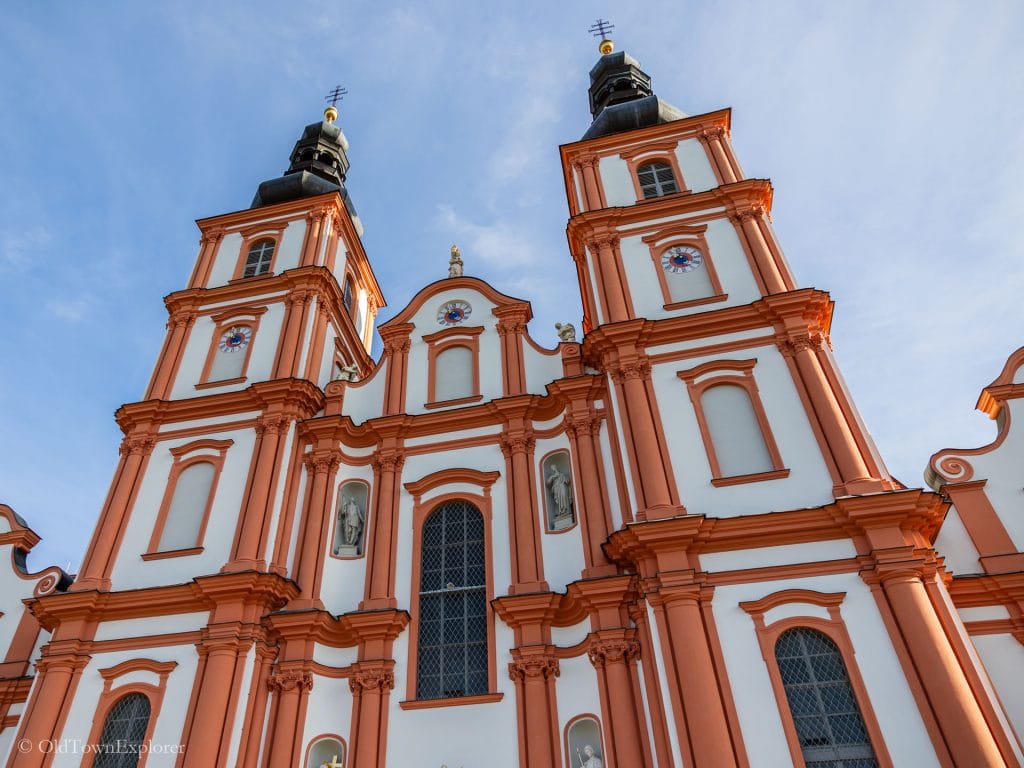
The two towers frame the main entrance and give Mariatrost its clearest exterior identity. The curved Baroque façade works best from the church square, where you can see the height, symmetry, and hilltop setting together.
Pause outside before entering. The exterior is one of the main reasons to come, even if you only have a short time at the basilica.
Nave and High Altar
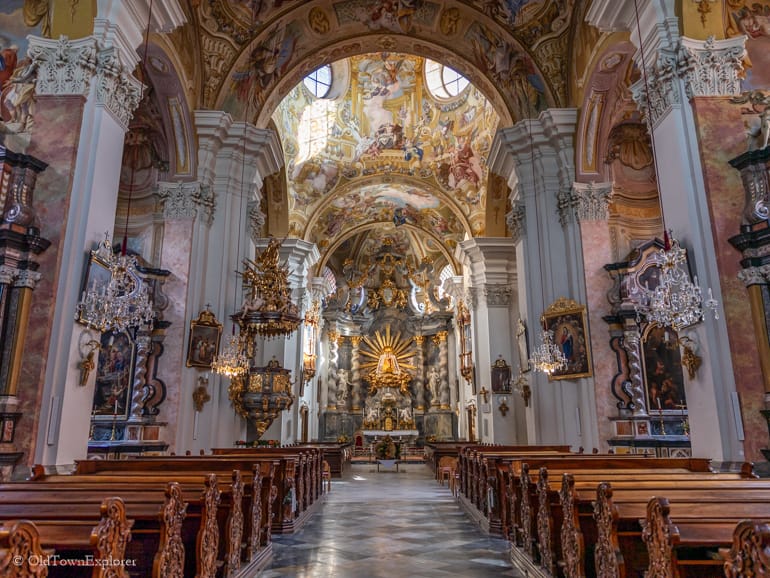
The interior pulls attention toward the high altar and Marian shrine. Stand near the back of the nave first so you can see how the altar, ceiling decoration, pulpit, side altars, and light all point forward.
Move closer after that first view. The high altar is the main interior focus and gives the church its strongest devotional center.
Marian Statue
The miraculous statue of the Mother of God is the central devotional object inside the basilica. It gives Mariatrost its pilgrimage identity and explains why the church is more than a scenic Baroque landmark.
Look at how the altar frames the statue. The surrounding architecture is designed to lead the eye toward this point.
Frescoes
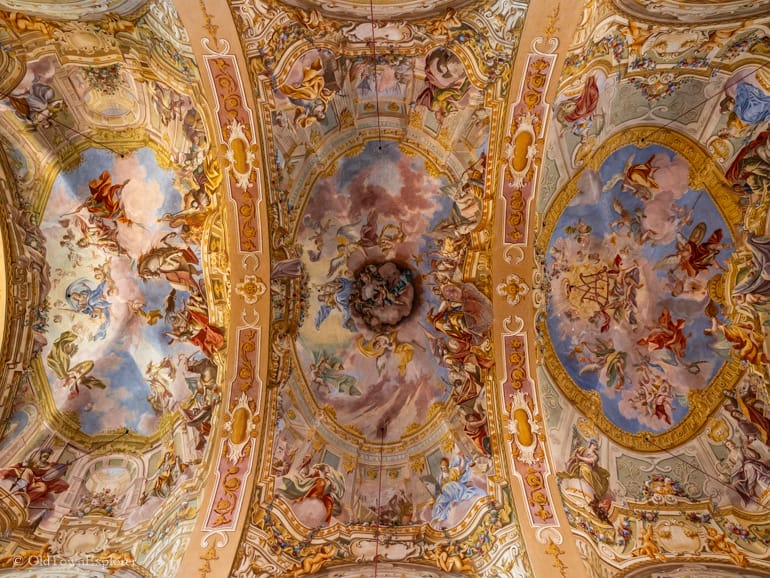
The frescoes add color, movement, and religious storytelling above the nave. Look up slowly, because much of the Baroque effect sits on the ceiling and upper walls rather than at floor level.
The frescoes make the interior feel larger and more theatrical than the church’s compact visit length might suggest.
Pulpit
The pulpit adds sculptural detail along the side of the nave. It projects into the interior and rewards a closer look after you have taken in the altar.
Notice the canopy, gilded decoration, and the way the pulpit breaks up the long view toward the altar.
Side Altars and Paulus Chapel
The side altars and Paulus Chapel create quieter spaces away from the main altar. They help the basilica feel like an active devotional church rather than a single-room sightseeing stop.
Move slowly through these areas and keep the visit quiet, especially if people are praying or services are taking place.
Lourdes Grotto
The Lourdes Grotto is a quieter Marian prayer space connected with the basilica’s pilgrimage role. It works well as a final stop after the more dramatic staircase, façade, nave, altar, and frescoes.
End here if you want a calmer moment before heading back down the hill or returning to central Graz.
How to Visit Mariatrost Basilica
A Mariatrost visit is simple compared with a large museum or palace. The main planning choices are how to approach the hill, whether to go inside, and whether to time the visit around worship, quiet interior time, or views.
Tickets and Entry
Mariatrost Basilica has free admission. Check the parish information before going if your visit depends on a specific opening window, service time, or event.
Exterior Viewing
The exterior is worthwhile even if you do not spend long inside. The staircase, hilltop square, towers, façade, and views give the basilica much of its attraction value.
Interior Visit
The interior is the reason to allow more than a quick photo stop. The high altar, statue, frescoes, pulpit, side altars, chapel, and devotional spaces explain why Mariatrost is a pilgrimage church rather than only a hilltop landmark.
Visit Length
Plan about 45–90 minutes for a normal visit, depending on how you arrive, whether you climb the steps, and how much time you spend inside. Add more time if you want a slow approach, quiet prayer, photography from outside, or a longer walk in Mariatrost.
Respectful Church Visit
Mariatrost is an active religious site. Keep voices low inside, avoid interrupting services or prayer, and treat chapels, altars, and candle areas as devotional spaces rather than museum displays.
How to Get to Mariatrost Basilica
Mariatrost Basilica sits northeast of central Graz, so most visitors should treat it as a short trip from the old center rather than part of the main Hauptplatz and Schlossberg walking loop. Public transport is the simplest option for most travelers.
By Public Transport
The Mariatrost parish arrival page explains public-transport access toward Mariatrost and the final approach from the Mariatrost stop by the Angelus Staircase or Kirchbergstraße. Check current Graz Linien and Verbund Linie routing before going, because tram works and replacement buses can change the final leg.
On Foot from the Stop
From the Mariatrost public-transport stop, the classic approach is the Angelus Staircase. Kirchbergstraße gives a road approach, but the hill still matters, so choose the route that fits your knees, shoes, weather, and energy.
By Taxi or Rideshare
A taxi or rideshare is useful if the stairs or hill are a problem, if you are visiting in bad weather, or if you want to combine Mariatrost with other outer Graz sights. Ask for Mariatrost Basilica or Kirchplatz in Mariatrost.
By Car
The parish arrival page gives Kirchplatz 8, 8044 Graz as the address for car access and notes limited parking near the basilica. Driving can work if you are already outside the center, but for most city stays public transport is easier.
By Bike
The parish describes cycling routes at the foot of the basilica and the hill approach as steep. A bike can work for confident riders, but the final climb is not the easiest casual-city ride.
Tips for Visiting Mariatrost Basilica
Mariatrost Basilica is easy to add to a Graz trip, but a little planning helps. The hill, stairs, worship setting, and distance from the old center affect the visit more than tickets or complicated entry rules.
Decide Whether to Climb the Angelus Staircase
The 216 steps are part of the experience, not just a shortcut. Climb them if you want the pilgrimage-style approach; skip them if stairs, heat, rain, or mobility make the hill less appealing.
Check Service Times Before Going Inside
The basilica is an active church. If you want quiet interior time, check parish information before planning around a service, concert, or special religious event.
Do Not Rush the Interior
The high altar, miraculous statue, frescoes, pulpit, and side spaces need a few minutes of slow looking. A rushed visit can make Mariatrost feel like only a view stop, which misses the main Baroque interior.
Wear Shoes for Steps and Slopes
The approach can involve stairs, slope, and outdoor surfaces. Comfortable shoes matter more here than they do for a flat old-center church visit.
Go in Clear Weather for the Full Hilltop Effect
Clear weather makes the exterior, towers, stairs, and hilltop setting easier to enjoy. Rainy weather can still work for the interior, but the climb and views become less rewarding.
Pair It With Graz Architecture
Mariatrost fits well after you have seen the old-center churches and palaces. Use Graz Architecture to compare it with Graz Cathedral, the Mausoleum, Herz Jesu Kirche, Schlossberg, Eggenberg Palace, and the modern Mur-side buildings.
Keep the Visit Quiet
Even when there is no service, Mariatrost is a devotional place. Move slowly, avoid loud conversation, and keep photography respectful around altars, chapels, prayer areas, and candles.
Allow Extra Time for the Return
The return is easy, but it still depends on the final hill descent and public transport. Check the next connection before you leave the basilica area if you are fitting Mariatrost between timed museum visits or dinner plans.
Where to Stay When Visiting Mariatrost Basilica
Most travelers should stay in Graz and visit Mariatrost Basilica as a short trip from the city rather than sleeping near the basilica itself. A central base keeps Hauptplatz, Schlossberg, Graz Cathedral, restaurants, museums, and tram connections close together, while Mariatrost remains easy to add when the weather and timing work.
Stay near the historic center if this is your first time in Graz. Hauptplatz, Herrengasse, Schlossbergplatz, Lend, and the Mur side work well for architecture walks, evening meals, and easy access to public transport. Staying near Mariatrost can be quiet, but it makes less sense unless you specifically want a residential edge-of-city base.
Hotels and Apartments in Graz
Use the interactive map below to compare hotels and apartments in Graz.
FAQs About Mariatrost Basilica
These answers focus on the main visit decisions: whether Mariatrost is worth the trip from central Graz, how to approach the hill, what to see inside, and how much time to allow.
Is Mariatrost Basilica worth visiting?
Yes, Mariatrost Basilica is worth visiting if you like Baroque church architecture, pilgrimage sites, hilltop views, and quieter Graz stops outside the historic center. It is especially useful when you want to compare Graz’s old-center churches with a major outer-district pilgrimage church.
How long should I spend at Mariatrost Basilica?
Allow about 45–90 minutes for most visits. That gives you time for the climb or arrival, exterior views, the nave, high altar, frescoes, pulpit, side spaces, and a few quiet minutes before heading back.
Do you need tickets for Mariatrost Basilica?
Admission to Mariatrost Basilica is free. Check the parish or tourism information before going if your visit depends on a specific opening time, service schedule, or event.
Can you see Mariatrost Basilica from outside?
Yes, the exterior is a major part of the visit. The twin towers, Baroque façade, hilltop square, Angelus Staircase, and views make the basilica worthwhile even before you go inside.
Is the interior worth seeing?
Yes, the interior is worth seeing because it contains the high altar, miraculous statue, frescoes, pulpit, side altars, chapel spaces, and the Baroque religious setting that gives the basilica its main identity.
How many steps lead to Mariatrost Basilica?
The Angelus Staircase has 216 steps. The climb is part of the pilgrimage approach, but you can also use the road approach or a taxi if the stairs are not practical.
How do you get to Mariatrost Basilica from central Graz?
Use public transport toward Mariatrost, then walk up by the Angelus Staircase or Kirchbergstraße. Check current Graz Linien or Verbund Linie routing before going because tram works and replacement buses can affect the final stretch.
What architecture style is Mariatrost Basilica?
Mariatrost Basilica is a Baroque pilgrimage church. Look for the twin towers, curved façade, dramatic altar focus, frescoes, pulpit sculpture, and the way the hilltop approach turns arrival into part of the architecture.
Who built Mariatrost Basilica?
Johann Georg Stengg is connected with the basilica’s construction, and Andreas Stengg is also associated with the design history. Use the Stengg attribution carefully rather than treating every detail as certain.
Can you combine Mariatrost Basilica with other Graz sights?
Yes, but it sits outside the tight old-center walking loop. It pairs best with a wider Graz architecture day that includes the old-center churches, Schlossberg, Eggenberg Palace, Herz Jesu Kirche, or other tram-accessible sights.
Mariatrost Basilica works best when you treat the approach, church, and interior as one visit. Our visit during a month in Graz made the main decision clear: choose the Angelus Staircase if the climb is comfortable, then give the façade, high altar, frescoes, pulpit, and quieter devotional spaces enough time.
For the broader city plan, start with Graz. For the old-center churches, palaces, courtyards, Schlossberg, and modern Mur-side buildings, use Graz Architecture. For meals before or after the trip to Mariatrost, continue with Graz Food.
