
Discover Murano: History, Architecture & Must-See Attractions
Murano, Italy, sits northeast of Venice in the Venetian Lagoon. Its glassmaking heritage makes it a useful day trip from Venice, with a glass museum and live demonstrations alongside churches, palaces, and canal walks.
The main sights stretch from the southern arrival area around Colonna through the Rio dei Vetrai to the museum and Basilica dei Santi Maria e Donato. Brick church walls, Gothic palace windows, and former industrial buildings give the walk several distinct stops beyond the shopfronts.
We visited Murano from Venice. For a first visit, allow a half day for the central walk and one substantial indoor stop; spend longer if you want both the museum and a glassmaking demonstration.
This post contains affiliate links that may earn us a small commission at no additional cost to you.
Murano at a Glance
Murano suits travelers who want to combine glassmaking with a walk through a lagoon settlement. The central sights fit into a half-day visit, although museum time, demonstrations, and boat connections can easily extend the outing.
Key day-trip points:
- Best for: Glass history, church mosaics, canal-facing palaces, and short walks between indoor visits.
- Base city: Venice, with public boat connections to several Murano stops.
- Main sights: Museo del Vetro, Basilica dei Santi Maria e Donato, San Pietro Martire, and Palazzo Da Mula.
- Walking difficulty: Mostly level canal fronts interrupted by stepped bridges; the full walk is not continuously step-free.
- Time needed: Allow roughly three to four hours on Murano for the central route and one major indoor visit, plus travel from Venice.
- Arrival choice: Colonna works for a south-to-north walk; Museo places you closer to the museum and basilica.
If you have only two hours on the island, start near Museo and prioritize the basilica and museum area instead of trying to include a demonstration at the southern end.
History of Murano
Murano's churches, palaces, and factory spaces reflect overlapping religious and industrial uses. Several buildings changed purpose while the canals continued to connect the settlement.
Medieval Churches and the San Donato Area
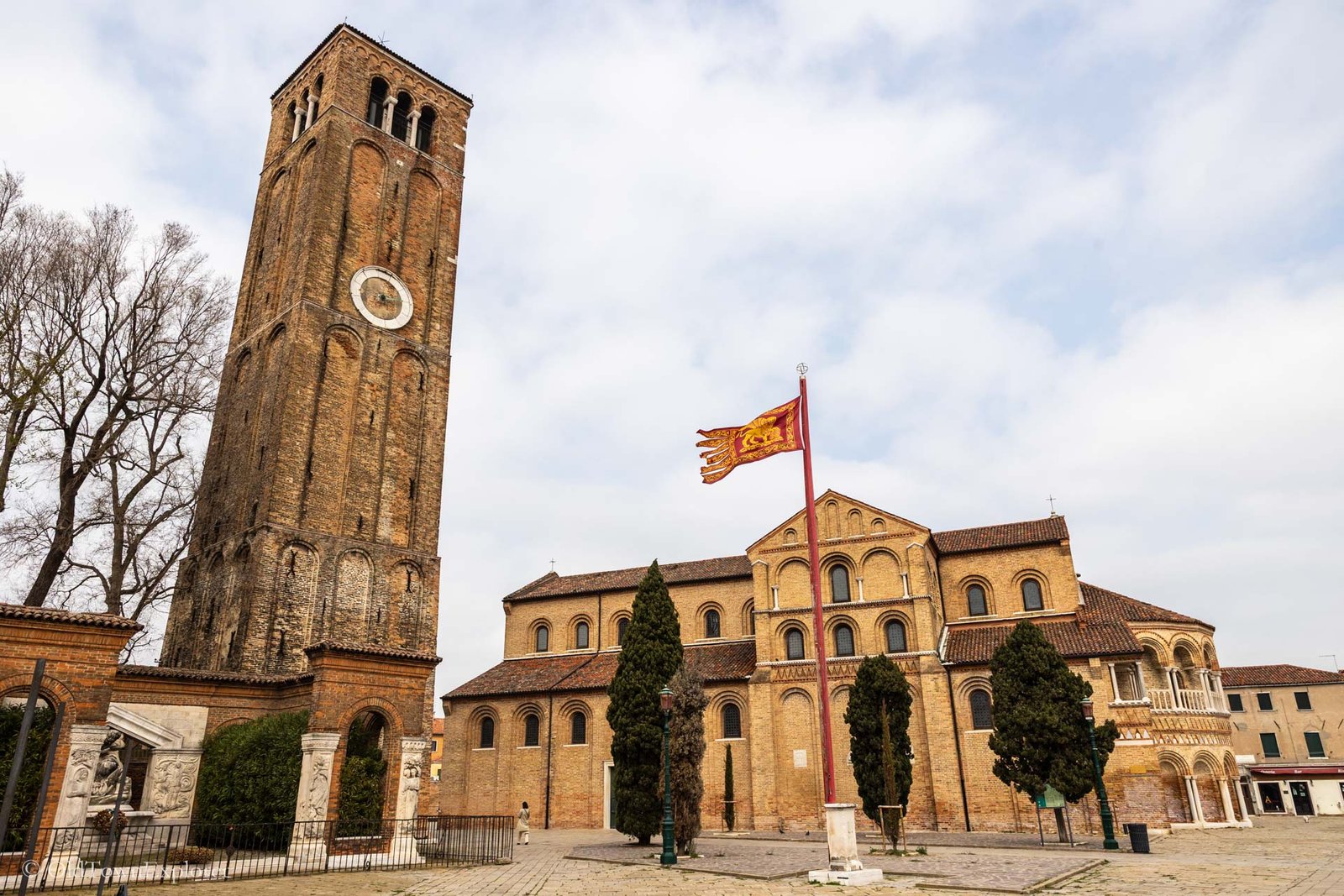
The present Basilica dei Santi Maria e Donato took shape through a twelfth-century rebuilding. Its mosaic pavement dates to around 1140, making this part of Murano an important stop for medieval art as well as architecture. The church and its separate bell tower still give Campo San Donato a different character from the commercial canal fronts farther south.
The Glassmaking Move of 1291
In 1291, Venice ordered glass furnaces to move to Murano to reduce the danger of fire in the city. Glass production became central to the island's economy and remains a reason to visit its workshops today. Pairing a demonstration with the museum helps connect a working furnace to the objects produced across different periods.
Renaissance Rebuilding at San Pietro Martire
San Pietro Martire was founded in 1348 with a Dominican convent. A fire destroyed the church in 1474, and the rebuilding completed in 1511 produced the church seen today. Its broad brick exterior and Renaissance paintings provide a useful comparison with the medieval mosaics at San Donato.
Palaces, Suppression, and Industrial Reuse
Palazzo Giustinian was remodeled in the seventeenth century as a residence for the bishops of Torcello. In the nineteenth century, religious suppression brought other changes: Santa Chiara's convent closed in 1810, and its former church became a glass factory after its sale in 1826. The surviving church volume at Santa Chiara shows how glass production occupied buildings originally made for worship.
The Museum, Civic Tower, and Bead Factories
The Museo del Vetro opened in 1861 in Palazzo Giustinian, giving Murano a place to collect and study its glassmaking history. The civic clock tower followed in 1890, with its clock installed in 1891. In 1898, bead producers joined forces as the Società Veneziana Conterie in the complex between the palace and San Donato; part of that industrial space now forms an extension of the museum.
Architecture of Murano
Murano combines church architecture, canal-facing houses, and buildings adapted for glass production. For the wider context of these periods, explore Italy Architecture.
Canals and Fondamente
A fondamenta is a walkway along a canal. On Murano, these paths provide long views of building fronts and lead between bridges, boat stops, and church squares. Follow the Rio dei Vetrai and then the wider Canal Grande to see how the scale of the waterway changes the street views.
Brick Walls and Stone Details
Exposed brick is particularly noticeable at San Pietro Martire and San Donato. Lighter stone around openings and architectural details breaks up the red-brown surfaces. Compare these church exteriors with the pale lighthouse at Faro, where the material creates a different skyline marker.
Romanesque Forms and Byzantine Mosaics
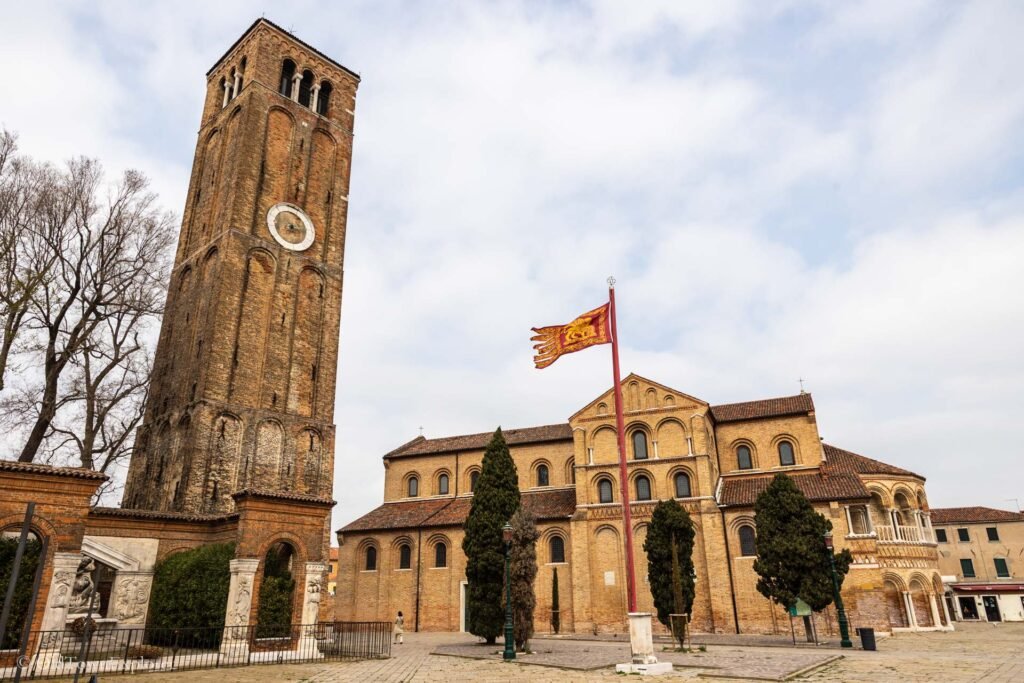
San Donato brings together rounded arches, an articulated apse, and mosaic decoration. The apse is the curved end of the church behind the altar; walk around the building before going inside. Its floor mosaics and gold-ground image of the Virgin add another layer to the exterior's brick-and-stone structure.
Venetian Gothic Palace Windows
Palazzo Da Mula offers a concentrated example of Venetian Gothic architecture along the canal. Look for pointed window arches and the grouped openings across its principal elevation. The canal-facing view helps you compare the palace's formal facade with adjoining buildings.
Renaissance Church Interiors
San Pietro Martire adds a later church interior to the visit, with paintings by major Venetian artists. The contrast with San Donato is especially useful: one stop emphasizes painted altarpieces, while the other emphasizes medieval mosaic surfaces. Check visiting arrangements before planning to enter San Pietro Martire.
Metal Bridges Across the Main Canal
Ponte Longo uses a single metal span to connect the two sides of Murano's main canal. Its structure differs from the smaller masonry bridges along the walking route. The crossing also provides a place to look along the waterway, although pedestrians still need room to pass.
Factories Adapted for Cultural Visits
The Conterie museum spaces and former Santa Chiara church show two different forms of reuse. At Conterie, a high industrial hall became exhibition space; at Santa Chiara, a former religious building now accommodates glass demonstrations and events. Include one of these interiors if you want to see how Murano's architecture extends beyond churches and palaces.
Architectural Attractions in Murano
The main sights fall into three connected areas: the southern approach along the Rio dei Vetrai, the central canal crossing, and the museum and San Donato area. Faro adds an eastern waterfront stop at the end of the walk.
Colonna and Rio dei Vetrai: Church Buildings and Canal Fronts
Ex Chiesa di Santa Chiara — The Glass Cathedral
- Architect: Unknown
- Style: Medieval religious building with later industrial alterations and modern restoration
- Built: Monastery documented in 1225; church reconsecrated in 1519; later alterations
- Address: Fondamenta Daniele Manin 1, Murano
The former Santa Chiara church stands near the southern arrival area and now operates as The Glass Cathedral. Its tall former sanctuary links Murano's religious past with subsequent factory use. A glassmaking demonstration provides a reason to enter the restored building. Check the session and ticket details before fitting it into your walk.
Fondamenta dei Vetrai and Rio dei Vetrai
- Architect: Unknown; developed through multiple building phases
- Style: Historic lagoon waterfront with residential and commercial facades
- Built: Developed over centuries; no single construction date
- Address: Canal corridor north of Murano Colonna, beside the Rio dei Vetrai
The Rio dei Vetrai forms the principal canal corridor between the southern arrival area and the central crossing. Its adjoining fondamente bring shopfronts, church buildings, and smaller bridges into the same walk. Look across the water for a fuller view of facades than the narrow pavement immediately beneath them allows. San Pietro Martire and Campo Santo Stefano provide stopping points along this approach.
Chiesa di San Pietro Martire
- Architect: Unknown
- Style: Renaissance church
- Built: Founded in 1348; rebuilt after the 1474 fire and completed in 1511
- Address: Campiello Marco Michieli 5, Murano
San Pietro Martire is one of Murano's two parish churches and stands beside the central visitor corridor. Its brick facade offers a substantial architectural stop between glass shops and the main canal. Inside, paintings include works by Giovanni Bellini and Paolo Veronese. Arrange your visit through the parish's visitor information, which includes reservation requirements.
Torre dell'Orologio
- Architect: Unknown
- Style: Medieval revival civic tower
- Built: Completed in 1890; clock installed in 1891
- Address: Campo Santo Stefano, Murano
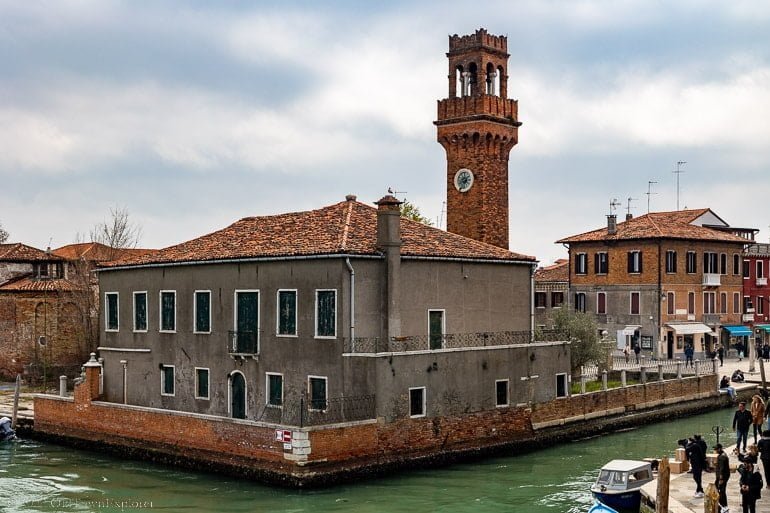
Murano's clock tower rises above Campo Santo Stefano along the Rio dei Vetrai corridor. Although its battlements suggest a medieval structure, the present civic tower dates to the late nineteenth century. It was built on the foundations of the former Santo Stefano church tower. View it from the campo as an exterior landmark before continuing toward the main canal.
The Main Canal: Palace Facades and the Central Crossing
Palazzo Da Mula
- Architect: Unknown
- Style: Venetian Gothic with later alterations
- Built: Medieval origins; subsequent alterations
- Address: Fondamenta Da Mula, beside the southern end of Ponte Longo
Palazzo Da Mula is a canal-facing palace close to Murano's central bridge. Its pointed arches and grouped windows make the facade a useful stop for comparing Gothic residential architecture with the island's churches. The building houses the Centro della Civiltà Lagunare, with displays concerning lagoon life. Check access arrangements if you want to add an interior visit; the facade can be included in the canal walk.
Ponte Longo “Lino Toffolo”
- Architect: Unknown for the original bridge
- Style: Nineteenth-century metal bridge with a single span
- Built: Nineteenth century; restored and reopened in August 2026
- Address: Canal Grande di Murano, between Fondamenta Da Mula and the Venier–Cavour side
Ponte Longo is a principal pedestrian connection between Murano's two larger island groups. Its low metal arch crosses the broad canal, giving views in both directions along the water. The restored bridge reopened in August 2026. Use the crossing to continue from Palazzo Da Mula toward the museum and San Donato.
San Donato and Faro: Museum Buildings, Mosaics, and the Lagoon Edge
Palazzo Giustinian — Museo del Vetro
- Architect: Antonio Gaspari for the seventeenth-century remodeling; original architect unknown
- Style: Palace of Gothic origin with seventeenth-century remodeling
- Built: Medieval palace; remodeled in the seventeenth century; museum established in 1861
- Address: Fondamenta Marco Giustinian 8, Murano
The Museo del Vetro occupies Palazzo Giustinian near Campo San Donato. The palace served as a residence for the bishops of Torcello before becoming Murano's town hall and then its glass museum. Look beyond the display cases to the decorated central hall and its chandeliers. The museum collections trace glassmaking through objects from different periods, making this a longer indoor stop rather than a quick shop visit.
Former Conterie Factory — Museum Exhibition Spaces
- Architect: Unknown
- Style: Industrial architecture adapted for exhibitions
- Built: Industrial complex in use by the bead company formed in 1898; museum extension opened in 2015
- Address: Museo del Vetro complex, between Palazzo Giustinian and San Donato
The former Conterie complex records Murano's large-scale bead production alongside its decorative glassmaking. Its museum exhibition space occupies a restored industrial hall with a high ceiling and surviving structural arches. This gives the museum a different type of interior from the rooms of Palazzo Giustinian. Explore the Conterie spaces as part of your museum visit, subject to the exhibition areas open that day.
Basilica dei Santi Maria e Donato
- Architect: Unknown
- Style: Lagoon Romanesque with Veneto-Byzantine decoration
- Built: Present church rebuilt in the twelfth century; mosaic floor around 1140
- Address: Campo San Donato 11, Murano
The Basilica dei Santi Maria e Donato anchors the church square beside the museum area. Rounded arches and layered arcades distinguish its canal-facing apse. Inside, the mosaic floor combines geometric designs with animal imagery, while the apse mosaic depicts the Virgin against gold. Consult the basilica's visitor information for admission and visiting times around worship.
Faro di Murano
- Architect: Mario Moro, engineer
- Style: Twentieth-century lighthouse in Istrian stone
- Built: Present stone structure from the 1930s
- Address: Fondamenta Francesco Maria Piave, beside Murano Faro boat stops
Murano's lighthouse stands at the southeastern lagoon edge near the Faro landing stages. Its pale stone tower provides a clear contrast with the brick church towers farther inland. The present structure replaced earlier wooden and metal versions. Treat it as an exterior waterfront stop and check your departure pontoon before joining a boat queue.
Walking Tour in Murano
Begin at Murano Colonna and finish at Murano Faro, linking the southern canal corridor with the museum and San Donato area. This is a suggested sightseeing route; plan around the boat stops and interior visits that suit your day.
Suggested Walking Route:
- Colonna and Santa Chiara: Start near the southern landing stages. Visit the former church if you have booked a demonstration, or continue to the canal walk.
- Rio dei Vetrai and San Pietro Martire: Walk north along the canal corridor, stopping at the church if your visiting arrangements allow entry.
- Campo Santo Stefano: Pause at the civic clock tower and compare its revival design with the older church buildings.
- Palazzo Da Mula: Continue toward the main canal to examine the palace facade; add the lagoon culture displays if open and time permits.
- Ponte Longo: Cross to the northern side of the main canal, then continue toward Fondamenta Giustinian.
- Museo del Vetro: Visit Palazzo Giustinian and the available Conterie exhibition spaces, or view the palace exterior for a shorter outing.
- Basilica dei Santi Maria e Donato: Walk around the apse before entering. Cross to the Navagero side for another view across the canal.
- Murano Faro: Follow the eastern side south toward the lighthouse and boat stops, ending with a lagoon view.
The museum and basilica are close together, so give this part of the walk the largest share of your visiting time. Faro works as an endpoint only if a suitable boat serves your intended destination.
How Much Time to Allow
Set aside about 60–90 minutes for the outdoor route at a sightseeing pace, with additional time for every interior, meal, or shop stop. Three to four hours on Murano gives more room for the route and one substantial indoor visit; a demonstration, museum, both churches, and lunch can fill most of a day.
A Shorter Visit from Museo
If architecture and the glass collection are your priorities, arrive near Museo and concentrate on Palazzo Giustinian and San Donato. Add Ponte Longo and Palazzo Da Mula if time remains. This reduces the distance compared with walking from Colonna and returning through Faro.
Bridges and Step-Free Planning
The canal paths are largely level, but bridge steps interrupt the route. For a visit with limited mobility, choose boat stops close to your main attractions and check the municipal accessible itinerary. The glass museum has a lift, but that does not make the full outdoor walk step-free.
How to Get to Murano from Venice
Travel from Venice to Murano by boat. Choose your departure point in Venice and your first attraction on Murano before selecting a service.
By Public Vaporetto
A vaporetto is a public waterbus. Line 3 connects Piazzale Roma and Ferrovia with Murano, while lines 4.1 and 4.2 run circular services linking Murano with Venice, including Fondamente Nove. From the northern side of Venice, line 12 also connects Fondamente Nove with Murano Faro.
Colonna is useful for the southern approach and a walk along the Rio dei Vetrai. Museo is more convenient for Palazzo Giustinian and San Donato, while Faro suits an eastern arrival or departure. Not every service calls at every Murano stop.
Use the current ACTV timetable and stop map for the date, direction, and landing stage you need. From San Marco/San Zaccaria, check whether line 7 operates at a suitable time. Buy the appropriate ticket or pass, validate it as instructed, and confirm the destination before boarding.
By Water Taxi
A private water taxi can reduce the need to walk to a public departure stop, particularly for a group or a visit arranged around a specific venue. Agree on the pickup, Murano landing point, total fare, and return arrangements before booking. For a straightforward visit centered on public boat stops, a vaporetto usually requires less planning.
With an Organized Boat Excursion
An organized lagoon excursion can combine transport with a demonstration or visits to other islands. Check the actual time allowed on Murano and whether the museum or churches fit into it. A short factory stop is suitable for seeing glass worked, but leaves less time for the full architectural walk.
Making the Most of Your Day Trip to Murano
For a full Murano day, combine one demonstration with the museum and church area, leaving space for lunch and the return boat. With a half day, choose the museum or demonstration first and fit the outdoor sights around it.
Morning: Colonna, Santa Chiara, and the Rio dei Vetrai
Arrive at Colonna if the southern route suits your transport. Attend a prearranged demonstration at Santa Chiara, then continue along the Rio dei Vetrai to San Pietro Martire and Campo Santo Stefano. If you choose the museum as your main indoor visit, skip the demonstration and spend more time on the church and canal fronts.
Midday: Palazzo Da Mula and the Main Canal
Continue to Palazzo Da Mula and cross Ponte Longo toward the museum side. Take a lunch break before the longer indoor visit, choosing somewhere convenient to the next stop. Check the menu and meal service times before sitting down so lunch does not consume your remaining museum time.
Afternoon: Glass Collections and San Donato
Visit the Museo del Vetro, allowing time to compare the historic palace rooms with the former Conterie spaces. Continue to San Donato for its apse and mosaics when tourist access is available. If church visiting hours are more restrictive than museum hours that day, reverse these two stops.
Late Afternoon: Navagero, Faro, and the Return to Venice
Walk to the Navagero side for a view of the basilica across the canal, then continue toward Faro if it suits your return service. Leave enough time to locate the correct landing stage and board without rushing. If your boat leaves from Museo or Colonna, shorten the waterfront walk and return to that stop instead.
Combining Murano with Burano
Combine the islands only if you are comfortable reducing the Murano itinerary. Keep one indoor visit and the central canal walk, then use the line 12 timetable to plan onward travel from Faro. The extra boat journey and waiting time leave less room for Murano's museum, churches, and lunch.
Tips for Visiting Murano
A few decisions made before leaving Venice will help you spend more of the day at the sights and less of it adjusting boat connections.
Choose Your First Indoor Visit
Decide whether the glass museum or a live demonstration matters more to you. Put that visit into the plan first, then add churches and canal stops around it.
Match the Arrival Stop to the Walk
Arrive at Colonna for Santa Chiara and the southern canal corridor. Choose Museo for a shorter walk to the museum and San Donato, or Faro if its boat connection suits your departure point.
Check Church Access Before Leaving Venice
San Pietro Martire's tourist visit arrangements include a reservation requirement. San Donato's tourist access also differs from worship times, so check both churches if their interiors are priorities.
Book a Specific Demonstration
Choose a named venue and session if watching glass worked is essential to your day. At Santa Chiara, check what the ticket includes and how long the demonstration lasts before adding other timed visits.
Wear Shoes for Bridge Steps
Allow for repeated bridge crossings and canal-side paving, including slippery surfaces in wet weather. Comfortable shoes are useful even though Murano has little sustained climbing.
Keep Large Luggage in Venice
The Museo del Vetro's luggage rules prohibit suitcases and other oversized bags in the museum areas. Travel with a small day bag so luggage does not prevent your museum visit.
Choose the Season for Your Priorities
Spring and autumn are useful choices for a day with substantial walking, while summer calls for breaks from exposed canal fronts. In winter, check your intended venues and boat services before setting out and leave daylight for the outdoor route.
Ask Where Glass Was Made
Ask the seller who made a piece and whether it was produced on Murano. If local production matters to your purchase, look into the Vetro Artistico Murano mark and ask about the maker, packaging, and shipping terms before paying.
Plan Lunch Near the Next Stop
For a longer visit, eat before the museum and basilica portion of the day or after completing it. Check meal service times and avoid a long detour if you have a booked visit or onward boat.
Leave a Buffer for the Return Boat
Confirm the departure stop and direction while you still have time to walk there. Check service notices in fog or high water, and leave a wider margin if you must catch a train or attend a timed activity back in Venice.
FAQs About Murano
Is Murano Worth Visiting from Venice?
Yes, Murano is worth visiting if glassmaking, medieval mosaics, or canal-facing architecture interest you. A visit works best when it includes the museum, a church interior, or a booked demonstration alongside the canal walk.
Where Is Murano, Italy?
Murano is in the Venetian Lagoon northeast of Venice, in Italy's Veneto region. It forms part of the municipality of Venice and consists of small islands connected by bridges.
How Long Should You Spend in Murano?
Allow roughly three to four hours on Murano for the central walk and one major indoor visit, plus the journey from Venice. Spend longer for both the glass museum and a demonstration, church interiors, and a sit-down lunch.
Can You Walk Around Murano?
Yes, the central sights are connected by canal paths and bridges. The suggested walk includes stepped crossings, so travelers who need step-free access should choose boat stops close to their main attractions and check individual entrances.
Should You Choose Murano, Burano, or Torcello?
Choose Murano for glassmaking and a combination of churches, palace architecture, and industrial heritage. Burano suits a visit centered on colored house fronts and lace, while Torcello suits travelers prioritizing early religious monuments. With limited time, select the island whose main sights interest you most.
Can You Visit Murano and Burano in One Day?
Yes, but shorten the Murano plan to leave time for boats and Burano. Choose one main indoor stop on Murano, then check the onward service from Faro and the return connection to Venice.
Do You Need to Book a Glassmaking Demonstration?
Book a specific session if a demonstration is essential to your visit. Venue arrangements differ, and arriving at a shop does not guarantee a demonstration at the time you need.
Is the Glass Museum the Same as a Glassmaking Demonstration?
No, the Museo del Vetro is a collection-based museum in Palazzo Giustinian. A demonstration is a separate visit to watch glass being worked, so allow additional time and check the chosen venue's ticket arrangements.
Can You Do Wine Tasting Without a Car?
Yes, you can plan wine tasting in Venice without a car, but Murano is primarily a glassmaking and architecture day trip. For a wine-focused stop before or after the island visit, explore Venice Wine and arrange the tasting around your boat journey.
When Is the Best Time to Visit Murano?
Spring or autumn is a practical choice for combining indoor visits with a longer outdoor walk. Whatever the season, choose a day when your priority venues are open and boat connections leave enough time for the visit.
Continue planning with Venice Architecture to compare Murano's churches and canal-facing palaces with buildings in the city. For the wider trip, explore our Italy destinations.
