

Discover the Best Things to See in Rovinj: Architectural Attractions, Walking Tours & Travel Tips
The best things to see in Rovinj form a compact route around its former island Old Town and the waterfront immediately beyond it. The Church of St. Euphemia and its bell tower define the skyline, while Grisia Street, the harbor, and the lower center show how the historic settlement connects with the mainland.
We spent a full month exploring Rovinj and repeatedly returned to these seven places during walks through the center. The selection combines the city’s main church, viewpoint, historic streets, harbor, former canal crossing, and central market without padding the list with weaker stops.
All seven sights fit one self-guided walk. The original route begins at the Green Market, climbs to St. Euphemia, descends through Grisia, and finishes across the lower center, although you can reverse it when arriving from the bus station or the southern side of town.
This website contains affiliate links that may earn us a small commission at no additional cost to you.
Best Things to See in Rovinj at a Glance
Rovinj’s main sights cluster around the hilltop Old Town, harbor, and former connection between the island settlement and mainland.
Key sightseeing points:
- See first: Prioritize the Church of St. Euphemia, its bell tower, Grisia Street, and the harbor when time is limited.
- Best starting area: Begin at the Green Market when approaching from Valdibora or the northern parking areas. Reverse the route from Carera Street when arriving from the bus station or southern center.
- Main sight pattern: The route moves from the later mainland center into the steep former island settlement and back to the waterfront.
- Quick exterior stops: The Port of Rovinj, Carera Street, Square on the Bridge, and Green Market need less time than the church and bell tower.
- Sights needing more time: Allow extra time for the Church of St. Euphemia, the church plateau, and the bell tower when you plan to enter or climb.
- Walking trade-off: Distances are short, but polished limestone, steps, steep lanes, photographs, and interior visits can make the route longer than it appears on the map.
One day is enough for all seven sights at an unhurried pace. A short visit should concentrate on the church, bell tower, Grisia Street, and harbor before adding the lower-center stops.
Best Things to See in Rovinj
These seven sights explain Rovinj through its skyline, street pattern, port, commercial center, and transition from a fortified island settlement to a town extending across the mainland.

Church of St. Euphemia
The Church of St. Euphemia stands on the highest plateau of Rovinj’s Old Town. The present Baroque church was built during the 18th century, while its stone façade was completed during the 1860s.
The church belongs first on the list because it anchors both the skyline and the historic settlement below it. Walk around the plateau to compare the broad church exterior with the dense roofs, narrow lanes, sea, harbor, and islands. When the interior is accessible, the sarcophagus associated with St. Euphemia adds the main reason to go inside.

Bell Tower of St. Euphemia
The bell tower rises beside the church but deserves separate consideration because it defines Rovinj’s silhouette and may require its own climb. Built during the 17th century, it follows the form of Venetian campaniles, particularly the bell tower of St. Mark’s in Venice.
Look for the copper figure of St. Euphemia at the top, installed in 1758 and designed to turn with the wind. The tower is the strongest elevated viewpoint among the seven sights, but the church plateau and harbor still provide worthwhile views when tower access does not fit your visit.

Grisia Street
Grisia Street connects the lower Old Town with the plateau in front of St. Euphemia. Its polished limestone, winding steps, changing widths, galleries, carved lintels, and tightly packed façades make the climb itself one of Rovinj’s principal sights.
Balbi’s Arch stands at the lower entrance and remains part of this stop rather than a separate eighth attraction. Pause beneath the arch for its Venetian lion and carved heads, then look beyond the shops as you climb for paving patterns, doorways, side passages, balconies, and changing views of the bell tower.
Port of Rovinj
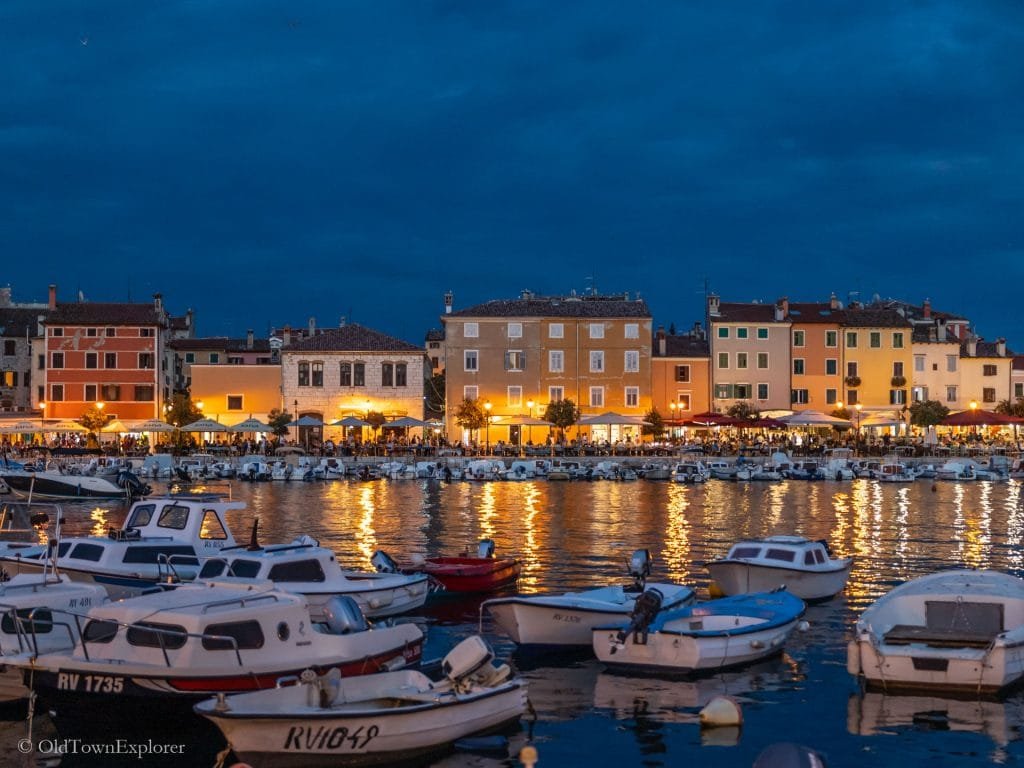
The Port of Rovinj gives one of the clearest complete views of the former island settlement. From the quays, the waterfront houses rise around the peninsula with St. Euphemia and its bell tower above them.
Walk more than one side of the harbor rather than stopping at the first viewpoint. The changing angle reveals fishing and passenger boats, stone quays, civic squares, café terraces, sea-facing façades, and the Old Town as a single hill-shaped group of buildings.

Carera Street
Carera Street developed as Rovinj expanded onto the mainland. Its flatter stone-paved route, continuous shopfronts, cafés, and galleries contrast with the steep steps and narrow passages of the Old Town.
Carera Street developed as Rovinj expanded onto the mainland. Its level stone paving, shops, cafés, and galleries make it feel more open and commercial than the steep lanes of the Old Town.

Square on the Bridge
Square on the Bridge, or Trg na mostu, marks the former connection between Rovinj’s island settlement and the mainland. A canal divided the two sides until it was filled in 1763.
The square is more important for its location than for a single monumental building. Stand near its curved row of Baroque façades and compare the rising Old Town beyond Balbi’s Arch with the flatter streets leading into the mainland center.

Green Market
The Green Market sits near Valdibora at the northern edge of the center, close to several parking areas. Stop for fruit, vegetables, fish, olive oil, cheese, or other Istrian products before continuing uphill toward St. Euphemia.
If you're still on the fence after reading about the seven best things to see, check out "Is Rovinj Worth Visiting." We review a long list of things you should consider before reserving a room and booking your flight.
Self-Guided Walking Tour of Rovinj
The original route connects all seven attractions in the order we used for approaching the Old Town from the northern side of the center. It begins with the market, climbs to the highest point of the peninsula, and descends through the historic streets toward the harbor and mainland shopping area.
What is Rovinj famous for?
Begin at the Green Market near Valdibora. Continue uphill to the Church of St. Euphemia and its bell tower, then descend through Grisia Street. Follow the waterfront through the Port of Rovinj before crossing Square on the Bridge and finishing along Carera Street.
- Green Market
- Church of St. Euphemia
- Bell Tower of St. Euphemia
- Grisia Street
- Port of Rovinj
- Square on the Bridge
- Carera Street
The church and bell tower occupy the same plateau but remain separate sightseeing decisions because entering the church and climbing the tower require different amounts of time. The map also shows the northern approach and southern end of the route. Reverse the order when Carera Street is closer to your arrival point.
City Tours in Rovinj
Independent walking is enough to locate the seven main sights, but a guide can explain features that are easy to miss, including the former canal, vanished gates and walls, Venetian symbols, local street names, church history, and the relationship between the harbor and former island settlement.
Guided Tours
Compare guided options by route, duration, language, group size, and whether the tour concentrates on the Old Town, local history, architecture, food, or the waterfront. A general city walk adds the most value when you want historical context rather than simply help finding the sights.
One Day in Rovinj
One day is enough to see all seven attractions, provided you choose carefully how much time to spend inside the church, at the bell tower, in the market, and along the waterfront.
Morning
Begin at the Green Market before climbing toward the Church of St. Euphemia. Walk around the church plateau first, then decide whether the church interior or bell-tower climb deserves additional time.
Midday
Descend through Grisia Street, pausing at Balbi’s Arch near its lower end. Continue to the harbor and walk far enough around the waterfront to see the Old Town from more than one angle.
Afternoon
Cross Square on the Bridge and finish along Carera Street. These lower-center stops require less concentrated sightseeing time, so they fit naturally after the church, bell tower, and Old Town lanes.
Late Afternoon or Evening
Return to the harbor or the southern waterfront for a wider view of the peninsula. Alternatively, climb back toward the church plateau when changing light and rooftop views matter more than adding another attraction.
What to Skip With Limited Time
Do not rush through the church, Grisia Street, and harbor merely to spend equal time at every stop. With only a few hours, shorten the Green Market and Carera Street visits while retaining the route’s main skyline, street, and waterfront sights.
Rovinj Information and Travel Tips
The main sightseeing decisions involve where to begin, whether to enter or climb at St. Euphemia, and how to manage the Old Town’s slopes, polished stone, summer foot traffic, and changing viewpoints.
Start Near Your Arrival Point
Begin at the Green Market when approaching from Valdibora or the northern parking areas. Start on Carera Street and reverse the route when arriving from the bus station, southern waterfront, or accommodation south of the center.
Treat the Church and Tower Separately
The church exterior, church interior, surrounding plateau, and bell-tower climb are not one quick stop. Decide which parts matter before climbing the hill so the rest of the route does not become rushed.
See Grisia Before It Fills
Grisia Street is easier to appreciate when the steps and façades are not hidden by dense pedestrian traffic. An earlier visit also makes it easier to notice paving, doorways, side passages, balconies, and framed views up the hill.
Most Stops Work from Outside
Grisia Street, the port, Carera Street, Square on the Bridge, the market, the church exterior, and the bell-tower exterior can all be appreciated from public spaces. Interior access adds detail but is not necessary for understanding the main sight pattern.
Polished Stone Needs Grip
Old Town paving becomes smooth through years of use and can be slippery when wet. Shoes with reliable grip matter most on Grisia Street and the descent from the church plateau.
The Route Includes Steps and Slopes
The harbor, Carera Street, and Square on the Bridge are comparatively level. Reaching St. Euphemia requires a sustained climb, and several Old Town alternatives include steps or steep polished lanes.
Keep the Market Stop Focused
The Green Market is worth seeing for local products, the adjoining fish market, and its position at the start of the route. It does not need the same amount of sightseeing time as St. Euphemia, Grisia, or the harbor unless you intend to shop.
Compare Two Skyline Views
The church plateau looks outward across the roofs, harbor, islands, and mainland. The harbor gives the reverse view, with the houses and bell tower rising together around the former island peninsula.
Where to Stay to See the Best Things in Rovinj
The harbor, Carera Street, and lower edge of the Old Town provide the easiest sightseeing base for most first-time visitors. All seven attractions remain close, while the bus station, market, waterfront, and Old Town entrances are easier to reach than from accommodation high on the peninsula.
Staying inside the Old Town places Grisia Street and St. Euphemia immediately outside your door, but steep paving, steps, pedestrian access, and luggage handling can complicate arrival. The mainland center provides flatter access and simpler connections while remaining within walking distance of the complete route.
Hotels and Apartments in Rovinj
Compare the Old Town for historic atmosphere, the harbor and Carera Street for the simplest sightseeing base, and Valdibora for access to the Green Market and northern end of the walking route. Our Rovinj page covers broader accommodation, transport, timing, and destination planning.
Use the interactive map below to compare hotels and apartments in Rovinj.
FAQs About Best Things to See in Rovinj
These answers focus on choosing and organizing Rovinj’s seven main sights rather than broader destination, transport, dining, or accommodation planning.
What Are the Best Things to See in Rovinj?
The seven best things to see are the Church of St. Euphemia, its bell tower, Grisia Street, the Port of Rovinj, Carera Street, Square on the Bridge, and the Green Market.
What Should I See First in Rovinj?
Prioritize the Church of St. Euphemia, the bell tower, Grisia Street, and the harbor. Together they provide Rovinj’s main skyline, viewpoint, Old Town street, and waterfront experiences.
Is One Day Enough to See Rovinj?
One day is enough for all seven sights because they lie within a compact walking area. Allow more time when you want to climb the bell tower, enter the church, shop at the market, or spend a long period photographing the waterfront.
How Long Does It Take to Walk Around Rovinj?
The core route is short, but sightseeing time varies with the church, tower, market, photographs, crowds, and rest stops. Allow at least half a day for an unrushed version of the seven-sight route.
Can I See Rovinj on My Own?
Yes. The principal sights are easy to locate on foot, and the route map connects them in a practical order. Choose a guided tour when historical interpretation matters more than route-finding.
Are the Main Sights Inside the Old Town?
The Church of St. Euphemia, bell tower, and Grisia Street are inside the former island Old Town. The port sits along its edge, while Carera Street, Square on the Bridge, and the Green Market explain the connection with the mainland.
Which Rovinj Sights Need More Time?
The Church of St. Euphemia and its bell tower require the most time when you plan an interior visit or climb. Grisia Street and the harbor also reward slower walking, while the market, square, and Carera Street work as shorter stops.
Which Sights Can I See for Free from Outside?
All seven sights provide value from public streets, squares, and waterfront areas. Church-interior or bell-tower access may involve separate schedules or admission, but neither is required to complete the exterior route.
What Is the Best Viewpoint in Rovinj?
The bell tower provides the strongest elevated panorama when the climb is available. The church plateau is the better no-climb option, while the harbor gives the clearest view back toward the Old Town skyline.
What Should I Skip With Limited Time?
Shorten the Green Market and Carera Street stops before removing the church, bell tower, Grisia Street, or harbor. The latter four explain the city’s skyline, street pattern, and coastal setting most clearly.
Where Should I Stay for Rovinj Sightseeing?
Stay near the harbor, Carera Street, or the lower edge of the Old Town for the easiest access to all seven sights. Choose accommodation inside the peninsula only when historic atmosphere matters more than steps, slopes, and luggage access.
The seven best things to see in Rovinj fit naturally into one compact walk, but the Church of St. Euphemia, bell tower, Grisia Street, and harbor deserve most of your time. The market, former canal crossing, and Carera Street complete the route by showing how Rovinj expanded beyond its former island Old Town.
Continue with Rovinj Architecture for the city’s churches, streets, civic buildings, and architectural details. Use Is Rovinj Worth Visiting? to decide how long to stay and whether Rovinj fits the wider trip.
