
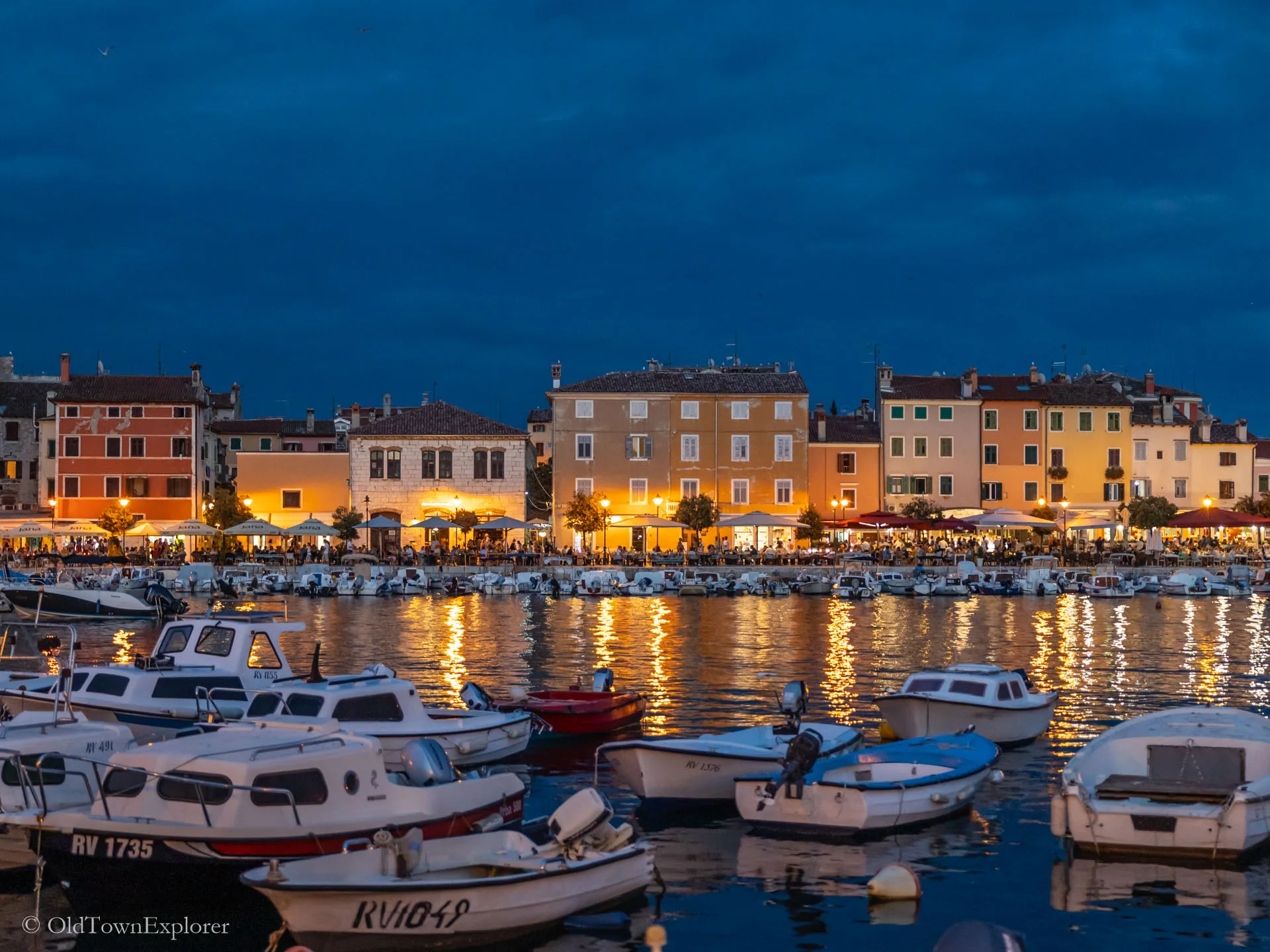
Discover If Rovinj Is Worth Visiting: Factors to Consider & Answers to Frequently Asked Questions
Yes, Rovinj is worth visiting if you want a compact Adriatic Old Town, rocky beaches, seafood, Istrian wine, waterfront walks, and enough outdoor activity to fill more than a sightseeing afternoon. It is a particularly strong choice for a coastal break that combines architecture and swimming without the scale of a large city.
The main trade-offs are summer crowds, hot walking weather, accommodation costs, and limited rail access. Rovinj works well without a car when the trip stays near the center, beaches, and harbor, but exploring inland Istria becomes easier with a car, driver, or organized excursion.
We spent the full month of August in Rovinj, walking the Old Town, running through Golden Cape, swimming, shopping for groceries, eating in town, and watching how visitors moved through the center. That stay supports the verdict, factor ratings, visitor-fit advice, and stay-length recommendations below.
This website contains affiliate links that may earn us a small commission at no additional cost to you.
Rovinj Worth Visiting at a Glance
Yes, Rovinj is worth visiting for travelers who want a walkable coastal town where Old Town streets, swimming, food, wine, and waterfront evenings fit into the same trip.
Key decision points:
- Best for: Couples, families, photographers, swimmers, runners, food travelers, wine travelers, and anyone who prefers a compact coastal base to a large resort city.
- Think twice if: Major museums, direct rail connections, sandy beaches, low summer prices, or an uncrowded August Old Town are central to the trip.
- Main reasons to go: The hilltop Old Town, Church of St. Euphemia, harbor, Golden Cape, rocky swimming areas, seafood, Istrian wine, and easy evening walks.
- Main trade-offs: Summer heat and visitor pressure can slow the center, while reaching airports, inland towns, and the wider European rail network requires more planning.
- Suggested stay: Two nights suit most first visits. Add more time for beaches, wineries, boat trips, or day trips across Istria.
- Day trip or overnight: A day covers the Old Town highlights, but at least one night gives you a quieter morning, sunset, dinner, and time by the water.
Visit for one day when Rovinj is one stop on an Istrian road trip. Stay two or three nights when the sea, food, wine, and slower coastal atmosphere are part of the reason for going.
Who Should Visit Rovinj
Rovinj gives the most value to travelers who want the coast to shape the entire day rather than appear as a brief view between monuments.
Travelers Who Want Old Town and Sea Together
The historic peninsula places stone lanes, waterfront houses, small squares, the harbor, and swimming access within a compact area. You can explore the Old Town in the morning and reach the water or a coastal walk without changing bases.
Beach and Outdoor Travelers
Rovinj suits travelers who enjoy pebbled beaches, rocky swim spots, kayaking, boat trips, cycling, walking, and running. Golden Cape Forest Park extends the visit beyond the built-up center through wooded trails, coves, and coastal paths.
Food and Wine Travelers
Seafood, pasta, truffles, olive oil, cheese, Malvazija Istarska, and Teran can turn meals into a central reason to stay overnight. Use Rovinj Food and Rovinj Wine when dining and tasting will determine how long you remain.
Architecture and Photography Travelers
The Church of St. Euphemia, bell tower, Grisia Street, Balbi’s Arch, harbor façades, polished paving, and views across the peninsula provide strong architecture and photography value without requiring a long attraction checklist. Rovinj Architecture covers the principal buildings and streets.
Slow Travelers Exploring Istria
Rovinj works as a comfortable coastal base when you want ordinary mornings and evenings between day trips. It is especially appealing when the itinerary includes inland hill towns, Roman Pula, wineries, olive-oil estates, or the wider western Istrian coast.
Families Who Prioritize Water
Families who are comfortable with pebbled and rocky shores can combine calm coves, swimming, boat rides, cycling, and a pedestrian Old Town. The city is less convincing when a wide sandy beach or a large purpose-built family resort is essential.
Who Should Think Twice About Rovinj
Rovinj’s limitations are manageable for many trips, but they become important when transport, museum depth, budget, or peak-season quiet matters more than the coastal setting.
Travelers Building a Rail Itinerary
Rovinj has no passenger railway station. Arriving from a rail-based European route requires another connection by bus, car, or transfer, and day trips by train are not practical from the city itself.
Travelers Seeking Major Museums
Rovinj has the City Museum and Batana Eco-Museum, but it is not a destination for large art, archaeology, or national-history collections. Choose nearby Pula when Roman monuments and broader museum options matter more than a compact Venetian-influenced Old Town.
Travelers Avoiding Summer Crowds
During our August stay, the Old Town, harbor, beaches, restaurants, and parking areas were busy with couples, families, and day visitors. Early mornings and evenings remained more comfortable, but travelers who strongly dislike crowds should choose a quieter season.
Travelers on a Tight Accommodation Budget
Our August accommodation cost was high relative to the space and comfort we received. Rates vary by date and property, but travelers with limited budgets should compare mainland accommodation, flexible dates, and nearby Istrian bases rather than assuming the historic center will provide good value.
Travelers Expecting Sandy Beaches
Rovinj’s coast is mainly rocky, pebbled, or built around paved sunbathing areas and swim ladders. These settings work well for clear water and quick swimming, but travelers who want long stretches of soft sand may prefer another coastal destination.
Travelers Wanting a Large City
Rovinj has limited major shopping, museum depth, and urban variety. Its strength is the combination of a small Old Town, sea, food, and outdoor space—not a long list of city districts and indoor attractions.
Factors to Consider Before Visiting Rovinj
We spent the whole month of August in Rovinj. Based on our experience, we assigned each factor a score from 1 to 5, with one being the worst and five being the best. If the attribute is unavailable or does not apply, we give it a 0.
If you’re asking yourself, “Is Rovinj worth visiting?” hopefully, this information will help you make a more informed decision.
Weather
| Hot in the Summer | 2 |
| Cold in the Winter | 3 |
Crowds
| Few Tourists in Large Groups | 5 |
| Few Cruise Ship Passengers | 3 |
| Few Tourists in Couples or Small Families | 1 |
| Pedestrian Only Areas | 5 |
| Lines at Attractions | 5 |
Water Activities
| Beaches with Calm Water (Kid-Friendly) | 5 |
| Beaches with Rough Water | 5 |
| Boating Activities/Kayaking | 5 |
| Rocky Swim Spots | 5 |
| Sunbathing | 5 |
Food and Beverage
| Wine | 4 |
| Beer | 4 |
| Specialty Liquor | 5 |
| Specialty Food | 5 |
| Seafood | 5 |
| Meat | 3 |
| Street Food | 1 |
| Food Market | 3 |
Interests
| History | 4 |
| Architecture | 4 |
| Art | 1 |
| Museums | 1 |
| Castles | 0 |
| Walled-City | 0 |
| Palaces | 0 |
| Hiking | 4 |
| Running | 5 |
| High-Fashion Stores/Shopping | 2 |
| Nightlife | 4 |
| Dog-Friendly | 3 |
| Kid-Friendly | 5 |
Conveniences
| Great Grocery Stores | 3 |
| English Widely Spoken | 5 |
| Outwardly Friendly Locals | 5 |
| American Tourists | 1 |
| Accessible by Train | 0 |
| Day Trips by Train | 0 |
| Clean Streets | 5 |
| Noise | 4 |
Costs
| Food Cost | 3 |
| Accommodation Cost | 2 |
| Activities Cost | 4 |
| Transportation Cost | 1 |

A Closer Look at Each Factor
Some factors may sway you in one direction or another, depending on your circumstances and interests—for example, the weather. If you like to go to the beach, you may be looking for hot weather in the summer. If you like winter sports, you may be looking for cold weather in the winter. On the other hand, if you want to explore the old town (like us), you may be looking for milder weather in the summer and winter. For this reason, you may need to take your situation into account.
Weather
What is Rovinj weather like?
Hot in the Summer – 2
We were in Rovinj for the entire month of August. It was hot and sunny the whole time. Even though it was very hot, it did have a breeze which made it better. The average highs for June, July, and August are 78℉, 83℉, and 83℉, respectively. During our month in Rovinj, the temperature got up to 95℉ but most days the high was around 88℉.
Cold in the Winter – 3
We were not in Rovinj during the winter, but the average highs for December, January, and February are 50℉, 48℉, and 50℉, respectively.

Crowds
Few Tourists in Large Groups - 5
Rovinj only gets a few tour buses with large groups. It's a destination more popular with couples and families than organized tour groups. While Old Town Rovinj gets crowded in August, it's not that bad since most people are not blocking the streets in large groups.
Few Cruise Ship Passengers - 3
Rovinj has a small port and only had one small Ponant cruise ship that showed up every couple of days.
Few Tourists in Couples or Small Families - 1
There are lots of tourists as couples and small families. In addition to the overnight tourists, there were lots of day tourists. They arrived by car and ferry.
Pedestrian-Only Areas - 5
Except for a few early morning delivery trucks, Rovinj Old Town is car-free. There are ample parking areas outside the Old Town where everyone parks.
One of the must-visit places in the pedestrian-only area is Grisia Street, which is lined with art galleries and interesting shops. The street is famous for its steep hills and smooth cobblestones. From the top of Grisia Street, you get the best view of Rovinj's old town and the surrounding area. Walking through the narrow streets in the Old Town is a unique experience that you shouldn't miss when you visit Rovinj.
Lines at Attractions - 5
The main attractions in Rovinj are beaches, boat activities, and strolling through the Old Town. There isn’t anything that requires a line to wait.

Water Activities
Beaches with Calm Water (Kid-Friendly) – 5
Many beaches within walking distance of Rovinj Old Town offer calm water. Rovinj is an incredible beach destination with amazing beaches. The Punta Corrente is a beautiful park with lots of beaches.
Beaches with Rough Water – 5
Depending on the weather, the calm beaches can have rough water but nothing that would allow surfing or other rough water activities.
Boating Activities/Kayaking – 5
Boating activities are very popular in Rovinj. You can charter a boat, rent a paddleboard or kayak, or take a group boat excursion.
Rocky Swim Spots – 5
Rovinj offers some unique rocky swim spots with roped-off swim areas. If you don’t want to walk to the beaches, there are several public rocky spots with ladders to jump into the sea right in the Old Town.
Sunbathing - 5
Rovinj is a sunbathing destination. In addition to sunbathing on the beaches, people will lie on the rocks around Old Town and soak up the sun.
Experiences
These highly-rated water experiences are a great way to cool off during the summer heat in Rovinj. Book now to enjoy Rovinj’s popular water activities during your stay!
Food and Beverage
Wine – 4
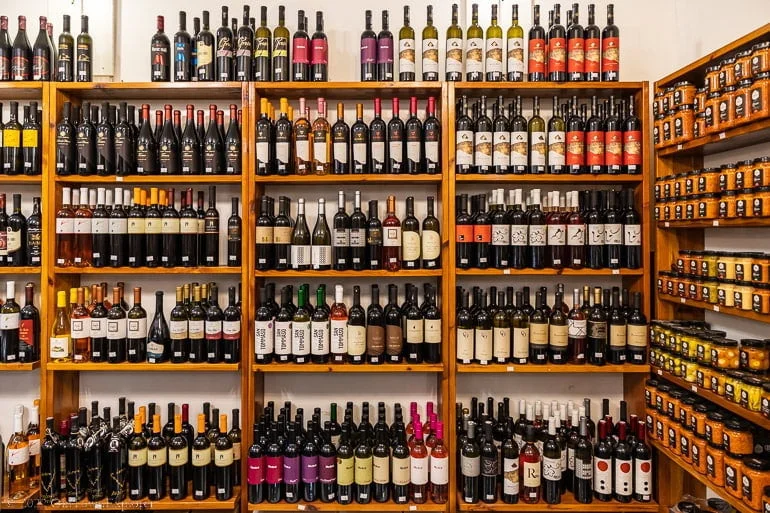
Rovinj is in the region of Istria, Croatia. There are many vineyards and wineries in Istria, and Rovinj offers an excellent opportunity to taste the local Istrian wines.
Beer – 4
There are a few local beer producers near Rovinj, and their beers are sold in small shops around Rovinj Old Town.
Specialty Liquor – 5
Flavored brandy is very popular in Rovinj, and you can taste the different flavored liquors sold at the small specialty shops.
Specialty Food – 5
Istrian specialty foods such as truffles and truffle cheese are available to taste and purchase at specialty shops.
Seafood – 5
If you enjoy seafood, Rovinj is a fantastic destination to enjoy whole fish and langoustines.
Meat – 3
Several restaurants in Rovinj roast whole pigs on a stake over an open wood fire. These restaurants are on the outer perimeter of the town.
Street Food – 1
Rovinj could be a better street food destination. It offers ice cream, pizza, burgers, and French fries but doesn’t offer fantastic street food. Its food scene is geared more toward sit-down restaurants.
Food Market - 3
Old Town Rovinj has a medium size market, the Gradska Trznica – Mercato Cittadino. It is more for tourists than serious food shopping.
Experiences
Want to learn about local food and wine during your Rovinj stay? Book a highly-rated food and wine experience!

Interests
History – 4
Rovinj has a great history that you can learn.
Architecture – 4
Old Town Rovinj’s architecture will not disappoint. It is incredible. A popular architectural attraction is the Church of St. Euphemia, often referred to as the Basilica of St. Euphemia (although it is not formally a basilica). For a small fee, you can climb to the top of the church's tall bell tower and enjoy a wonderful view of Rovinj.
Art – 1
There are small art galleries in the Old Town of Rovinj but no art museums.
Museums – 1
I did not see any museums in Rovinj, but I am giving it a one instead of zero because there could be a small hidden museum I missed.
Castles – 0
There are no castles in Rovinj.
Walled-City – 0
Old Town Rovinj is a beautiful island city with no wall around it.
Palaces – 0
Old Town Rovinj does not have any palaces.
Hiking – 4
Rovinj is a great place for hiking. For more information on Rovinj hiking, check out AllTrails.
Running – 5
We ran while in Rovinj and encountered many other runners.
The forest park Punta Corrente (Golden Cape) is the perfect place for a run. If you stay in the Old Town, you will run south along the harbor, past the large luxury hotels, and through the park gates.
For more information on Rovinj's running routes, check out Map My Run.
High – Fashion Stores/Shopping – 2
There are a few fun clothing stores in Rovinj but no high fashion brands.
Nightlife – 4
Rovinj has lots of bars and restaurants that are open late.
Dog Friendly – 3
Rovinj is dog friendly in that many Airbnbs allow dogs, dogs are allowed in the outdoor restaurant seating areas, and the locals are friendly towards dogs. But dogs are prohibited on buses, restaurants, and grocery stores.
Kid Friendly – 5
We don’t have kids, but Rovinj is an excellent destination for children, and many families are there with their kids. Rovinj has many beaches with calm water. Lots of beaches have inflatable bouncy playscapes. There are also many kid-friendly activities like paddleboarding, kayaking, boating, and biking around the park.
Conveniences
Great Grocery Stores – 3
The grocery stores adjacent to Rovinj Old Town are small and have a limited selection. There are large grocery stores on the outskirts of the town, including a Kaufland, Super Konzum, Lidl, and Plodine. These large grocery stores were great but I’m giving this a three because they are far and not everyone would want to walk that far for groceries and not everyone has a car.
English Widely Spoken – 5
English is widely spoken. Knowing a handful of Croatian words is endearing and makes an excellent first impression on everyone, but learning Croatian is optional to have a great time in Rovinj.
Outwardly Friendly Locals – 5
Rovinj locals are very outwardly friendly and wonderful people.
American Tourists – 1
Rovinj has few American tourists. Most tourists in Rovinj are from Italy, Austria, and Germany. But, don’t worry, most tourists speak English as a common language.
Accessible by Train – 0
Rovinj has no train station, and you cannot go anywhere by train. It does have a very active ferry port during the summer months with a three-hour ferry to Venice.
Most people get to Rovinj by driving. For private transfers, we recommend GetTransfer. For rental cars and price comparisons of international and local brands, we recommend Discover Cars.
Day Trips by Train – 0
Day trips by train are not an option from Rovinj.
But day trips by ferry and rental car are an option. It is a great base to explore Istria on day trips. The best day trips from Rovinj are to the towns Pula, Porec, Motovun, and Piran.
Clean Streets – 5
The town of Rovinj works very hard to keep the streets clean with daily sweepers and vacuums. Go for an early morning walk or run to see how Rovinj keeps everything shiny and clean.
Noise - 4
Rovinj is a late-night dinner scene but surprisingly not a noisy location. But, if you are a light sleeper, you should confirm with your hotel or Airbnb that the doors and windows are insulated.
Experiences
Want to explore the area surrounding Rovinj? Book a highly-rated tour!
Costs
Food Cost – 3
Rovinj is not a super expensive food destination, but it is also not cheap.
Accommodation Cost – 2
Rovinj is a costly destination for accommodation. It was not our most expensive Airbnb stay (Cinque Terre gets that honor), but it was the third most expensive. And, what we got for that high cost was not much.
Activities Cost – 4
The activities in Rovinj are excellent and inexpensive. Two very popular activities, beaches and walking the Old Town, are free. Other popular activities, boating and biking, are reasonably priced.
Transportation Cost – 1
Transportation cost in Rovinj is very expensive because it is not accessible by train. We rented a car for our first trip to Croatia in 2012. It was great since our journey started in Ljubljana, Slovenia, went all over Croatia and Bosnia, and ended in Dubrovnik, Croatia.
We now use private transfers and rental cars when moving around Croatia and Bosnia. For private transfers, we recommend GetTransfer. For rental cars and price comparisons of international and local brands, we recommend Discover Cars.
Ferries are an additional option if you are traveling during the summer months.
How Long Should You Spend in Rovinj?
One day is enough to see the main Old Town and harbor, but two nights provide a better first visit. Add more time when swimming, food, wine, boats, or wider Istrian day trips are central to the itinerary.
One Day in Rovinj
A full day covers Balbi’s Arch, Grisia Street, the Church of St. Euphemia, the harbor, the waterfront, and one substantial meal. Add a quick swim or a short walk toward the marina when weather and daylight allow.
This works well as part of an Istrian road trip, but it misses a quieter morning, sunset, and the slower evening atmosphere that strengthen Rovinj.
One Night in Rovinj
One night is better than a rushed day trip. Arrive early enough to explore the Old Town, stay for dinner and sunset, then use the following morning for the harbor, market, or a coastal walk before day visitors fill the center.
Two or Three Nights in Rovinj
Two nights suit most first-time visitors. They allow one Old Town day, time at Golden Cape or another beach, several meals, and room for a boat trip, museum, wine tasting, or unhurried waterfront evening.
A third night makes sense when you want more swimming, a nearby winery, or a day trip without treating Rovinj only as the place where you sleep.
When to Stay Longer
Stay four nights or more when Rovinj will be your base for Pula, Motovun, Poreč, wineries, olive-oil estates, Brijuni, or other parts of Istria. A longer stay works best with a car, driver, or carefully planned excursions because regional rail is not available from town.
Use Best Things to See in Rovinj to decide whether the city itself justifies another day before adding regional trips.
Rovinj Compared With Nearby Destinations
Rovinj is not automatically the best Istrian stop for every traveler. Pula provides stronger Roman monuments and museum depth, while Motovun provides a fortified hill-town setting, inland views, truffles, and a quieter small-town scale.
Rovinj vs Pula
Choose Rovinj for a compact waterfront Old Town, swimming, seafood, Istrian wine, sunset walks, and a polished coastal atmosphere. Choose Pula for the Roman amphitheater, archaeological sites, broader museum options, a larger urban center, and easier access to the southern Istrian peninsula.
Rovinj generally works better for a romantic or slow coastal stay. Pula works better when Roman history and a larger working city are more important than a concentrated historic peninsula.
Rovinj vs Motovun
Choose Rovinj for the sea, beaches, boats, seafood, waterfront evenings, and a wider range of accommodation and dining. Choose Motovun for medieval walls, hilltop views, truffle-focused meals, inland wine, and a much smaller historic settlement.
Rovinj can justify two or three nights on its own. Motovun is easier to cover in a day, although an overnight stay gives you the hilltop after most day visitors leave. Our Is Motovun Worth Visiting? page explains the inland alternative.
Rovinj as a Base vs a Road-Trip Stop
Choose Rovinj as a base when you want to return to the coast for dinner, swimming, and evenings after inland day trips. Treat it as a one- or two-night road-trip stop when changing bases gives you easier access to northern Istria, Slovenia, or the next part of Croatia.
Where to Stay When Visiting Rovinj
Most first-time visitors should stay near the harbor, Carera Street, or the lower edge of the Old Town. These areas keep the main streets, restaurants, market, bus station, waterfront, and Old Town climb within a practical walk.
Staying inside the historic peninsula gives you the strongest atmosphere and the shortest walk to Grisia Street and St. Euphemia. The trade-offs are steep polished paving, steps, pedestrian access, luggage handling, and possible evening or delivery noise. The mainland center is usually easier for buses, taxis, groceries, and parking.
Hotels and Apartments in Rovinj
Compare the Old Town for historic atmosphere, the harbor and Carera Street for the easiest sightseeing base, Valdibora for access to the northern center and parking, and the marina side for beaches, Golden Cape, and wide views back toward the peninsula.
Use the interactive map below to compare hotels and apartments in Rovinj.
FAQs About Rovinj
Is Rovinj Worth Visiting?
Yes. Rovinj is worth visiting for its waterfront Old Town, Church of St. Euphemia, beaches, rocky swimming areas, Golden Cape, seafood, Istrian wine, and walkable evening atmosphere.


How Many Days Do You Need in Rovinj?
Plan two nights for a first visit. One day covers the main Old Town, while the extra time allows swimming, Golden Cape, a boat trip, a slower meal, or an evening after many day visitors leave.
Is Rovinj Better as a Day Trip or Overnight Stay?
Rovinj works as a day trip, but an overnight stay is better. Sunset, dinner, an early-morning Old Town walk, and time at the water provide much of the value that a rushed daytime stop misses.
What Is Rovinj Best Known For?
Rovinj is best known for its hilltop Old Town, Church of St. Euphemia and bell tower, Venetian-influenced architecture, harbor views, rocky coastline, Golden Cape, seafood, and Istrian wine.
Is Rovinj Walkable?
The principal visitor area is compact and walkable. The Old Town has steep polished paving and steps, while the harbor, Carera Street, bus station, and lower center are comparatively flat.
Is Rovinj Expensive to Visit?
Rovinj can be expensive during peak summer, particularly for accommodation close to the Old Town and sea. Walking, beaches, swimming, the harbor, and Golden Cape keep many daily activities inexpensive once you arrive.
When Is the Best Time to Visit Rovinj?
Late spring and early autumn suit travelers who want comfortable walking weather and a functioning coastal trip without the strongest August pressure. Summer is better for consistently warm swimming conditions but brings more heat, crowds, and accommodation demand.
Is Rovinj Too Tourist-Oriented?
Rovinj is heavily shaped by tourism during summer, especially around the Old Town, harbor, beaches, restaurants, and parking areas. Its working port, local traditions, churches, market, and Batana culture still give the town more depth than a purpose-built resort.
Is Rovinj Better Than Pula?
Rovinj is better for a compact Old Town, coastal atmosphere, swimming, food, wine, and waterfront evenings. Pula is better for Roman monuments, archaeology, museums, and a larger urban base.
Is Rovinj Good Without a Car?
Yes, when the visit focuses on the Old Town, harbor, Golden Cape, nearby beaches, restaurants, and boat trips. A car becomes more valuable for inland Istria, wineries, airports, and several regional day trips.
Is Rovinj Good for Food and Wine?
Yes. Seafood, pasta, truffles, olive oil, cheese, Malvazija Istarska, and Teran make food and wine important reasons to stay overnight rather than leaving after the main sights.
What Is the Main Reason Not to Visit Rovinj?
The strongest reason to choose another destination is a mismatch with Rovinj’s scale and transport. Travelers who need major museums, direct trains, sandy beaches, low August prices, or a large city may find Pula or another regional stop more suitable.
