
Puglia Food
Explore Puglia Food: Local Products & Traditional Dishes
Puglia food connects durum wheat, olive oil, vegetables, legumes, dairy farming, and two long coastlines. Pane di Altamura, Burrata di Andria, Puglia olive oils, and regional produce provide the main product reference points.
Bari is the broadest base for bread, focaccia, pasta, markets, and seafood. Lecce concentrates Salento dishes and pastries, while the Valle d’Itria connects dairies, meat grills, olive mills, and inland towns.
We spent a month in Lecce while traveling through Italy. This page covers protected products, local differences, regional dishes, food routes, and seasonal shopping from the Gargano to Salento.
Puglia Food at a Glance
Best Food Bases
- Bari: markets, bakeries, focaccia, orecchiette, panzerotti, seafood, and access to Altamura, Andria, and the Alta Murgia
- Lecce Food: Salento pasta, pasticciotto, pittule, vegetable dishes, food markets, and city restaurants
- Valle d’Itria: dairies, mozzarella, burrata, bombette, butcher-restaurants, olive oil, and inland towns
- Gargano and Daunia: citrus, table olives, wheat, cheese, seafood, olive oil, and northern Puglia products
These bases divide the region into central, southern, western-coast, and northern food routes without requiring long cross-region drives each day.
Core Food Identity
- Durum wheat used for bread, fresh pasta, dried pasta, focaccia, friselle, and taralli
- Olive oil, table olives, vegetables, legumes, citrus, grapes, and market produce
- Cow’s, sheep’s, and buffalo-milk products alongside meat grills and seafood from two coasts
Puglia’s cooking changes between wheat plains, olive-growing zones, dairy areas, market gardens, fishing ports, and the Salento peninsula.
Signature Products and Dishes
- Pane di Altamura DOP, Burrata di Andria IGP, Mozzarella di Gioia del Colle DOP, and Canestrato Pugliese DOP
- Five protected olive-oil DOPs, Olio di Puglia IGP, La Bella della Daunia DOP, and Gargano citrus
- Orecchiette, fave e cicorie, tiella barese, focaccia, bombette, ciceri e tria, pasticciotto, and seafood dishes
A first comparison should include one dairy product, one olive oil or vegetable, one wheat-based food, and one dish tied to the day’s area.
Main Areas and Local Differences
- Gargano and Daunia: citrus, olives, oil, wheat, cheese, seafood, and agricultural products from the Tavoliere
- Bari and the Alta Murgia: Altamura bread and lentils, burrata, mozzarella, focaccia, orecchiette, tiella, and Zampina
- Valle d’Itria, Brindisi, and Taranto: dairies, grilled meat, olive oil, artichokes, clementines, mussels, and coastal cooking
- Lecce and Salento: pasta and chickpeas, rolled pasta, fried dough, pasticciotto, potatoes, olive oil, octopus, and coastal fish
Select one adjoining pair of areas per day rather than treating Puglia as one continuous food route.
Eating and Shopping Notes
- The current protected-food total is 23 names: 13 DOPs and 10 IGPs
- Zampina di Sammichele di Bari became the newest Puglia IGP in June 2026
- Fresh burrata, mozzarella, ricotta, seafood, and uncooked meat need refrigeration, while oil, bread, pasta, lentils, olives, and preserves are easier to carry
Read the complete designation before treating a cheese, oil, olive, citrus fruit, bread, or meat product as protected.
Local Food Products in Puglia
Puglia has 23 registered food names: 13 DOPs and 10 IGPs. Some registrations cover products made entirely within Puglia, while Caciocavallo Silano and the two buffalo-dairy designations extend into other southern Italian regions.
Puglia Dairy and Cheese
Canestrato Pugliese DOP is a firm sheep’s-milk cheese associated with northern and central Puglia. It is sold at different aging stages and used at the table, grated over pasta, or served with bread and preserves.
Burrata di Andria IGP has a cow’s-milk pasta-filata casing filled with stracciatella and cream. Mozzarella di Gioia del Colle DOP is made from cow’s milk in the Bari and Taranto Murgia and is sold in rounded, knotted, or braided forms.
Puglia Olive Oils
Puglia’s five olive-oil DOPs are Collina di Brindisi, Dauno, Terra di Bari, Terra d’Otranto, and Terre Tarentine. Each name has a defined production area, permitted cultivars, and separate specification.
Olio di Puglia IGP covers extra-virgin olive oil produced throughout the region. Use the full registered name when comparing a broad regional IGP with one of the five smaller DOP areas.
Pane di Altamura and Lenticchia di Altamura
Pane di Altamura DOP is naturally leavened bread made with remilled durum-wheat semolina from the defined northwestern Murgia area. It has a substantial crust, yellow-toned crumb, and two registered traditional forms.
Lenticchia di Altamura IGP protects dried green or brown lentils grown across the Bari and Matera Murgia and the adjoining pre-Murgia area. They are sold dried and used in soups, vegetable dishes, and pasta preparations.
Table Olives and Fresh Produce
La Bella della Daunia DOP covers green and black table olives made from the Bella di Cerignola variety. Other protected produce includes Patata Novella di Galatina DOP, Carciofo Brindisino IGP, Cipolla Bianca di Margherita IGP, and Uva di Puglia IGP.
These products belong to different growing areas and sales seasons. Markets may carry the fresh crop, while olives, onions, artichokes, grapes, and potatoes may also appear in preserved, cooked, or packaged forms.
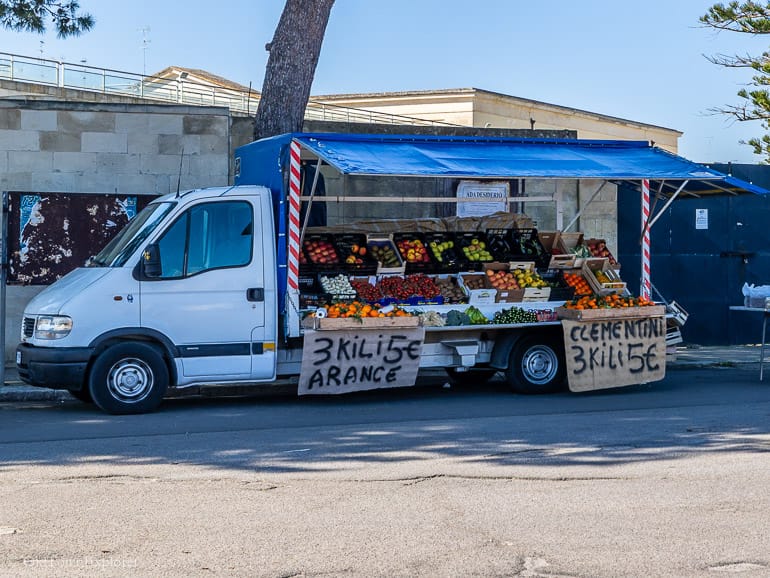
Gargano Citrus and Taranto Clementines
Arancia del Gargano IGP and Limone Femminello del Gargano IGP come from the Gargano citrus zone. Their registered names cover specific fruit types and production areas rather than every orange or lemon grown in northern Puglia.
Clementine del Golfo di Taranto IGP covers clementines grown around the Gulf of Taranto. Fresh fruit follows the harvest and packing cycle, while marmalades, preserves, sweets, and liqueurs may remain available later.
Zampina di Sammichele di Bari
Zampina di Sammichele di Bari IGP is a fresh spiral sausage made within the municipality of Sammichele di Bari. The mixture uses beef and sheep meat with grated aged cheese, peeled tomato, pepper, salt, and basil.
The sausage must be cooked before eating and is commonly grilled. Because it is a fresh meat product, it requires refrigeration when bought uncooked.
Cross-Regional Protected Products
Caciocavallo Silano DOP, Mozzarella di Bufala Campana DOP, and Ricotta di Bufala Campana DOP appear in Puglia’s protected-food coverage because approved production zones extend into parts of the region.
These products are not exclusive to Puglia. Check the complete designation and producer address rather than treating every caciocavallo, buffalo mozzarella, or buffalo ricotta sold in Puglia as part of the registered product.
Complete Puglia DOP and IGP Register
The current register contains 23 food names connected with Puglia. The list includes Puglia-only production areas and several cross-regional designations.
Cheese and Dairy
- Canestrato Pugliese DOP
- Caciocavallo Silano DOP
- Mozzarella di Bufala Campana DOP
- Mozzarella di Gioia del Colle DOP
- Ricotta di Bufala Campana DOP
- Burrata di Andria IGP
Burrata di Andria and Mozzarella di Gioia del Colle have the clearest Puglia-wide and Murgia visitor routes, while the buffalo products and Caciocavallo Silano cross regional boundaries.
Olive Oils
- Collina di Brindisi DOP
- Dauno DOP
- Terra di Bari DOP
- Terra d’Otranto DOP
- Terre Tarentine DOP
- Olio di Puglia IGP
The five DOP names identify smaller production areas. Olio di Puglia IGP covers the wider region.
Fruit, Vegetables, Legumes, and Table Olives
- La Bella della Daunia DOP
- Patata Novella di Galatina DOP
- Arancia del Gargano IGP
- Carciofo Brindisino IGP
- Cipolla Bianca di Margherita IGP
- Clementine del Golfo di Taranto IGP
- Lenticchia di Altamura IGP
- Limone Femminello del Gargano IGP
- Uva di Puglia IGP
Fresh availability follows the individual crop, while dried lentils, processed olives, preserves, and packaged products remain available longer.
Bread and Meat Products
- Pane di Altamura DOP
- Zampina di Sammichele di Bari / Zampina di Sammichele / Zampina Sammichelina IGP
Zampina joined the register in June 2026 and raised Puglia’s total to 23 food DOP and IGP names.
Food by Area in Puglia
Gargano, Daunia, and the Tavoliere
The Gargano connects protected oranges and lemons with olive oil, seafood, bread, vegetables, cheese, and coastal cooking. Daunia adds Bella di Cerignola table olives, Dauno oil, wheat, pasta, legumes, and products from the Tavoliere plain.
Foggia is the main urban base, while the citrus, olive, fishing, and hill-town routes cover a broad area. Select either the Gargano coast or the inland Daunia route for a short visit.
Bari, Alta Murgia, and the Adriatic Coast
Bari provides markets, bakeries, focaccia, orecchiette, panzerotti, seafood, raw and cooked fish preparations, and access to central Puglia products. Altamura adds protected bread and lentils, Andria adds burrata, and Gioia del Colle adds protected cow’s-milk mozzarella.
Sammichele di Bari is the production area for Zampina, while the wider Murgia supports dairies, wheat production, bakeries, farms, and meat grills. The product towns require separate transport from central Bari.
Valle d’Itria and Central Puglia
The Valle d’Itria and adjoining towns connect dairy products, bombette, butcher-restaurants, bread, olive oil, vegetables, pasta, and masseria cooking. Martina Franca, Cisternino, Locorotondo, Alberobello, and nearby towns provide different combinations of food shops and grilled-meat dining.
Use one central base and group dairies, mills, markets, and evening meat grills by town. Continue with Puglia Wine for grape varieties, appellations, wineries, and tasting routes.
Brindisi and Taranto
Brindisi province supplies protected artichokes and Collina di Brindisi olive oil. Taranto and its gulf add protected clementines, Terre Tarentine oil, mussels, fish, shellfish, and pasta or rice dishes tied to the coast.
Inland towns add wheat, dairy, vegetables, and meat grills. Taranto suits seafood and market visits, while producer routes require travel across the surrounding agricultural areas.
Lecce and Salento
Lecce is the main city base for ciceri e tria, sagne ’ncannulate, pasticciotto, rustico, pittule, vegetable dishes, and regional food shops. Salento also connects Terra d’Otranto olive oil, Patata Novella di Galatina, Uva di Puglia, seafood, octopus, and coastal cooking.
See Lecce Food for detailed dishes, street food, markets, traditional restaurants, and modern restaurants in the Old Town.
Traditional Dishes Across Puglia
Puglia’s dishes change between Bari, the Alta Murgia, the Valle d’Itria, Gargano, Taranto, and Salento. The regional page summarizes these differences without duplicating the detailed Lecce restaurant and menu guide.
Orecchiette con Cime di Rapa
Orecchiette are small concave pasta pieces shaped by dragging and turning pieces of dough. They are served with several sauces, but cime di rapa with garlic, chili, olive oil, and often anchovy is one of the principal Puglia preparations.
The greens and seasoning vary by season and kitchen. Tomato sauce, meat ragù, vegetables, and baked preparations provide other common serving formats.
Fave e Cicorie
Fave e cicorie combines puréed dried broad beans with cooked bitter greens. Olive oil is added before serving, and bread, peppers, onions, or other vegetables may accompany the plate.
The balance between smooth beans and bitter greens defines the dish. Recipes and garnishes vary across homes, trattorias, and agriturismi.
Tiella Barese
Tiella barese is a layered baked dish commonly made with rice, potatoes, mussels, tomato, onion, cheese, herbs, and olive oil. Ingredient proportions and layering methods vary between households and restaurants.
It is associated especially with Bari and the central Adriatic coast. Ask whether mussels, cheese, or another ingredient changes in the restaurant’s version.
Focaccia Barese and Panzerotti
Focaccia barese is a leavened baked bread commonly topped with tomatoes, olives, oil, and seasoning. Dough composition, thickness, crust, and toppings change between Bari, Altamura, and nearby towns.
Panzerotti are folded dough parcels filled and fried or baked. Tomato and mozzarella is a reference filling, but vegetables, meat, cheese, and other combinations appear.
Bombette and Zampina
Bombette are small rolls of pork wrapped around cheese, seasoning, or other fillings and cooked on skewers or grills. They are strongly associated with the Valle d’Itria and butcher-restaurants.
Zampina di Sammichele di Bari IGP is a separate fresh spiral sausage made from beef and sheep meat with cheese, tomato, pepper, salt, and basil. Both are commonly grilled, but they should not be treated as the same product.
Salento Pasta and Street Food
Ciceri e tria combines chickpeas with boiled and fried pasta, while sagne ’ncannulate are twisted strips commonly served with tomato, cheese, or other sauces. Pittule are small portions of fried dough served plain or with savory ingredients.
These foods belong in fuller detail on Lecce Food, including local menu terms, bakeries, street-food counters, and restaurant options.
Pasticciotto and Cartellate
Pasticciotto is a shortcrust pastry filled with custard and strongly associated with Lecce and Salento. Bakeries serve it at breakfast and throughout the day, with variations in filling and size.
Cartellate are shaped ribbons of fried dough commonly finished with vincotto, honey, sugar, or spices. They are especially associated with holiday periods, though packaged versions may be sold more widely.
Polpo alla Pignata and Coastal Seafood
Polpo alla pignata is octopus slowly cooked in an earthenware vessel with ingredients such as tomato, onion, herbs, or chili. It is associated especially with Salento rather than every Puglia coastal kitchen.
Elsewhere, menus may center on mussels, anchovies, cuttlefish, squid, small fish, shellfish, or the day’s catch. Ask which species and preparation are available rather than expecting one fixed regional seafood list.
Where to Try Puglia Food
Food Markets and Specialty Shops
Bari and Lecce provide the broadest city selection of bakeries, pasta shops, cheese shops, butchers, fish sellers, produce stalls, and regional food stores. Foggia, Brindisi, Taranto, Andria, Altamura, and smaller towns provide closer access to products from their surrounding areas.
Use city shops to compare oil, bread, pasta, cheese, olives, legumes, preserves, and sweets before planning rural producer stops.
Dairies, Olive Mills, Bakeries, and Pasta Makers
Caseifici produce mozzarella, burrata, ricotta, caciocavallo, and other cheeses. Frantoi mill olives, forni bake bread and focaccia, and pastifici make fresh or dried pasta.
The Alta Murgia and central Puglia suit dairy and bread routes, while olive mills operate across the region’s DOP and IGP oil zones. Confirm current visits, direct sales, and refrigeration requirements before traveling.
Traditional Restaurants and Regional Dining
Bari’s bakeries, seafood restaurants, focaccia shops, and trattorias provide the broadest central-Puglia introduction. Valle d’Itria butcher-restaurants grill bombette, sausages, and meat selected from the counter.
Lecce and Salento add pasta, chickpeas, vegetable dishes, fried foods, pastries, octopus, and seafood. Gargano and Taranto restaurants place more emphasis on the day’s fish, mussels, shellfish, citrus, vegetables, and local oil.
Regional Food Routes
The official Puglia food itinerary directory provides a starting point for food routes across the region. Build each day around one area rather than individual products separated by several hours of driving.
Practical routes include Bari with Altamura and the Alta Murgia; Andria, Gioia del Colle, and the Valle d’Itria for dairy and meat grills; Gargano and Daunia for citrus and olives; and Lecce with one Salento coast for pasta, pastries, oil, and seafood.
Seasonal and Shopping Notes
- Cooler months into spring: citrus, artichokes, cime di rapa, leafy vegetables, legumes, and some new potatoes become more visible
- Spring and summer: table grapes, tomatoes, peppers, onions, herbs, fresh dairy, and coastal produce follow local supply
- Autumn: olives, recently milled oil, dried legumes, grapes, mushrooms, and preserved vegetables become more prominent
- Longer availability: bottled oil, dried pasta, lentils, taralli, bread products, processed olives, preserves, and packaged sweets remain available beyond harvest
- Cold-storage products: burrata, mozzarella, ricotta, fresh pasta, seafood, and uncooked Zampina require controlled storage
Bottled oil, dried pasta, lentils, taralli, bread products, sealed olives, and preserves are easier to carry than fresh dairy, fish, or meat. Check current import rules before taking animal products across an external border.
FAQs About Puglia Food
What food is Puglia known for?
Puglia is known for olive oil, Pane di Altamura, burrata, mozzarella, table olives, vegetables, legumes, orecchiette, focaccia, panzerotti, grilled meat, Salento pasta and pastries, mussels, octopus, and coastal fish dishes.
How many protected food products does Puglia have?
Puglia has 23 registered food names: 13 DOPs and 10 IGPs. Zampina di Sammichele di Bari became the newest registration in June 2026.
Which Puglia products should a first-time visitor try?
Start with one protected olive oil, Pane di Altamura DOP, Burrata di Andria IGP or Mozzarella di Gioia del Colle DOP, and one product tied to the route. Examples include Gargano citrus, Bella della Daunia olives, Taranto clementines, or Zampina near Sammichele di Bari.
How does food differ across Puglia?
Northern Puglia emphasizes wheat, citrus, table olives, cheese, and Gargano seafood. Bari and the Murgia add bread, focaccia, pasta, dairy, lentils, and meat. Brindisi and Taranto add vegetables, oil, clementines, mussels, and fish, while Salento adds chickpea pasta, pastries, fried dough, octopus, and coastal dishes.
Where are the main food bases?
Bari is the broadest base for central Puglia and access to Altamura, Andria, and the Murgia. Lecce suits Salento food, the Valle d’Itria suits dairy and meat grills, Foggia suits Daunia and Gargano, and Taranto suits the gulf’s seafood and nearby agricultural products.
Which Puglia foods are seasonal?
Fresh citrus, artichokes, potatoes, grapes, leafy vegetables, onions, tomatoes, peppers, seafood, and other produce follow crop or market cycles. Olive oil, dried pasta, lentils, bread products, processed olives, preserves, and packaged sweets have longer availability.
Can Puglia food be explored without a car?
Bari and Lecce provide the easiest food exploration by foot and public transport. Trains connect several larger towns, but olive mills, dairies, farms, Gargano producers, Valle d’Itria villages, and smaller coastal areas are easier by car, taxi, or organized excursion. Compare the regional food systems with Italy Food.