
Spain Wine
Explore Spain Wine: Wine Regions & Grape Varieties
Spain wine is shaped by Atlantic coasts, Mediterranean heat, high inland plateaus, river valleys, island vineyards, fortified-wine cellars, and one of Europe’s largest protected-origin systems. The main names to learn first are Tempranillo, Garnacha, Albariño, Verdejo, Viura, Palomino Fino, Monastrell, Mencía, Bobal, Godello, Xarel·lo, Parellada, Graciano, Mazuelo, Airén, Listán Negro, Trepat, and Moscatel.
The clearest first routes are Rioja for oak-aged Tempranillo, Ribera del Duero and Toro for firmer Tempranillo reds, Rías Baixas for Albariño, Rueda for Verdejo, Jerez and Sanlúcar for sherry, Penedès for Cava, Priorat and Montsant for Garnacha and Cariñena, the Basque coast for txakoli, and the Canary Islands for volcanic island wines.
We spent extended time in Spain, including month-long stays in Barcelona, San Sebastian, and Seville. The main wine questions are what Spanish grapes to try first, how the protected regions differ, how to read DO, DOCa, VP, VC, DOP, IGP, Crianza, Reserva, and Gran Reserva labels, and when a winery visit needs advance contact, transport, or a planned route.
Spain Wine at a Glance
Best Starting Points
- Rioja: Tempranillo, Garnacha, Graciano, Mazuelo, Viura, Crianza, Reserva, Gran Reserva, Rioja Alta, Rioja Alavesa, and Rioja Oriental
- Castile and León: Ribera del Duero, Rueda, Toro, Bierzo, Tempranillo, Verdejo, Mencía, Godello, Prieto Picudo, and high-plateau reds and whites
- Galicia: Rías Baixas, Ribeiro, Ribeira Sacra, Valdeorras, Monterrei, Albariño, Godello, Treixadura, Loureira, Mencía, Atlantic seafood, and river-valley wines
- Andalusia: Jerez, Sanlúcar, Montilla-Moriles, Málaga, Palomino Fino, Pedro Ximénez, Moscatel, fino, manzanilla, amontillado, oloroso, and sweet fortified wines
- Catalonia: Barcelona, Penedès, Cava, Priorat, Montsant, Terra Alta, Xarel·lo, Macabeo, Parellada, Garnacha, Cariñena, and Catalan wine bars
- Basque Country: San Sebastian, Getaria, Bizkaia, Álava, txakoli, Hondarrabi Zuri, Hondarrabi Beltza, seafood, pintxos, and Atlantic whites
Start with Rioja, Rías Baixas, Jerez, Cava, and Ribera del Duero for the clearest first comparison, then add Priorat, Galicia’s inland regions, the Basque coast, the Canary Islands, and southeastern Monastrell or Bobal regions.
Core Wine Identity
- Main red identity: Tempranillo, Garnacha, Mencía, Bobal, Monastrell, Graciano, Mazuelo, Listán Negro, Trepat, Sumoll, Cabernet Sauvignon, Merlot, and red blends
- Main white identity: Albariño, Godello, Verdejo, Viura, Palomino Fino, Malvasía, Xarel·lo, Parellada, Moscatel, Airén, Hondarrabi Zuri, Treixadura, Loureira, Macabeo, and Listán Blanco
- Main style identity: Oak-aged reds, Atlantic whites, Cava, sherry, txakoli, rosado, island wines, fortified wines, sweet wines, and high-plateau reds
- Main label cue: Read Spanish wine by region, grape, producer, protected-origin term, aging term, sweetness, and whether the bottle is still, sparkling, fortified, or sweet
Spain wine is easiest to approach through region first, then grape, style, aging term, and food pairing.
Main Wine Regions
- Northern Spain: Rioja, Basque Country, Navarre, Galicia, Asturias, Cantabria, Aragón, and Castile and León, with Tempranillo, Albariño, Mencía, Verdejo, Godello, Garnacha, and txakoli
- Central Spain: Castile-La Mancha, Madrid, and Extremadura, with Airén, Tempranillo, Garnacha, Bobal, Vino de Pago estates, large vineyard areas, and inland food wines
- Mediterranean Spain: Catalonia, Valencia, Murcia, and the Balearic Islands, with Cava, Priorat, Penedès, Monastrell, Bobal, Malvasía, Callet, Manto Negro, Garnacha, and coastal wines
- Southern Spain: Andalusia, with sherry, manzanilla, Montilla-Moriles, Málaga, Palomino Fino, Pedro Ximénez, Moscatel, and fortified or oxidative styles
- Island Spain: Canary Islands and Balearic Islands, with volcanic vineyards, Listán Negro, Malvasía, Listán Blanco, Callet, Manto Negro, Prensal Blanc, and island food pairings
The region choice usually decides the bottle: Rioja and Ribera del Duero for Tempranillo, Galicia for Atlantic whites, Jerez for sherry, Catalonia for Cava and Priorat, Murcia for Monastrell, Valencia for Bobal, and the Canary Islands for volcanic wines.
Main Grapes
- White grapes: Albariño, Godello, Verdejo, Viura, Palomino Fino, Malvasía, Xarel·lo, Parellada, Moscatel, Airén, Hondarrabi Zuri, Treixadura, Loureira, and Listán Blanco
- Black grapes: Tempranillo, Garnacha, Mencía, Bobal, Monastrell, Graciano, Mazuelo, Listán Negro, Trepat, Sumoll, Callet, Manto Negro, Cabernet Sauvignon, and Merlot
- First tasting set: Rioja Tempranillo, Ribera del Duero Tempranillo, Rías Baixas Albariño, Rueda Verdejo, Jerez fino or manzanilla, Cava, Priorat Garnacha blend, and Bierzo Mencía
A first Spanish tasting should compare one oak-aged Tempranillo, one Atlantic white, one fortified wine, one sparkling wine, one Mediterranean red, and one regional bottle from a less obvious area.
Key Wine Styles
- Oak-aged reds: Rioja, Ribera del Duero, Toro, Navarra, La Mancha, Valdepeñas, and other Tempranillo-based wines
- Atlantic whites: Albariño from Rías Baixas, Godello from Valdeorras, Treixadura from Ribeiro, txakoli from the Basque Country, and coastal whites from northern Spain
- Sparkling wines: Cava from Penedès and other approved areas, plus Corpinnat and producer-led Catalan sparkling wines
- Fortified and oxidative wines: Fino, manzanilla, amontillado, oloroso, palo cortado, Pedro Ximénez, Montilla-Moriles, and Málaga wines
- Mediterranean reds: Garnacha, Cariñena, Monastrell, Bobal, Priorat, Montsant, Jumilla, Yecla, Bullas, Utiel-Requena, and Alicante
- Island wines: Listán Negro, Listán Blanco, Malvasía, volcanic Canary Island wines, Mallorca reds, and Balearic blends
The main style choice is between aged reds, Atlantic whites, sparkling wines, fortified wines, Mediterranean reds, and island wines.
Wine Tasting Notes
- City tasting: Barcelona works well for Catalonia, Cava, Penedès, Alella, Priorat, and Montsant; San Sebastian works well for txakoli and Rioja Alavesa; Seville works well for sherry, Montilla-Moriles, and Andalusian bottles
- Winery routes: Rioja, Ribera del Duero, Jerez, Sanlúcar, Penedès, Priorat, Rías Baixas, Rueda, Bierzo, Jumilla, Utiel-Requena, and island wine routes usually need advance contact, a car, driver, train plan, or tour
- Label reading: Start with protected region, producer, grape, aging term, sweetness, and whether the bottle is still, sparkling, fortified, oxidative, or sweet
- Food pairing: Albariño fits seafood, Tempranillo fits lamb and pork, fino fits tapas and fried foods, txakoli fits pintxos, and Cava fits aperitivo, seafood, fried foods, and cheese
The simplest route is to taste by the glass in Barcelona, San Sebastian, or Seville first, then add a winery day once the region and transport plan are clear.
Wine Regions in Spain
Andalusia
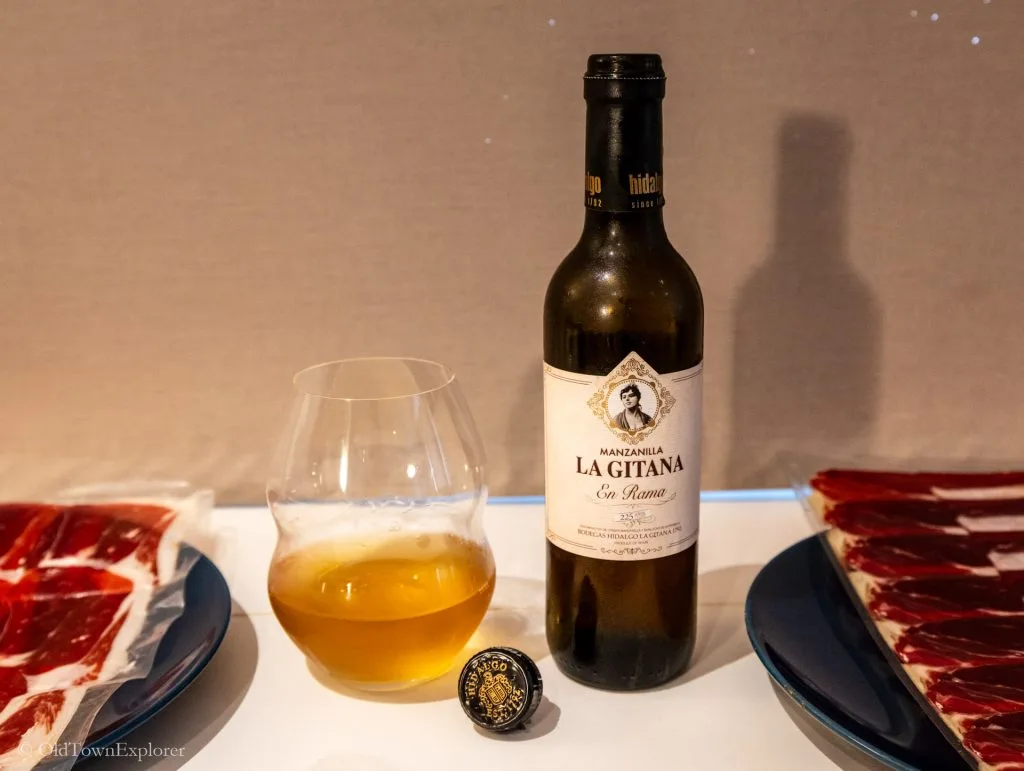
Andalusia is the first Spanish region to understand for fortified, oxidative, and sweet wines. Jerez-Xérès-Sherry, Manzanilla-Sanlúcar de Barrameda, Montilla-Moriles, Málaga, Sierras de Málaga, Condado de Huelva, Granada, and Lebrija cover Palomino Fino, Pedro Ximénez, Moscatel, fino, manzanilla, amontillado, oloroso, palo cortado, sweet PX, and still wines from mountain, coastal, and inland areas.
Start with fino or manzanilla for tapas, fried seafood, olives, almonds, jamón, and salty snacks. Move to amontillado or oloroso for richer dishes, then Pedro Ximénez or Málaga wines for desserts, blue cheese, dried fruit, nuts, and small final pours. For city tasting, Seville Wine covers Andalusian wine bars, shops, sherry, and nearby tasting options.
Denominación de Origen (DO)
- Condado de Huelva
- Granada
- Jerez-Xérès-Sherry / Jerez / Xérès / Sherry
- Málaga
- Manzanilla-Sanlúcar de Barrameda / Manzanilla
- Montilla-Moriles
- Sierras de Málaga
These DO names point first toward sherry country, then toward Málaga sweet wines, Montilla-Moriles, Huelva, Granada, and still wines from southern mountain and coastal zones.
Vino de Calidad (VC)
- Lebrija
Lebrija adds a smaller lower-Guadalquivir wine area between Seville, Cádiz, and sherry country.
Vino de la Tierra / Indicación Geográfica Protegida (IGP)
- Altiplano de Sierra Nevada
- Bailén
- Cádiz
- Córdoba
- Cumbres del Guadalfeo
- Desierto de Almería
- Laderas del Genil
- Laujar-Alpujarra
- Los Palacios
- Norte de Almería
- Ribera del Andarax
- Sierra Norte de Sevilla
- Sierra Sur de Jaén
- Sierras de Las Estancias y Los Filabres
- Torreperogil
- Villaviciosa de Córdoba
The IGP names are better for local bottle-shop and restaurant lists, especially when the label points to Cádiz, Córdoba, Almería, Jaén, Granada, or Seville rather than a major DO.
Aragón
Aragón is one of Spain’s clearest regions for Garnacha. Campo de Borja, Calatayud, Cariñena, and Somontano show different sides of warm inland reds, high-altitude sites, old vines, and fruit-driven bottles, while Somontano adds Pyrenean influence and a wider mix of grapes.
Choose Aragón for Garnacha with lamb, pork, grilled meats, stews, sausages, mushrooms, and aged cheese. The region is also a good comparison point for Priorat and Montsant because Garnacha and Cariñena appear across northeastern Spain in very different styles.
Denominación de Origen (DO)
- Calatayud
- Campo de Borja
- Cariñena
- Somontano
These DO names put Garnacha first, then add Cariñena, Somontano whites and reds, and high-altitude inland Aragón wines.
Vino de Pago (VP)
- Aylés
- Urbezo
Aylés and Urbezo give Aragón two single-estate protected wine names beside its larger regional DOs.
Vino de la Tierra / Indicación Geográfica Protegida (IGP)
- Bajo Aragón
- Ribera del Gállego - Cinco Villas
- Ribera del Jiloca
- Valdejalón
- Valle del Cinca
The Aragón IGP names are most relevant when a bottle comes from a smaller inland area outside the better-known DOs.
Asturias & Cantabria
Asturias and Cantabria are small Atlantic wine areas rather than first-route regions for most Spain wine trips. Cangas in Asturias is the main protected name, with steep inland vineyards and local grapes, while Cantabria’s Costa de Cantabria and Liébana IGP areas add cool-climate whites and lighter reds.
These regions fit trips already following the north coast, cider routes, mountain villages, cheeses, seafood, or inland stews. Expect a smaller wine scene than Rioja, Galicia, or Castile and León.
Vino de Calidad (VC)
- Cangas
Cangas is the key protected wine name for Asturias and the first label to know for inland Asturian wine.
Vino de la Tierra / Indicación Geográfica Protegida (IGP)
- Costa de Cantabria
- Liébana
The Cantabrian IGP names point to coastal and mountain wines that are best paired with fish, shellfish, cheeses, pork, and inland Cantabrian dishes.
Castile and León
Castile and León is one of Spain’s strongest regions for red wine and one of the clearest first regions for comparing Tempranillo by place. Ribera del Duero, Toro, Cigales, Arlanza, and Tierra del Vino de Zamora show different sides of Tempranillo, while Bierzo, León, Arribes, Cebreros, and Sierra de Salamanca add Mencía, Prieto Picudo, Rufete, Garnacha, and fresher red-wine styles.
Rueda is the main white-wine counterpoint, especially for Verdejo and Sauvignon Blanc. Start with Ribera del Duero for structured Tempranillo, Rueda for Verdejo, Toro for fuller reds, Bierzo for Mencía, and Cebreros for Sierra de Gredos Garnacha.
Denominación de Origen (DO)
- Arlanza
- Arribes
- Bierzo
- Cigales
- León
- Ribera del Duero
- Rueda
- Tierra del Vino de Zamora
- Toro
These DO names cover the region’s main bottle choices: Ribera del Duero and Toro for Tempranillo, Rueda for Verdejo, Bierzo for Mencía, and León for Prieto Picudo.
Vino de Calidad (VC)
- Cebreros
- Sierra de Salamanca
- Valles de Benavente
- Valtiendas
The VC names point toward smaller red-wine areas, especially Cebreros for Garnacha and Sierra de Salamanca for Rufete.
Vino de Pago (VP)
- Abadía Retuerta
- Dehesa Peñalba
- Urueña
These single-estate protected names add estate-led bottles beside the larger Castile and León DOs.
Vino de la Tierra / Indicación Geográfica Protegida (IGP)
- Castilla y León
The Castilla y León IGP is the broad regional label to notice when a bottle comes from the wider community rather than a specific DO, VC, or VP.
Galicia
Galicia is Spain’s strongest Atlantic white-wine region and one of the easiest places to match wine with seafood. Rías Baixas leads with Albariño, Ribeiro adds Treixadura, Loureira, Godello, and blends, Valdeorras is important for Godello, Ribeira Sacra is important for steep-slope Mencía, and Monterrei adds warmer inland wines.
Start with Rías Baixas Albariño for shellfish, grilled fish, octopus, and coastal meals. Add Godello from Valdeorras for more texture, Ribeiro for blended whites, and Ribeira Sacra Mencía for lighter reds with pork, mushrooms, river fish, and Galician meat dishes.
Denominación de Origen (DO)
- Monterrei
- Rías Baixas
- Ribeira Sacra
- Ribeiro
- Valdeorras
These DO names give Galicia its main wine map: Rías Baixas for Albariño, Valdeorras for Godello, Ribeiro for blends, Ribeira Sacra for Mencía, and Monterrei for inland whites and reds.
Vino de la Tierra / Indicación Geográfica Protegida (IGP)
- Barbanza e Iria
- Betanzos
- Ribeiras do Morrazo
- Terras do Navia
- Valle del Miño-Ourense / Val do Miño-Ourense
The Galicia IGP names are smaller Atlantic and inland labels to notice after the five main DOs are clear.
Valencian Community
The Valencian Community is strongest for Mediterranean reds, rosé, sweet wines, regional grapes, and protected estate wines. Utiel-Requena is the main area for Bobal, Alicante is important for Monastrell and Fondillón, and Valencia covers a wide range of inland and coastal styles from local and international varieties.
Choose Bobal with rice dishes, grilled meats, sausages, pork, mushrooms, and tomato-based plates. Monastrell fits lamb, beef, stews, aged cheese, and fuller Mediterranean meals, while Fondillón belongs with nuts, dried fruit, desserts, blue cheese, and small after-dinner pours.
Denominación de Origen (DO)
- Alicante
- Utiel-Requena
- Valencia
These DO names give the region its main bottle route: Alicante for Monastrell and Fondillón, Utiel-Requena for Bobal, and Valencia for a broader inland and coastal range.
Vino de Pago (VP)
- Chozas Carrascal
- El Terrerazo
- Los Balagueses
- Tharsys
- Vera de Estenas
The Vino de Pago names make the Valencian Community especially important for estate-led protected wines.
Vino de la Tierra / Indicación Geográfica Protegida (IGP)
- Castelló
Castelló is the broad northern Valencian IGP to notice when the label points away from Alicante, Utiel-Requena, or Valencia.
Castile-La Mancha
Castile-La Mancha is Spain’s largest vineyard region and a major source of Airén, Tempranillo, Garnacha, Bobal, Monastrell, Cabernet Sauvignon, Syrah, and Vino de Pago estates. La Mancha, Valdepeñas, Manchuela, Almansa, Méntrida, Uclés, Ribera del Júcar, Mondéjar, Campo de Calatrava, and the single-estate pagos show the range between large-scale production and focused estate bottlings.
Start with Airén or Macabeo when looking at everyday whites, then compare Cencibel or Tempranillo, Garnacha, Bobal, and Monastrell for reds. The Vino de Pago names are especially important here because many of Spain’s single-estate protected wines are in Castile-La Mancha.
Denominación de Origen (DO)
- Almansa
- Campo de Calatrava
- La Mancha
- Manchuela
- Méntrida
- Mondéjar
- Ribera del Júcar
- Uclés
- Valdepeñas
These DO names cover central Spain’s largest vineyard area, from La Mancha and Valdepeñas to smaller zones such as Uclés, Méntrida, and Ribera del Júcar.
Vino de Pago (VP)
- Calzadilla
- Campo de La Guardia
- Casa del Blanco
- Dehesa del Carrizal
- Dominio de Valdepusa
- El Vicario
- Finca Élez
- Guijoso
- La Jaraba
- Los Cerrillos
- Pago Florentino
- Río Negro
- Rosalejo
- Vallegarcía
The Vino de Pago list is central to Castile-La Mancha because it adds estate-specific names to a region otherwise known for broad vineyard areas.
Vino de la Tierra / Indicación Geográfica Protegida (IGP)
- Castilla
Castilla is the broad IGP label to notice when a Castile-La Mancha bottle does not sit inside one of the DO or Vino de Pago names.
Community of Madrid
Madrid should be included because Vinos de Madrid is a protected wine name and because the capital’s restaurants and shops often carry bottles from central Spain. The region is especially tied to Garnacha, Tempranillo, Albillo Real, Malvar, and high-elevation vineyards in zones such as San Martín, Navalcarnero, Arganda, and El Molar.
Madrid wines fit roast meats, stews, mushrooms, sheep cheese, tapas, cocido-style dishes, and central Spanish plates. The region is also a good comparison point between Sierra de Gredos Garnacha, Castile-La Mancha reds, and broader central Spanish wine lists.
Denominación de Origen (DO)
- Vinos de Madrid
Vinos de Madrid is the protected name to look for when comparing local bottles in the capital and nearby central-Spain wine areas.
Catalonia
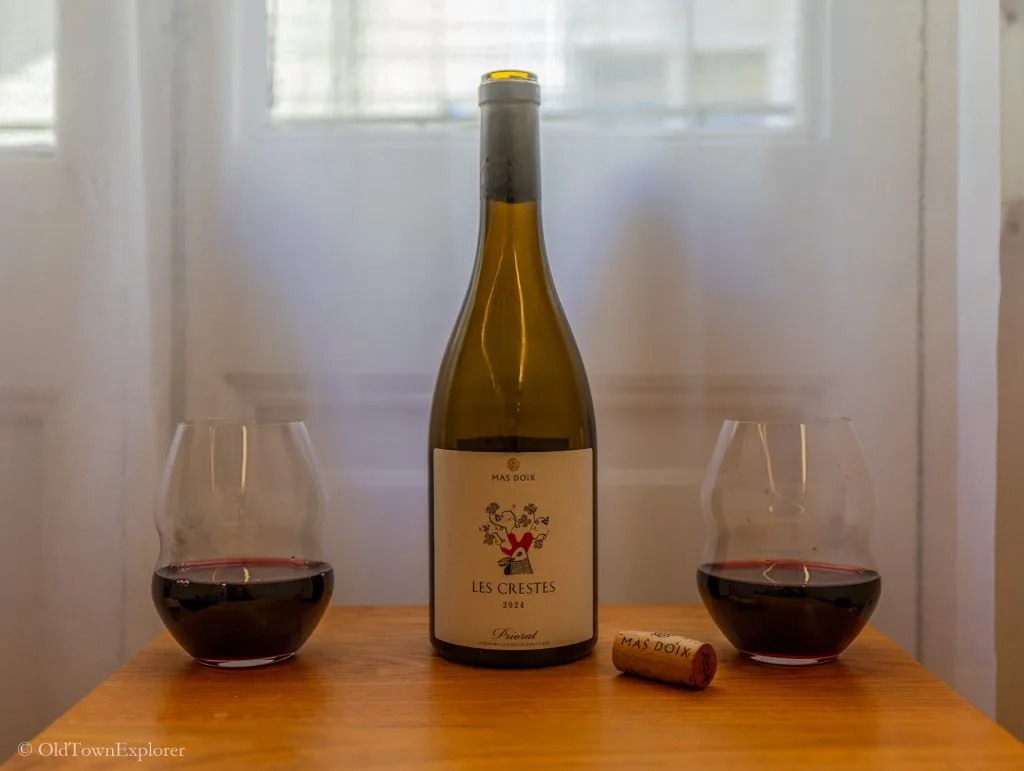
Catalonia is one of Spain’s most important regions for sparkling wine, Mediterranean reds, still whites, and regional variety. Penedès is central for still wines and Cava tasting, Priorat is one of Spain’s two DOCa regions, Montsant gives a broader Garnacha and Cariñena comparison, and Terra Alta is important for Garnacha Blanca.
Barcelona is the clearest city base for Catalan bottles. Use Barcelona Wine for Cava, Penedès, Alella, Priorat, Montsant, Catalan wine bars, shops, and winery planning from the city.
Denominación de Origen (DO)
- Alella
- Cataluña / Catalunya
- Conca de Barberà
- Costers del Segre
- Empordà
- Montsant
- Penedès
- Pla de Bages
- Tarragona
- Terra Alta
These DO names show the range of Catalan wine, from coastal Alella and Empordà to Penedès, Montsant, Terra Alta, Tarragona, and inland Costers del Segre.
Denominación de Origen Calificada (DOCa)
- Priorat / Priorato
Priorat is the Catalan DOCa to know for steep vineyards, Garnacha, Cariñena, and structured Mediterranean reds.
Supra-autonomous Denominación de Origen (DO)
- Cava
Cava is registered separately because its approved area is not limited to Catalonia, but Penedès and Barcelona remain the main first routes for Cava tasting.
Extremadura
Extremadura is a large western region where Ribera del Guadiana is the main protected name. The region produces reds from Tempranillo, Garnacha Tintorera, Cabernet Sauvignon, and other grapes, along with whites from Cayetana Blanca, Pardina, Macabeo, and local varieties.
Extremadura wines fit grilled meats, pork, lamb, stews, cheeses, paprika-seasoned dishes, and inland meals. The region is more likely to appear in bottle shops or regional lists than as a first wine-tour route.
Denominación de Origen (DO)
- Ribera del Guadiana
Ribera del Guadiana is the protected name that carries most Extremadura wine searches and label recognition.
Vino de la Tierra / Indicación Geográfica Protegida (IGP)
- Extremadura
The Extremadura IGP is the broad regional label for wines outside the Ribera del Guadiana DO.
Basque Country
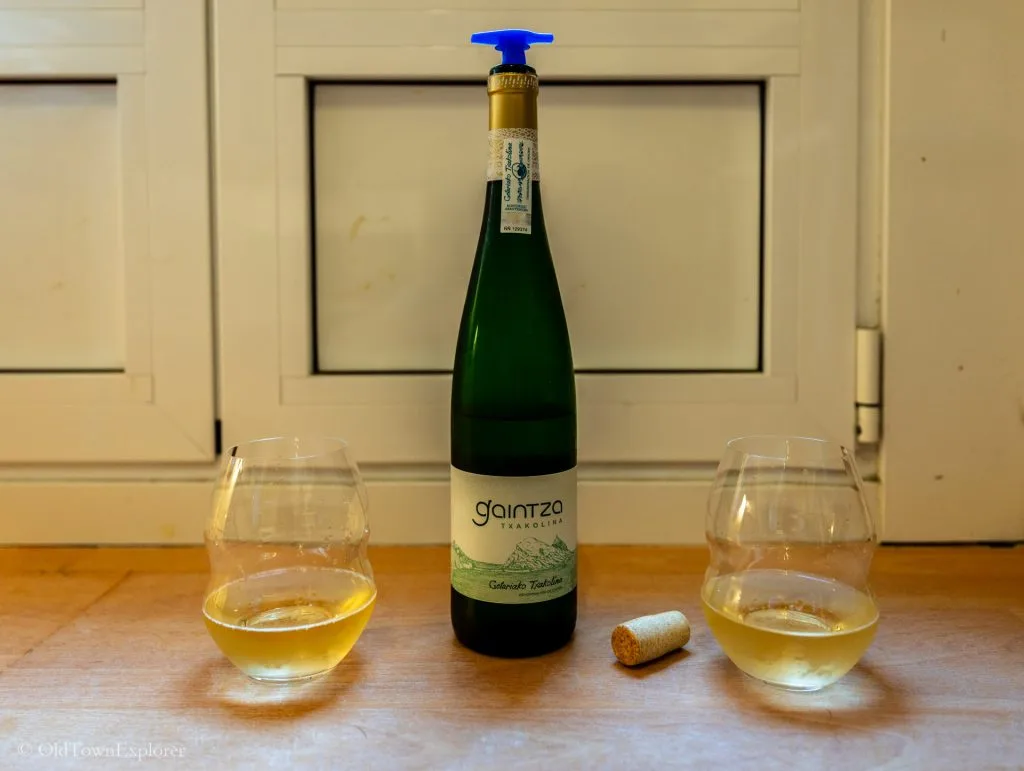
The Basque Country is the main region for txakoli, a fresh Atlantic wine style made mostly from Hondarrabi Zuri, with Hondarrabi Beltza also appearing in rosé or red versions. Getaria, Bizkaia, and Álava are the main txakoli names, while Rioja Alavesa links the Basque Country to Rioja’s Tempranillo tradition.
San Sebastian is the clearest city base for txakoli with pintxos, seafood, anchovies, grilled fish, and coastal meals. Use San Sebastian Wine for wine bars, shops, txakoli, local tasting, and nearby winery planning.
Denominación de Origen (DO)
- Arabako Txakolina / Txakolí de Álava / Chacolí de Álava
- Bizkaiko Txakolina / Chacolí de Bizkaia / Txakolí de Bizkaia
- Getariako Txakolina / Chacolí de Getaria / Txakolí de Getaria
These three txakoli DO names point to Álava, Bizkaia, and Getaria, with San Sebastian and the coast giving the easiest first food pairing route.
Foral Community of Navarre
Navarre sits between Rioja, Aragón, and the Pyrenees, with a strong rosado tradition and a broad range of reds and whites. Garnacha is important for rosé, while Tempranillo, Cabernet Sauvignon, Merlot, Graciano, Chardonnay, and Viura appear across regional lists and protected estates.
Navarre is a good region for comparing rosado, Rioja-adjacent reds, and Vino de Pago estates. Pair rosado with vegetables, rice dishes, seafood, pork, and tapas, and pair the reds with lamb, grilled meats, mushrooms, and aged cheese.
Denominación de Origen (DO)
- Navarra
Navarra is the main protected regional name, especially for rosado, Garnacha, Tempranillo, and Rioja-adjacent reds.
Vino de Pago (VP)
- Bolandin
- Pago de Arínzano
- Pago de Otazu
- Prado de Irache
The Navarre Vino de Pago names add estate-led bottles beside the broader Navarra DO.
Vino de la Tierra / Indicación Geográfica Protegida (IGP)
- 3 Riberas
3 Riberas is the Navarre IGP to know for broader regional wines outside the Navarra DO and Vino de Pago names.
Supra-autonomous Vino de la Tierra / Indicación Geográfica Protegida (IGP)
- Ribera del Queiles
Ribera del Queiles crosses Navarre and Aragón, so it is best read as an Ebro-edge label rather than a single-community wine name.
Balearic Islands
The Balearic Islands, especially Mallorca, are important for island wines made from local grapes and Mediterranean varieties. Binissalem and Pla i Llevant are the main DO names, while the IGP zones cover Mallorca, Menorca, Ibiza, Formentera, and broader island bottlings.
Look for Callet, Manto Negro, Fogoneu, Prensal Blanc, Giró Ros, Malvasía, and blends with international grapes. Balearic wines fit seafood, lamb, pork, sobrassada, rice dishes, vegetables, almonds, olive oil, and island cheeses.
Denominación de Origen (DO)
- Binissalem
- Pla i Llevant
Binissalem and Pla i Llevant are the two protected island DO names to know first, especially for Mallorca wine.
Vino de la Tierra / Indicación Geográfica Protegida (IGP)
- Formentera
- Ibiza / Eivissa
- Illes Balears
- Isla de Menorca / Illa de Menorca
- Mallorca
- Serra de Tramuntana-Costa Nord
The Balearic IGP names are important when a bottle points to a specific island or to Mallorca outside the two DO areas.
Canary Islands
The Canary Islands are one of Spain’s most distinctive wine areas because of volcanic soils, old vines, island climates, and local grape names. Tenerife includes several DOs, while Lanzarote, La Palma, El Hierro, La Gomera, Gran Canaria, and island-wide labels add major variety.
Start with Listán Negro for lighter volcanic reds, Listán Blanco or Malvasía for whites, and island blends for seafood, goat cheese, potatoes with mojo, grilled fish, pork, and volcanic-soil comparisons. Canary wines are especially strong when the trip includes Tenerife, Lanzarote, or La Palma.
Denominación de Origen (DO)
- Abona
- El Hierro
- Gran Canaria
- La Gomera
- La Palma
- Lanzarote
- Tacoronte-Acentejo
- Valle de Güímar
- Valle de la Orotava
- Ycoden-Daute-Isora
These DO names show the island-by-island structure of Canary wine, with Tenerife, Lanzarote, La Palma, Gran Canaria, La Gomera, and El Hierro all offering different bottle cues.
Vino de Calidad (VC)
- Islas Canarias
Islas Canarias is the island-wide protected name to notice when the label is broader than one island DO.
Murcia
Murcia is one of Spain’s main regions for Monastrell, especially through Bullas, Yecla, and the wider southeastern wine belt. The wines are usually warmer, darker, fuller, and more structured than many northern Spanish reds, though altitude and older vines can keep acidity and balance in the better bottles.
Choose Monastrell with lamb, beef, pork, grilled meats, stews, sausages, mushrooms, aged cheese, and rice dishes. Jumilla is the first protected name to know in the broader southeast, with Yecla and Bullas giving smaller regional comparisons.
Denominación de Origen (DO)
- Bullas
- Yecla
Bullas and Yecla are the two Murcia-specific DO names, both tied closely to Monastrell and southeastern red-wine styles.
Supra-autonomous Denominación de Origen (DO)
- Jumilla
Jumilla is registered separately because the protected area crosses autonomous-community lines, but it remains the key first Monastrell label for the Murcia and southeastern Spain wine route.
Vino de la Tierra / Indicación Geográfica Protegida (IGP)
- Campo de Cartagena
- Murcia
Campo de Cartagena and Murcia are the broader IGP labels to notice when the bottle sits outside Bullas, Yecla, or Jumilla.
Rioja
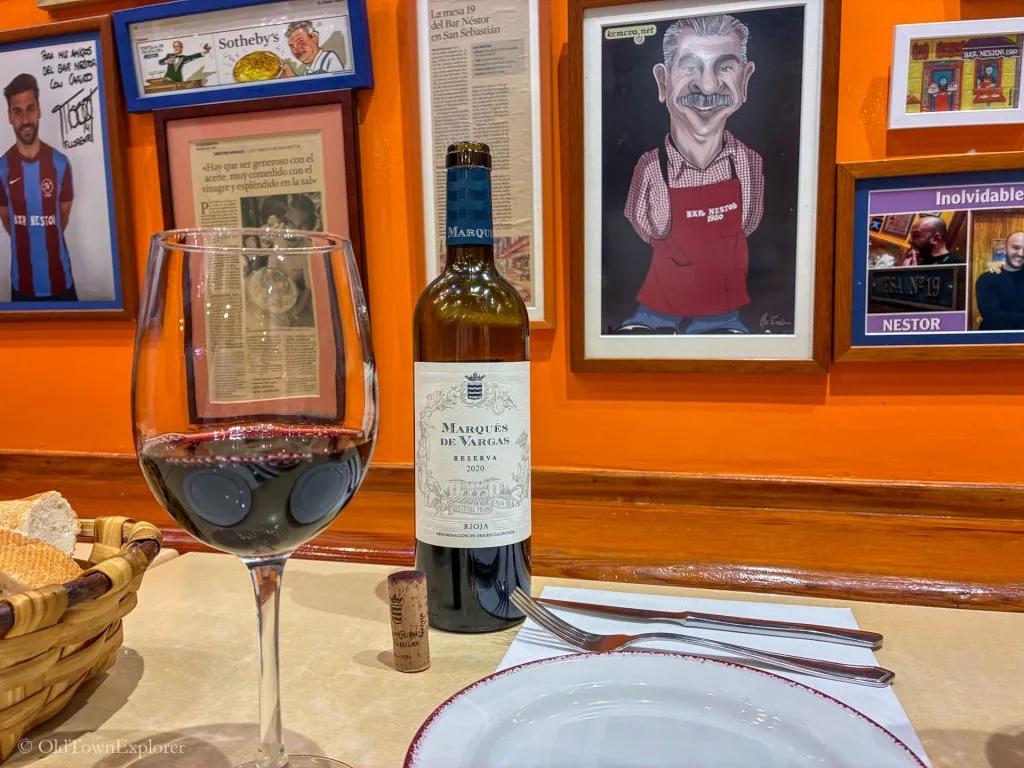
Rioja is Spain’s best-known red-wine region and one of the two DOCa regions, alongside Priorat. The region spans Rioja Alta, Rioja Alavesa, and Rioja Oriental, with Tempranillo as the main grape and Garnacha, Graciano, Mazuelo, and Viura also important.
Rioja labels often show Crianza, Reserva, and Gran Reserva aging terms, so the label gives a first clue about time in cellar, oak influence, and bottle style. Pair Rioja reds with lamb, pork, mushrooms, grilled meats, stews, chorizo, roast vegetables, and aged sheep cheese.
Supra-autonomous Denominación de Origen Calificada (DOCa)
- Rioja
Rioja is registered as supra-autonomous because the DOCa extends beyond La Rioja, but the label remains the clearest first name for oak-aged Tempranillo in Spain.
Vino de la Tierra / Indicación Geográfica Protegida (IGP)
- Valles de Sadacia
Valles de Sadacia is the La Rioja IGP to notice when the bottle is not labeled under the Rioja DOCa.
Grape Varieties in Spain
Spain’s vineyards host a broad mix of native and international grape varieties—many of which are cultivated only in specific regions. While Tempranillo, Garnacha, and Albariño are widely known, Spain is also home to lesser-known yet regionally important grapes like Mencía, Godello, and Bobal. These varieties often reflect unique terroirs, with wines ranging from bold and structured reds to crisp, aromatic whites and oxidative styles.
Spain classifies its wines not only by origin but also by aging (Crianza, Reserva, Gran Reserva), and the grapes used must comply with strict DO or DOCa guidelines. This ensures that each variety retains a strong regional identity and expresses a particular style that reflects local tradition and geography.
White Grapes
Albariño
- Profile: High acidity, citrus, peach, saline finish
- Regions: Rías Baixas (Galicia), northern Portugal (Alvarinho)
- Styles: Crisp, aromatic whites
Spain’s most iconic white grape, Albariño thrives in the coastal vineyards of Galicia. It produces crisp, fragrant wines with citrus, stone fruit, and a distinct saline edge from Atlantic influence. Often vinified in stainless steel, it’s prized for its purity and food-friendly acidity.
Godello
- Profile: Medium to full body, pear, herbs, minerality
- Regions: Valdeorras, Bierzo, Monterrei (Galicia, Castile and León)
- Styles: Fresh to barrel-aged whites
A rising star among Spain’s whites, Godello balances richness with tension. It can produce complex wines with herbal and mineral notes, often likened to high-quality Burgundian Chardonnay when barrel-aged. High-altitude vineyards bring freshness and structure.
Verdejo
- Profile: Citrus, fennel, grassy, slightly bitter finish
- Regions: Rueda (Castile and León)
- Styles: Fresh dry whites, some barrel-aged styles
Verdejo is the dominant white in Rueda, delivering zesty, green-fruited wines often compared to Sauvignon Blanc. When oak-aged, it gains texture and depth. The grape’s natural freshness makes it popular for everyday wines across Spain.
Viura (also called Macabeo)
- Profile: Apple, floral, occasionally nutty; good acidity
- Regions: Rioja, Catalonia, Aragón
- Styles: Still whites, aged whites, cava base
Used widely in white Rioja and as one of the three main cava grapes, Viura is highly versatile. It produces fresh young wines but can also develop nutty, oxidative notes when aged in oak, as in traditional white Rioja Reservas.
Palomino Fino
- Profile: Subtle fruit, saline, nutty when aged
- Regions: Jerez (Andalusia)
- Styles: Fortified wines (fino, amontillado, oloroso)
Palomino is the base grape for Spain’s world-famous sherries. Neutral when vinified dry, it transforms through biological (under flor) or oxidative aging into complex, savory fortified wines. Rarely bottled as a still table wine.
Malvasía
- Profile: Floral, stone fruit, spice
- Regions: Canary Islands, Rioja, Valencia
- Styles: Still and sweet whites
A traditional grape found in older Rioja whites and island wines, Malvasía offers heady aromatics and a broad palate. It’s often blended but can also stand alone in expressive, textural wines.
Xarel·lo
- Profile: Pear, herbs, structure, minerality
- Regions: Penedès (Catalonia)
- Styles: Cava base, still whites
Xarel·lo is a key grape in cava blends, providing body and aging potential. Increasingly used for still wines, it shows saline and herbal notes with notable texture. It’s considered one of Spain’s most terroir-expressive white grapes.
Parellada
- Profile: Delicate, floral, citrus
- Regions: Catalonia (especially Penedès)
- Styles: Cava base, fresh whites
Often used in cava for its finesse and freshness, Parellada brings lightness and floral aromas. Less common in still wines, but sometimes bottled on its own or blended for light summer whites.
Moscatel (Muscat)
- Profile: Grape-like, floral, sweet
- Regions: Málaga, Alicante, Valencia, Canary Islands
- Styles: Sweet wines, fortified, dry aromatics
Aromatic and often sweet, Moscatel is prominent in Mediterranean coastal regions. It produces both light, floral dry wines and rich, sun-dried dessert styles. Fortified examples are especially prized in Málaga and Alicante.
Airén
- Profile: Neutral, light, high alcohol potential
- Regions: Castile-La Mancha
- Styles: Bulk whites, distillation
Once the world’s most planted grape, Airén is still widely grown in central Spain. It’s typically used in blends or for brandy production, though quality-focused producers are beginning to explore its potential for fresh, unoaked wines.
Black Grapes
Tempranillo
- Profile: Cherry, plum, tobacco, leather, balanced tannins
- Regions: Rioja, Ribera del Duero, Toro, La Mancha, Navarra
- Styles: Structured reds, oak-aged wines, blends
Spain’s flagship red grape, Tempranillo is known for its versatility and affinity for oak aging. In Rioja, it produces elegant, medium-bodied wines, while in Ribera del Duero and Toro, it becomes more intense and full-bodied. It goes by various regional names, such as Tinta del País and Cencibel.
Garnacha (Grenache)
- Profile: Ripe red fruit, spice, high alcohol
- Regions: Aragón (Campo de Borja, Calatayud), Priorat, Rioja, Navarra
- Styles: Bold reds, rosé, blends
Garnacha thrives in warm, dry regions and produces juicy, fruit-forward reds with spice and body. In Priorat, it partners with Cariñena for powerful, age-worthy wines. It’s also widely used in rosado (rosé) wines, particularly in Navarra.
Mencía
- Profile: Red berry, floral, herbal, fresh acidity
- Regions: Bierzo, Ribeira Sacra, Valdeorras
- Styles: Elegant reds, sometimes age-worthy
Often compared to Pinot Noir or Cabernet Franc, Mencía is gaining popularity for its expressive, floral reds with minerality and finesse. Grown on steep slopes in Galicia and Castile and León, it reflects the region’s cool-climate influence.
Bobal
- Profile: Dark fruit, earthy, firm tannins
- Regions: Utiel-Requena, Manchuela
- Styles: Structured reds, rosés
Native to eastern Spain, Bobal is known for deep color, high acidity, and rustic character. Long overlooked, it is now being used to craft expressive, terroir-driven wines—often from old vines planted at elevation.
Monastrell (Mourvèdre)
- Profile: Blackberry, spice, gamey, tannic
- Regions: Jumilla, Yecla, Bullas
- Styles: Powerful reds, blends
Monastrell dominates in Murcia and parts of southeastern Spain. It produces robust reds with dark fruit and earthy spice. Recent efforts have focused on balance and restraint, with low-intervention winemaking gaining ground.
Graciano
- Profile: Blackcurrant, floral, high acidity
- Regions: Rioja, Navarra
- Styles: Blending grape, age-worthy reds
Used primarily in Rioja blends, Graciano adds acidity, perfume, and aging potential. Though yields are low, it’s valued for enhancing complexity in both traditional and modern styles.
Mazuelo (Cariñena/Carignan)
- Profile: Dark fruit, tannic, spicy
- Regions: Rioja, Priorat, Aragón (as Cariñena)
- Styles: Blends, robust reds
Known as Cariñena in most regions outside Rioja, this grape brings structure and depth. Often blended with Garnacha and Tempranillo, it features prominently in Priorat and in its namesake DO in Aragón.
Listán Negro
- Profile: Red fruit, smoke, volcanic minerality
- Regions: Canary Islands
- Styles: Light-bodied reds, natural wines
Indigenous to the Canaries, Listán Negro grows in volcanic soils and often on ungrafted vines. Wines are typically pale, savory, and smoky, with wild acidity and a distinct island character.
Trepat
- Profile: Strawberry, pepper, light body
- Regions: Conca de Barberà, Catalonia
- Styles: Light reds, rosés, cava rosado
Trepat is mostly used in sparkling rosés but can also produce delicate reds. Its light body and peppery edge suit fresh styles and have drawn attention from natural winemakers.
Sumoll
- Profile: Cranberry, herbs, sharp acidity
- Regions: Catalonia
- Styles: Natural reds, rosés
Once nearly extinct, Sumoll has returned in artisanal Catalan wines. Naturally high in acidity, it delivers light, punchy reds with character and aging potential when handled carefully.
How to Choose and Taste Spain Wine
Choosing Spain wine is usually easiest by reading region, protected-origin term, producer, grape, aging term, sweetness, and style. A clear first tasting compares Rioja Tempranillo, Ribera del Duero Tempranillo, Rías Baixas Albariño, Rueda Verdejo, Jerez fino or manzanilla, Cava, Priorat or Montsant Garnacha, and Bierzo Mencía.
Wine Labels, DOP, IGP, DO, DOCa, VC, and Vino de Pago
Spanish wine labels may use EU protected-origin terms and Spanish traditional terms. DOP is the protected-origin category, while DO, DOCa, VC, and Vino de Pago are Spanish traditional terms that may appear on labels. IGP is the protected-geographical-indication category, often seen in Spain as Vino de la Tierra.
- DOP: Protected designation of origin category used for wines tied closely to a defined place and production rules
- DO: Denominación de Origen, the common Spanish traditional term for many protected wine regions
- DOCa: Denominación de Origen Calificada, used by Rioja and Priorat
- VC: Vino de Calidad, a protected category for quality wine with geographical indication
- Vino de Pago: Single-estate protected wine category used for approved estate wines
- IGP or Vino de la Tierra: Broader protected geographical indication category, often covering wider regional areas
For most restaurant and bottle-shop decisions, start with the place name. Rioja, Ribera del Duero, Rías Baixas, Rueda, Jerez, Priorat, Penedès, Jumilla, Utiel-Requena, and Canary Islands names usually tell more than the EU category alone.
Crianza, Reserva, and Gran Reserva
Crianza, Reserva, and Gran Reserva are Spanish aging terms. They are especially visible on Rioja, Ribera del Duero, and other red-wine labels, but exact aging rules depend on the protected designation and wine type.
- Crianza: Usually a younger oak-aged style than Reserva and Gran Reserva, often ready for lamb, pork, tapas, and everyday meals
- Reserva: Usually longer-aged and more developed, often showing more oak, leather, spice, dried fruit, and structure
- Gran Reserva: Usually the longest-aged category, often with more bottle development, softer tannins, and stronger pairing with roast meat, stews, and aged cheese
Use these terms as style clues, not as automatic quality rankings. A young village wine, a modern producer bottling, or a single-vineyard bottle may be the better choice depending on the meal and region.
Wine Tasting in Spain
City tasting is the easiest way to begin. Barcelona gives access to Cava, Penedès, Alella, Priorat, Montsant, Catalan whites, and broader Spanish lists. San Sebastian gives access to txakoli, Rioja Alavesa, Basque wine bars, and pintxos pairings. Seville gives access to sherry, Montilla-Moriles, Málaga wines, Andalusian bottles, and tapas bars.
Barcelona Wine covers Catalan wine bars, shops, Cava, Penedès, Alella, and winery trips from the city. San Sebastian Wine covers txakoli, pintxos pairings, wine bars, shops, and nearby tasting. Seville Wine covers sherry, Andalusian wine bars, shops, and southern Spanish bottles.
Winery visits usually need advance contact. Confirm tasting times, language, transport, food, payment, and route timing before leaving the city, especially for Rioja, Ribera del Duero, Jerez, Sanlúcar, Penedès, Priorat, Rías Baixas, Rueda, Bierzo, Jumilla, Utiel-Requena, and island routes.
Food Pairings with Spain Wine
- Albariño: Shellfish, octopus, grilled fish, seafood rice, soft cheese, and salty tapas
- Godello: Fish, poultry, pork, mushrooms, cheese, octopus, and richer seafood
- Verdejo: Fish, salads, poultry, pork, cheese, vegetables, and fried foods
- Fino and manzanilla: Olives, almonds, jamón, fried fish, shellfish, tapas, and salty snacks
- Cava: Aperitivo snacks, seafood, fried foods, cheese, charcuterie, tapas, and opening courses
- Tempranillo: Lamb, pork, grilled meats, mushrooms, stews, chorizo, roast vegetables, and aged cheese
- Garnacha: Lamb, pork, sausages, grilled vegetables, stews, mushrooms, rice dishes, and tapas
- Mencía: Pork, mushrooms, poultry, octopus, river fish, stews, and cheese
- Monastrell: Lamb, beef, grilled meats, stews, sausages, rice dishes, mushrooms, and aged cheese
- Txakoli: Pintxos, anchovies, grilled fish, shellfish, seafood, white cheese, and fried foods
- Sweet sherry, Moscatel, and Málaga wines: Blue cheese, nuts, dried fruit, chocolate, pastries, and small sweet courses
Food makes Spain wine easier to choose: Albariño fits seafood, Tempranillo fits lamb and pork, fino fits tapas and fried foods, txakoli fits pintxos, Cava fits aperitivo and fried dishes, and sweet fortified wines fit desserts, nuts, and blue cheese. Spain Food covers the dishes and regional products that shape those pairings.
FAQs About Spain Wine
What wine is Spain known for?
Spain is known for Rioja, Ribera del Duero, Cava, sherry, Rías Baixas Albariño, Rueda Verdejo, Priorat, Bierzo Mencía, Jumilla Monastrell, Utiel-Requena Bobal, txakoli, Canary Island wines, Tempranillo, Garnacha, Palomino Fino, Albariño, Verdejo, and Godello.
Where should I start with Spanish wine?
Start with Rioja Tempranillo, Ribera del Duero Tempranillo, Rías Baixas Albariño, Rueda Verdejo, Jerez fino or manzanilla, Cava, Priorat or Montsant Garnacha, and Bierzo Mencía. That tasting set gives a first comparison of aged reds, Atlantic whites, sparkling wine, fortified wine, Mediterranean reds, and northwestern reds.
What Spanish red wine should I try first?
Start with Tempranillo from Rioja and Ribera del Duero. Add Garnacha from Aragón, Priorat, or Montsant; Mencía from Bierzo or Ribeira Sacra; Monastrell from Jumilla; Bobal from Utiel-Requena; and Listán Negro from the Canary Islands.
What Spanish white wine should I try first?
Start with Albariño from Rías Baixas, Verdejo from Rueda, Godello from Valdeorras, Viura from Rioja, Xarel·lo from Penedès, and Palomino Fino through fino or manzanilla sherry. Add Malvasía from the Canary Islands and Moscatel from Málaga, Alicante, or Valencia for aromatic and sweet styles.
What do DO, DOCa, DOP, IGP, and Vino de Pago mean?
DOP is the EU protected-origin category. DO and DOCa are Spanish traditional terms used for protected wine regions, with DOCa used by Rioja and Priorat. IGP is the protected-geographical-indication category, often seen in Spain as Vino de la Tierra. Vino de Pago is a single-estate protected wine category.
What do Crianza, Reserva, and Gran Reserva mean?
Crianza, Reserva, and Gran Reserva are aging terms. They usually signal progressively longer ageing before release, often including time in oak and bottle, but exact rules depend on the protected designation and wine type.
What is Spain’s best-known wine region?
Rioja is Spain’s best-known wine region internationally and one of the country’s two DOCa regions, along with Priorat. Rioja is especially known for Tempranillo-based reds and aging terms such as Crianza, Reserva, and Gran Reserva.
What is sherry?
Sherry is a fortified wine from the Jerez area of Andalusia. Dry styles include fino, manzanilla, amontillado, oloroso, and palo cortado, while sweet styles include Pedro Ximénez and some Moscatel wines. Sherry is one of Spain’s most important food wines.
What is Cava?
Cava is a Spanish traditional-method sparkling wine made in approved areas, especially Penedès in Catalonia. The classic grapes are Macabeo, Xarel·lo, and Parellada, though other grapes may also appear depending on producer and rules.
Where should I taste wine in Spain without a car?
Barcelona, San Sebastian, and Seville are strong city bases for tasting Spanish wine without a car. Barcelona works well for Cava, Penedès, Alella, Priorat, and Catalan wine bars. San Sebastian works well for txakoli, pintxos, and Rioja Alavesa bottles. Seville works well for sherry, Montilla-Moriles, Málaga wines, and Andalusian wine bars.
Do I need reservations for winery visits in Spain?
Reservations are safer for many winery visits, especially in Rioja, Ribera del Duero, Jerez, Sanlúcar, Penedès, Priorat, Rías Baixas, Rueda, Bierzo, Jumilla, Utiel-Requena, and island regions. Confirm tasting times, language, transport, food, payment, and route timing before leaving the city.
What food pairs with Spain wine?
Albariño pairs well with shellfish, octopus, and grilled fish. Tempranillo fits lamb, pork, stews, and aged cheese. Fino and manzanilla fit tapas, olives, almonds, jamón, and fried fish. Cava fits aperitivo, seafood, fried foods, and cheese. Txakoli fits pintxos, anchovies, and coastal dishes.