
Discover Hofburg Palace: History, Architecture & What to See
Hofburg Palace is the former Habsburg imperial palace in central Vienna. It sits between Michaelerplatz, Heldenplatz, Josefsplatz, the Ringstrasse, and the old city streets, so it works as both a palace visit and one of Vienna’s most important architecture walks.
The complex began as a medieval fortified castle and grew into a large palace district with courtyards, gates, museums, ceremonial rooms, churches, libraries, gardens, and official government spaces. The main visitor decision is whether to treat the Hofburg as a free exterior walk, a paid imperial-apartment visit, a museum day, or a route through several nearby buildings.
We visited Hofburg Palace several times during our stay in Vienna. Start with the outside spaces if time is short, then choose the Imperial Apartments, Sisi Museum, Imperial Treasury, Austrian National Library State Hall, Spanish Riding School, or Neue Burg museums if you want a deeper interior visit.
This website contains affiliate links that may earn us a small commission at no additional cost to you.
Hofburg Palace at a Glance
Hofburg Palace is not one building with one entrance. It is a large palace complex in Vienna’s Innere Stadt, with free courtyards and squares outside and several separate paid museums, rooms, and cultural institutions inside.
Key Hofburg Palace decisions:
- What it is: Former Habsburg imperial palace complex with Gothic, Renaissance, Baroque, Rococo, Neoclassical, and Historicist layers.
- Where it is: In central Vienna, between Michaelerplatz, Heldenplatz, Josefsplatz, the Ringstrasse, and the old city streets.
- What to see first: Michaelerplatz, St. Michael’s Wing, Swiss Gate, Swiss Court, Imperial Apartments, Sisi Museum, Imperial Treasury, Austrian National Library State Hall, Spanish Riding School, and Neue Burg.
- Exterior or interior: Courtyards, gates, squares, and façades work well as a free architecture walk; interiors need separate time, tickets, and planning.
- Time needed: Allow about one hour for an exterior walk, two to three hours for one major interior visit, and longer if you combine museums.
- Main trade-off: The Hofburg is central and easy to reach, but its size makes it easy to underestimate. Choose a clear focus before you arrive.
For most first visits, start outside at Michaelerplatz, walk through the courtyards toward Heldenplatz, then choose one interior priority rather than trying to see every museum in the complex.
History of Hofburg Palace
The history of Hofburg Palace explains why the complex feels uneven in the best way. Each major period added another wing, courtyard, façade, museum, or ceremonial space rather than replacing the palace with one single design.
Medieval Fortress
The Hofburg began as a fortified medieval castle in the 13th century. The oldest core is the Alte Burg, later known as the Swiss Wing, where the Swiss Court and Swiss Gate still help visitors read the palace’s defensive and Renaissance layers.
Habsburg Residence
The Habsburgs ruled from the Hofburg from the 13th century through the end of the monarchy in 1918. The complex grew as the dynasty’s political role expanded, first in Austria, then in the Holy Roman Empire, and later in the Austrian Empire.
Renaissance and Baroque Expansion
Renaissance and Baroque additions changed the Hofburg from a fortified castle into an imperial residence and administrative center. Wings such as the Amalienburg, Leopoldine Wing, Imperial Chancellery Wing, and St. Michael’s Wing show how court life, offices, ceremonial rooms, and palace approaches expanded around the older core.
Imperial Apartments and Court Life
The Imperial Apartments show the residential side of the Hofburg, especially the rooms connected with Emperor Franz Joseph and Empress Elisabeth. These interiors matter because they turn the huge palace complex back into a lived-in imperial residence.
Republic, Museums, and Public Space
After the end of the monarchy, the Hofburg became a mix of public squares, museums, cultural institutions, and official state spaces. The Austrian Federal President’s offices, the Sisi Museum, the Imperial Apartments, the Spanish Riding School, the Austrian National Library, and several museum collections now share the former palace district.
Architecture and Layout of Hofburg Palace
Hofburg Palace is best understood as a palace district rather than a single palace building. The architecture changes as you move from Michaelerplatz into older courtyards, Baroque wings, Heldenplatz, Neue Burg, Josefsplatz, and the surrounding museum and garden edges.
Palace District Layout
The complex sits across several city blocks in the Innere Stadt. Michaelerplatz gives the most dramatic palace entrance, the Swiss Court holds the oldest palace core, Josefsplatz connects to the Austrian National Library, and Heldenplatz opens the complex toward the Ringstrasse and Neue Burg.
Michaelerplatz and St. Michael’s Wing
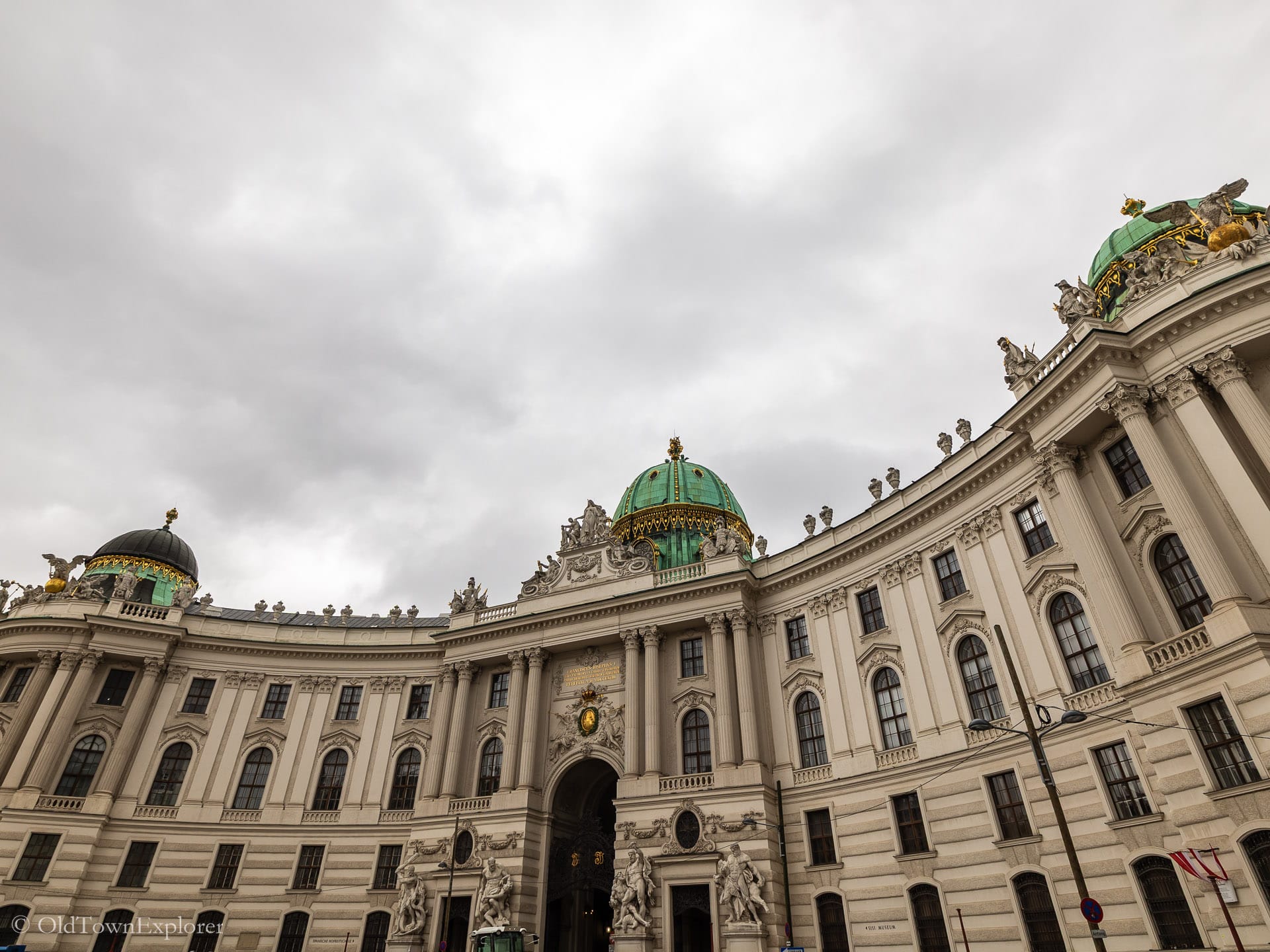
St. Michael’s Wing creates the palace’s grand Baroque face toward Michaelerplatz. The curved façade, dome, gateways, and horseshoe-like entrance make this the clearest first exterior view for understanding the Hofburg as an imperial arrival point.
Swiss Court and Swiss Gate
The Swiss Court marks the oldest part of the Hofburg complex. The Swiss Wing preserves the medieval core, while the Swiss Gate adds a Renaissance layer with heraldic decoration and a strong sense of entry into the older palace.
Baroque Wings and Ceremonial Spaces
The Leopoldine Wing, Imperial Chancellery Wing, Redoute Wing, Augustinian Wing, and related palace rooms show the Hofburg’s Baroque and ceremonial expansion. These wings matter because they explain the palace as a working court, not only as a royal residence.
Neue Burg and Heldenplatz
Neue Burg changes the scale of the Hofburg on the Heldenplatz side. The Neue Hofburg was planned as part of a larger imperial project that remained unfinished, but its curved façade, grand staircases, and museum rooms still make it one of the strongest Historicist pieces of the complex.
Libraries, Museums, and Reused Palace Rooms
Several parts of the Hofburg now function as museums or cultural institutions. The Austrian National Library State Hall, Imperial Treasury, Sisi Museum, Imperial Apartments, Weltmuseum Wien, and House of Austrian History show how palace architecture now supports collections, exhibitions, and public visits.
Attractions in the Hofburg Palace
The Hofburg Imperial Palace complex includes the former winter residence of the Habsburgs and today houses several museums and government offices. Key sites within the Hofburg include the Imperial Apartments, the Sisi Museum, the Silver Collection, and the Austrian National Library. The architecture reflects centuries of expansion and combines Gothic, Renaissance, Baroque, and Rococo styles. Visitors can explore grand halls, ornate rooms, and historic collections showcasing Vienna’s imperial history.

Hofburg
- Architect: Multiple architects over centuries
- Style: Medieval, Renaissance, Baroque, Rococo, and Classicist
- Year Built: 13th century onwards
- Address: Michaelerkuppel, 1010 Vienna, Austria
The former imperial palace of the Habsburg dynasty, the Hofburg has evolved over centuries into a complex housing museums, the Austrian National Library, and the offices of the President of Austria.
Swiss Gate
Schweizertor
- Architect: Pietro Ferabosco
- Style: Renaissance
- Year Built: 1552
- Address: Schweizerhof, 1010 Vienna, Austria
The Swiss Gate serves as the main entrance to the oldest part of the Hofburg, the Swiss Courtyard. Notable for its Renaissance design, it features intricate heraldic reliefs and inscriptions, symbolizing the power of the Habsburg dynasty.
Redoute Wing
Redoutensäle
- Architect: Jean Nicolas Jadot de Ville-Issey
- Style: Baroque
- Year Built: 1744–1748
- Address: Josefsplatz, 1010 Vienna, Austria
This wing includes the Redoutensäle, grand halls used historically for courtly balls and events. After suffering fire damage in 1992, they were restored and now host various cultural events.
Imperial Chancellery Wing
Reichskanzleitrakt
- Architect: Lukas von Hildebrandt
- Style: Baroque
- Year Built: 1723–1730
- Address: Hofburg, 1010 Vienna, Austria
This wing housed the offices of the Imperial Vice-Chancellor and features a richly decorated façade, exemplifying the grandeur of Baroque architecture.
Amalienburg
- Architect: Not specifically documented
- Style: Renaissance with Baroque modifications
- Year Built: 1575–1581
- Address: Hofburg, 1010 Vienna, Austria
Named after Empress Amalie Wilhelmine, this wing served as a residence for various members of the imperial family and is noted for its distinctive tower with a dome and astronomical clock.
Leopoldine Wing
Leopoldinischer Trakt
- Architect: Filiberto Lucchese and Giovanni Pietro Tencala
- Style: Baroque
- Year Built: 1660–1666
- Address: Hofburg, 1010 Vienna, Austria
Commissioned by Emperor Leopold I, this wing now houses the offices of the Austrian Federal President and features elegant Baroque architecture.
Augustinian Wing
- Architect: Not specifically documented
- Style: Baroque
- Year Built: 18th century
- Address: Josefsplatz, 1010 Vienna, Austria
Connecting the Hofburg to the Augustinian Church, this wing includes the Augustinian Hall and was used for various court functions.
Festival Hall Wing
Festsaaltrakt
- Architect: Gottfried Semper and Karl von Hasenauer
- Style: Historicist
- Year Built: 1870–1890
- Address: Heldenplatz, 1010 Vienna, Austria
This wing includes the grand Festsaal (Festival Hall), used for state functions and ceremonies, and is part of the Neue Burg extension of the Hofburg.
St. Michael's Wing
Michaelertrakt
- Architect: Joseph Emanuel Fischer von Erlach
- Style: Baroque
- Year Built: 1726–1730
- Address: Michaelerplatz, 1010 Vienna, Austria
Facing Michaelerplatz, this wing features a grand façade with a central dome and serves as one of the main entrances to the Hofburg complex.
The Imperial Apartments
- Architect: Various
- Style: Baroque and Rococo
- Year Built: 18th century
- Address: Hofburg, 1010 Vienna, Austria
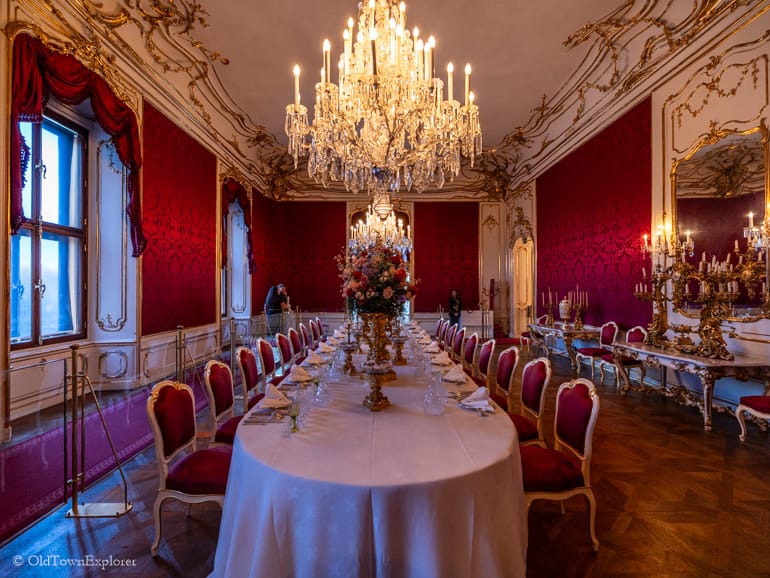
These restored rooms provide a glimpse into the daily life of Emperor Franz Joseph and Empress Elisabeth, showcasing original furnishings and décor.
Hofburg Chapel
Burgkapelle
- Architect: Unknown
- Style: Gothic
- Year Built: 1449
- Address: Hofburg, 1010 Vienna, Austria
The Hofburg Chapel serves as the seat of the Vienna Hofmusikkapelle. Built in the 15th century, it continues to host performances by the Vienna Boys' Choir during Sunday Masses.
Heldenplatz
aka Heroes' Square
- Architect: Peter von Nobile (for the Äußeres Burgtor)
- Style: Neoclassical
- Year Built: 1821–1824 (Äußeres Burgtor)
- Address: Heldenplatz, 1010 Vienna, Austria
A significant public space in front of the Hofburg Palace, Heldenplatz is framed by the Äußeres Burgtor, a triumphal arch commemorating the Battle of Leipzig.
Michaelerplatz
- Architect: Joseph Emanuel Fischer von Erlach (Michaelertrakt); Adolf Loos (Looshaus)
- Style: Baroque (Michaelertrakt); Modernist (Looshaus)
- Year Built: 18th century (Michaelertrakt); 1912 (Looshaus)
- Address: Michaelerplatz, 1010 Vienna, Austria
This historic square features the Baroque Michaelertrakt of the Hofburg and the pioneering modernist Looshaus, reflecting Vienna's architectural evolution.
Imperial Treasury Vienna
Kaiserliche Schatzkammer Wien
- Architect: Johann Bernhard Fischer von Erlach
- Style: Baroque
- Year Built: 16th century (Schweizerhof); opened as a museum in 1954
- Address: Schweizerhof, Hofburg, 1010 Vienna, Austria
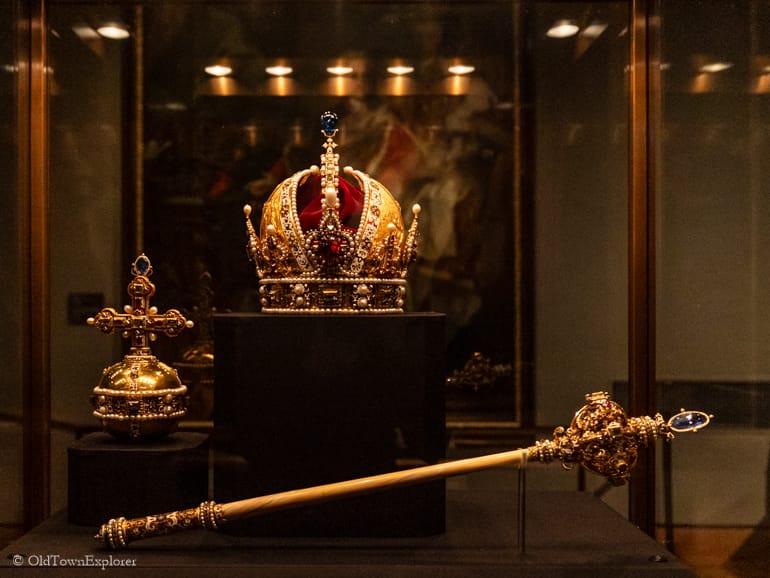
Housing the regalia of the Holy Roman and Austrian Empires, the treasury is located in the Renaissance-style Swiss Courtyard of the Hofburg.
Imperial Silver Collection
Silberkammer
- Architect: Not specified
- Style: Imperial residential
- Year Built: Part of the Hofburg complex; specific date not provided
- Address: Hofburg, 1010 Vienna, Austria
This collection showcases courtly dining artifacts, including porcelain, crystal, and the notable 30-meter-long Milan centerpiece.
Spanish Riding School
Spanische Hofreitschule
- Architect: Joseph Emanuel Fischer von Erlach
- Style: Baroque
- Year Built: 1729–1735
- Address: Michaelerplatz, Hofburg, 1010 Vienna, Austria
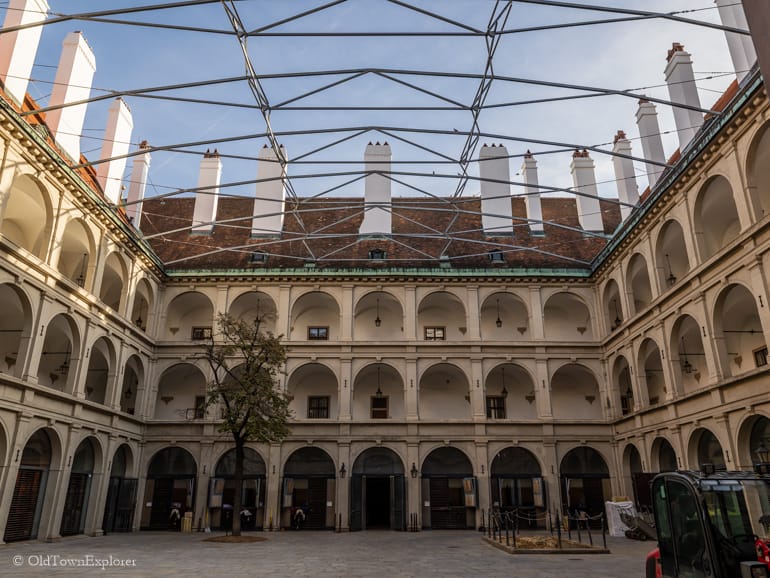
Renowned for classical dressage performances by Lipizzaner horses, the school operates in the Baroque Winter Riding School within the Hofburg.
Stallburg
- Architect: Not specifically documented
- Style: Renaissance
- Year Built: 1558–1565
- Address: Stallburg, 1010 Vienna, Austria
Originally constructed as a residence for Archduke Maximilian, the Stallburg later housed the imperial art collection and now serves as part of the Spanish Riding School, accommodating the Lipizzaner horses.
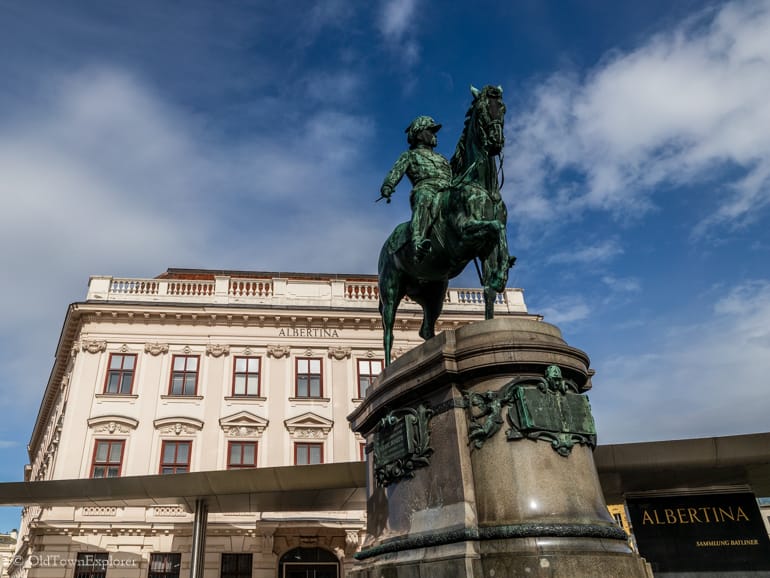
Albertina
- Architect: Not specified
- Style: Neoclassical
- Year Built: Established in 1805
- Address: Albertinaplatz 1, 1010 Vienna, Austria
Originally a palace, the Albertina now houses one of the world's most significant print rooms, with collections spanning from the Renaissance to contemporary art.
Austrian National Library
Prunksaal
- Architect: Johann Bernhard Fischer von Erlach; completed by Joseph Emanuel Fischer von Erlach
- Style: Baroque
- Year Built: 1726
- Address: Josefsplatz 1, 1010 Vienna, Austria
The grand hall is the centerpiece of the Austrian National Library, featuring ornate frescoes and housing a vast collection of historical books.
World Museum Vienna
Weltmuseum Wien
- Architect: Gottfried Semper and Karl von Hasenauer
- Style: Historicist
- Year Built: 1871–1881
- Address: Heldenplatz, 1010 Vienna, Austria
Originally part of the Imperial Palace's Neue Burg wing, the Weltmuseum Wien houses extensive ethnographic collections from around the world, reflecting Austria's imperial history and global connections.
House of Austrian History
Haus der Geschichte Österreich
- Architect: Gottfried Semper and Karl von Hasenauer
- Style: Historicist
- Year Built: 1871–1881 (as part of Neue Burg)
- Address: Neue Burg, Heldenplatz, 1010 Vienna, Austria
Austria's first museum dedicated to contemporary history, it offers insights into the country's political, social, and cultural developments from the late 19th century to the present.
Ephesus Museum
Ephesos-Museum
- Architect: Gottfried Semper and Karl von Hasenauer
- Style: Historicist
- Year Built: 1871–1881 (as part of Neue Burg)
- Address: Neue Burg, Heldenplatz, 1010 Vienna, Austria
Showcasing artifacts from the ancient city of Ephesus, the museum features sculptures, reliefs, and architectural elements excavated by Austrian archaeologists in the late 19th and early 20th centuries.
Papyrus Museum
- Architect: Not specified
- Style: Baroque (Palais Mollard-Clary)
- Year Built: 17th century
- Address: Herrengasse 9, 1010 Vienna, Austria
Home to one of the world's largest collections of papyri, the museum offers a glimpse into ancient Egyptian, Greek, and Roman written cultures.
Collection of Arms and Armor
Hofjagd- und Rüstkammer
- Architect: Gottfried Semper and Karl von Hasenauer
- Style: Historicist
- Year Built: 1871–1881 (as part of Neue Burg)
- Address: Neue Burg, Heldenplatz, 1010 Vienna, Austria
This collection displays an array of ceremonial armor, weapons, and hunting equipment, illustrating the martial traditions of the Habsburg court.
Austrian Film Museum
Österreichisches Filmmuseum
- Architect: Not specified
- Style: Modernist (within Albertina complex)
- Year Built: Established in 1964
- Address: Augustinerstraße 1, 1010 Vienna, Austria
Dedicated to the preservation and presentation of film as an art form, the museum hosts screenings and exhibitions focusing on international and Austrian cinema history.
Volksgarten
- Architect: Ludwig Remy
- Style: English landscape garden
- Year Built: 1820–1823
- Address: Volksgarten, 1010 Vienna, Austria
Opened to the public in 1823, this park features manicured lawns, rose gardens, and the neoclassical Theseus Temple, offering a tranquil retreat in the city center.
Burggarten
- Architect: Friedrich Ohmann
- Style: English landscape garden
- Year Built: 1818–1823
- Address: Burggarten, 1010 Vienna, Austria
Once the private garden of the Habsburgs, it now serves as a public park featuring monuments to Emperor Franz Joseph I and composer Wolfgang Amadeus Mozart.
Maria-Theresien-Platz
- Architect: Gottfried Semper and Carl von Hasenauer
- Style: Historicist
- Year Built: 1889
- Address: Maria-Theresien-Platz, 1010 Vienna, Austria
A grand square flanked by the Kunsthistorisches Museum and the Naturhistorisches Museum, centered around a monumental statue of Empress Maria Theresa.
Sisi Museum
- Architect: Not specified
- Style: Baroque (within Hofburg)
- Year Built: Opened in 2004
- Address: Hofburg, 1010 Vienna, Austria
Dedicated to Empress Elisabeth of Austria, known as "Sisi," the museum offers personal artifacts, portraits, and insights into her life and legacy.
Collection of Historic Musical Instruments
- Architect: Gottfried Semper and Karl von Hasenauer
- Style: Historicist
- Year Built: 1871–1881 (as part of Neue Burg)
- Address: Neue Burg, Heldenplatz, 1010 Vienna, Austria
Featuring instruments from the Renaissance to the 20th century, the collection includes pieces associated with famous composers like Mozart and Beethoven.
Church of the Augustinian Friars
Augustinerkirche
- Architect: Unknown
- Style: Gothic
- Year Built: 1339
- Address: Augustinerstraße 3, 1010 Vienna, Austria
This church served as the imperial court church and was the site of many Habsburg weddings, including that of Emperor Franz Joseph and Empress Elisabeth.
Butterfly House
Schmetterlinghaus
- Architect: Friedrich Ohmann
- Style: Art Nouveau
- Year Built: 1901
- Address: Burggarten, 1010 Vienna, Austria
A tropical oasis housing hundreds of free-flying butterflies within a stunning Art Nouveau greenhouse.

Museum of Art History
Kunsthistorisches Museum Wien
- Architect: Gottfried Semper and Carl von Hasenauer
- Style: Renaissance Revival
- Year Built: 1891
- Address: Maria-Theresien-Platz, 1010 Vienna, Austria
One of the world's foremost fine arts museums, it houses the Habsburgs' extensive art collections, including works by Old Masters.

Natural History Museum
Naturhistorisches Museum Vienna
- Architect: Gottfried Semper and Carl von Hasenauer
- Style: Renaissance Revival
- Year Built: 1889
- Address: Burgring 7, 1010 Vienna, Austria
One of the most significant natural history museums in the world, it houses over 30 million objects, including meteorites, fossils, and taxidermy specimens, all displayed in a grand neoclassical setting.
Globe Museum / Esperanto Museum
Globenmuseum
- Architect: Palais Mollard-Clary (original palace structure)
- Style: Baroque
- Year Built: 1686–89
- Address: Herrengasse 9, 1010 Vienna, Austria
These two museums are housed within the Austrian National Library’s Palais Mollard annex. The Globe Museum is the only one of its kind in the world, dedicated to terrestrial and celestial globes. The Esperanto Museum explores constructed languages and the history of international language movements.
Theater Museum
Originally Palais Lobkowitz
- Architect: Not Specified
- Style: Baroque
- Year Built: Late 17th century (Palais completed ~1690)
- Address: Lobkowitzplatz 2, 1010 Vienna, Austria
Situated in one of Vienna’s oldest aristocratic residences, this museum presents Austria’s rich theatrical history through stage models, costumes, and archival materials, with a focus on Viennese performance traditions.
How to Visit Hofburg Palace
A Hofburg visit can be as simple as a free walk through courtyards or as full as a multi-museum day. The key is to separate exterior architecture from ticketed interiors before you arrive.
Free Exterior Walk
You can understand a lot of the Hofburg from outside by walking between Michaelerplatz, the Swiss Court, Josefsplatz, Heldenplatz, Volksgarten, Burggarten, and the Ringstrasse edge. This is the best option when time is short or when the main goal is architecture rather than museum collections.
Paid Interior Visits
Paid interior choices include the Imperial Apartments, Sisi Museum, Imperial Treasury, Austrian National Library State Hall, Spanish Riding School, Neue Burg museums, and other collections around the complex. Treat each interior as its own visit because ticketing, entrance points, opening days, audio guides, and security can differ.
Best First Interior Choice
Choose the Imperial Apartments and Sisi Museum if you want the most direct palace-residence visit. Choose the Imperial Treasury for crowns and dynastic objects, the State Hall for Baroque library architecture, or the Spanish Riding School if horses and court riding tradition are the reason you came.
Visit Length
Allow about one hour for an exterior walk through the main courtyards and squares. Allow two to three hours for one major interior visit with time to orient yourself, and add more time if you plan to combine several museums or a Spanish Riding School event.
Tickets and Official Details
Check the official pages before planning around a specific interior. The Sisi Museum and Imperial Apartments ticket page, Imperial Treasury, Austrian National Library State Hall, and Spanish Riding School are the safest places for current access, ticket, and schedule details.
How to Get to Hofburg Palace
Hofburg Palace sits in the center of Vienna, so most visitors reach it on foot or by public transport. The best arrival point depends on which side of the complex you want first: Michaelerplatz, Heldenplatz, Josefsplatz, the Albertina side, or the Ringstrasse edge.
On Foot
Walking works best from Stephansplatz, Graben, Kärntner Straße, the State Opera, Albertina, MuseumsQuartier, or the Ringstrasse. Michaelerplatz is the clearest first approach if you want the classic palace entrance, while Heldenplatz works better for Neue Burg, Volksgarten, and the Ringstrasse side.
By U-Bahn, Tram, or Bus
Public transport is the easiest way to reach the Hofburg from outside the central walking area. Herrengasse, Stephansplatz, Volkstheater, MuseumsQuartier, Karlsplatz, and nearby tram stops can all work depending on which entrance or museum you plan to use.
By Taxi or Rideshare
A taxi or rideshare can help when mobility, luggage, rain, or a tight schedule makes walking less practical. Ask for the side that matches your visit: Michaelerplatz for the Imperial Apartments and Sisi Museum, Heldenplatz for Neue Burg, or Josefsplatz for the Austrian National Library State Hall.
By Car
Driving is usually the least useful option for a central Hofburg visit. The palace sits in Vienna’s dense historic center, where walking streets, traffic, garages, and short central distances make public transport or walking easier for most visitors.
What to Expect Upon Arrival at Hofburg Palace
Arrival at the Hofburg can feel confusing because there is no single palace front desk for the entire complex. You arrive first in a city square, courtyard, museum entrance, garden edge, or Ringstrasse-facing space, then choose the part of the palace you want to visit.
Michaelerplatz Approach
Michaelerplatz is the best first approach for the classic Hofburg view. The curved St. Michael’s Wing leads into the palace courtyards and keeps you close to the Imperial Apartments, Sisi Museum, Spanish Riding School area, and inner palace passages.
Heldenplatz Approach
Heldenplatz is stronger for Neue Burg, the large public square, Ringstrasse views, Volksgarten, and the museum side of the complex. This approach feels more open and monumental than the tighter Michaelerplatz entrance.
Separate Entrances
Each major interior attraction has its own entrance logic. The Imperial Apartments and Sisi Museum, Imperial Treasury, State Hall, Spanish Riding School, Neue Burg museums, and nearby collections should be treated as separate visits inside the wider Hofburg area.
Courtyards Before Interiors
Give yourself a few minutes to walk through the courtyards before starting a ticketed interior. The layout makes more sense once you have seen Michaelerplatz, the Swiss Court, Josefsplatz, and Heldenplatz from outside.
Maps, Tickets, and Security
Ticket checks, audio-guide pickup, security, cloakrooms, and bag rules can differ by museum or institution. Check the official page for the exact interior you plan to visit rather than assuming one Hofburg rule applies everywhere.
Tips for Visiting Hofburg Palace
The best Hofburg visit starts with one clear priority. The complex is too large and layered to treat every courtyard, museum, church, garden, and collection as equal on a first visit.
Start Outside First
Begin with Michaelerplatz, the Swiss Court, Josefsplatz, and Heldenplatz before entering a museum. The courtyards and façades explain the palace layout and make the interiors easier to place.
Pick One Main Interior
Choose one main interior if you have limited time. The Imperial Apartments and Sisi Museum are strongest for imperial residence, the Treasury for regalia, the State Hall for Baroque architecture, and the Spanish Riding School for court riding tradition.
Do Not Rush the Complex
The Hofburg looks compact on a map because it sits in the old center, but the courtyards, museums, squares, and garden edges take time. A short exterior walk is satisfying; a full interior day needs a clear plan.
Wear Comfortable Shoes
Expect stone paving, museum floors, courtyards, stairs, and long transitions between entrances. Comfortable shoes matter more here than they do for a single church or small museum stop.
Check Official Access Details
Current opening days, ticket rules, guided visits, audio guides, and access details vary by institution. Check the official page for the specific Hofburg attraction you plan to enter before building the day around it.
Pair It With Nearby Architecture
The Hofburg pairs naturally with St. Stephen’s Cathedral, Graben, Albertina, Volksgarten, Burggarten, Parliament, the State Opera, and MuseumsQuartier. For a wider building-focused plan, use Vienna Architecture.
Save Schönbrunn for Another Slot
Hofburg and Schönbrunn can both fit in a Vienna trip, but they are different palace decisions. Hofburg is the central imperial and administrative palace complex; Schönbrunn is the larger Baroque palace-and-garden outing outside the center.
FAQs About the Hofburg Palace
Where is the Hofburg Palace located?
The Hofburg Palace is in the Innere Stadt (1st District) of Vienna, Austria. Its central location makes it easily accessible by foot, tram, or metro.
What are the opening hours?
Opening hours vary by attraction. The Sisi Museum and Imperial Apartments are generally open daily from 9:00 AM to 5:30 PM. The Imperial Treasury and Spanish Riding School have separate schedules, so it’s best to check their official websites for exact times.
Is the Hofburg free to visit?
The palace courtyards and exterior areas are open to the public and free to walk through. Entry to interior attractions like museums and the Spanish Riding School requires a ticket.
Can I see everything in one visit?
You can visit several highlights in a single day, but the Hofburg’s scale means that in-depth exploration may require multiple visits. Prioritize based on your interests—whether imperial history, art collections, or performances.
Is it worth visiting both the Hofburg and Schönbrunn Palaces?
Yes. While both served imperial functions, they differ in style and purpose. The Hofburg was the Habsburgs’ winter residence and administrative hub, while Schönbrunn was their summer retreat with more emphasis on gardens and Baroque grandeur.
Are guided tours available?
Yes, guided tours are offered for many of the museums within the Hofburg complex. Audio guides are also widely available in multiple languages, including English.
Is the Hofburg accessible for visitors with limited mobility?
Most major museum wings are equipped with ramps or elevators, though some older sections may have limitations. Staff assistance is available at most entrances.
Can I take photos inside the palace?
Photography is generally allowed in exterior areas and some museum spaces but may be restricted in certain exhibits. Flash and tripods are typically prohibited.
Hofburg Palace works best when you treat it as both a palace complex and a central Vienna architecture walk. Start outside, choose one interior priority, and leave time for the courtyards, squares, and garden edges that make the complex easier to understand.
For the wider city plan, start with Vienna. For churches, palaces, Ringstrasse buildings, Secession sites, and Otto Wagner architecture across the city, use Vienna Architecture. For meals before or after the palace, continue with Vienna Food.
