
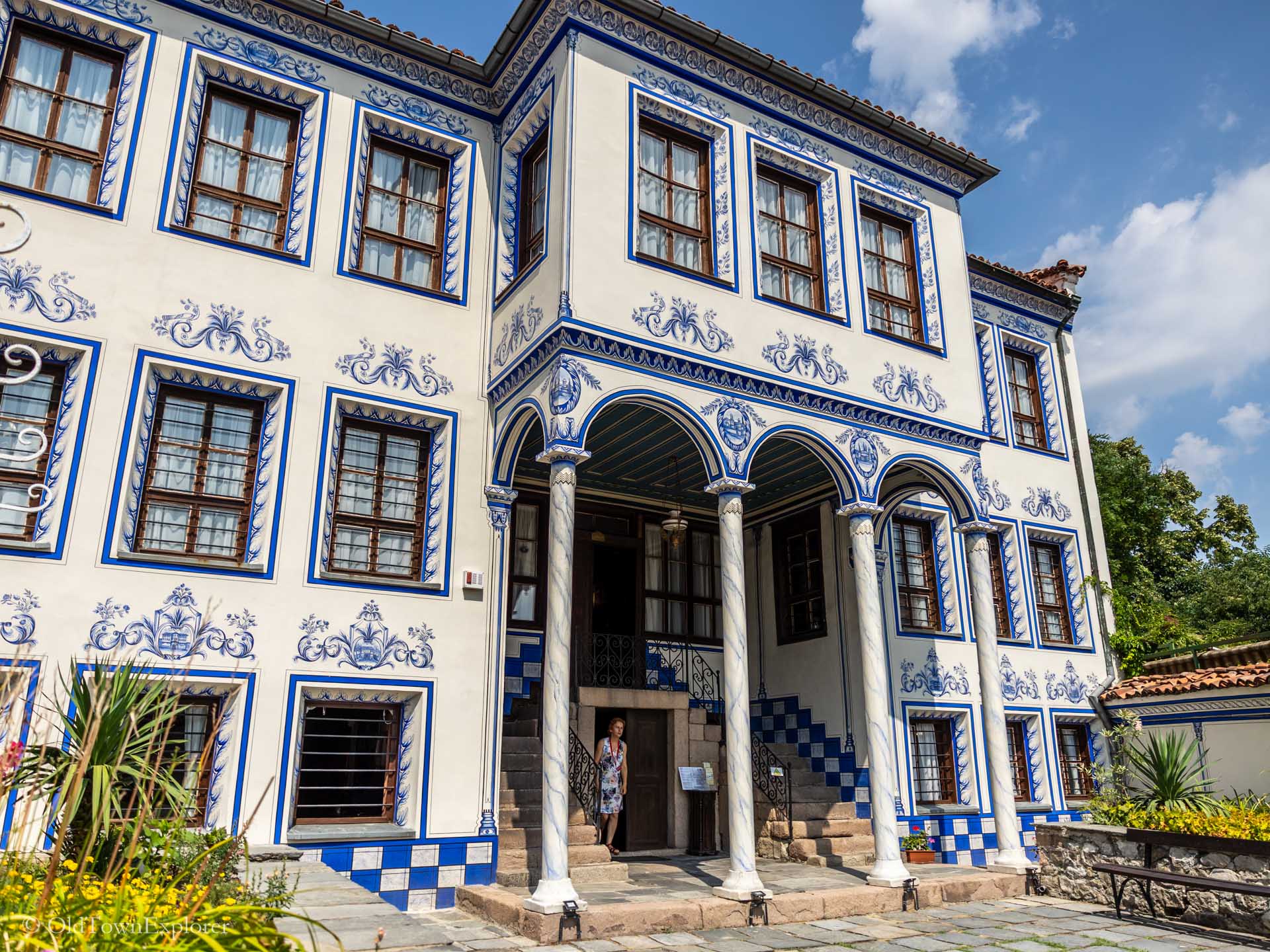
Discover the Best Things to See in Plovdiv: Architectural Attractions, Walking Tours & Travel Tips
The best things to see in Plovdiv are concentrated around the Roman city center and the hills of the Old Town. The Ancient Theatre, Roman Stadium, Bishop's Basilica, Revival-period houses, Orthodox churches, Dzhumaya Mosque, and Nebet Tepe put several periods of the city's history within a compact sightseeing area.
We spent a full month in Plovdiv visiting Roman sites, museums, churches, historic houses, streets, and viewpoints. The 31 sights below combine the places we explored during that stay with additional important Plovdiv sights that belong in a complete first-visit selection.
Most of the central sights connect naturally on foot, but seeing all 31 properly takes longer than a day. The walking route below follows the order we used on the ground, while the one-day section narrows the list to the sights worth protecting time for on a short visit.
This website contains affiliate links that may earn us a small commission at no additional cost to you.
Best Things to See in Plovdiv at a Glance
Plovdiv works especially well for sightseeing because Roman ruins sit below the modern pedestrian center while the Old Town climbs through Revival houses, churches, gates, and archaeological remains.
Start with these choices:
- See first: Ancient Theatre, Bishop's Basilica, Roman Stadium, Old Town, and Nebet Tepe.
- Best starting area: Dzhumaya Square puts the Roman Stadium, Dzhumaya Mosque, Kapana, and the climb toward the Old Town close together.
- Sights needing more time: Bishop's Basilica, the Regional Ethnographic Museum, and any Revival house you choose to enter.
- Quick stops: Roman Stadium, Dzhumaya Mosque, Hisar Kapia, Roman Forum, Odeon, and several churches fit easily into a wider walk.
- Main walking constraint: The Old Town and Nebet Tepe add steep cobbles and uphill sections to an otherwise compact central route.
- One-day trade-off: Choose a few interiors rather than trying to go inside every museum, church, and historic house.
Plovdiv is compact enough to see a great deal on foot, but the interiors are where a short sightseeing day can become rushed.
Best Things to See in Plovdiv
The 31 sights below range from major Roman interiors to small route stops. Give the Ancient Theatre, Bishop's Basilica, selected historic houses, and museums more time; use gates, street-level ruins, churches, and viewpoints to connect them without treating every stop as a full visit.

Ancient Theatre of Philippopolis
The Ancient Theatre is the Roman site to prioritize first on a short Plovdiv visit. Its semicircular seating, stage building, columns, and position between the Old Town hills make the structure easier to read than archaeological remains that survive only at street level.
Go inside when Roman architecture is a main reason for your trip. The view across the stage toward modern Plovdiv also makes this one of the places where the ancient site and present-day city can be seen together.

The Bishop's Basilica of Philippopolis
The Bishop's Basilica needs more time than most of Plovdiv's street-level Roman remains. The large early-Christian basilica preserves two layers of mosaic floors covering more than 2,000 square meters, so this is an interior to choose deliberately rather than squeeze between quick exterior stops.
The basilica, Small Basilica, and Late Antique Irene Building form a serial property on Bulgaria's UNESCO Tentative List. Look closely at the birds, geometric patterns, and changes between the mosaic layers rather than focusing only on the size of the building.

House of Stepan Hindliyan
The House of Stepan Hindliyan is one of the Old Town interiors to choose when you want to see how a wealthy 19th-century Plovdiv house worked beyond its painted façade. Built in 1834–35, it is one of the relatively few symmetrical houses preserved in its original form.
Go inside for the painted walls and ceilings, decorative details, and room arrangement. With time for only one or two Revival-house interiors, Hindliyan House gives you more to examine than another exterior stop.

Roman Stadium of Philippopolis
The Roman Stadium is one of the easiest ancient sites to add to a Plovdiv walk because its exposed northern end sits directly beneath the modern pedestrian center. The stone seating below the surrounding streets makes the overlap between Roman Philippopolis and modern Plovdiv especially clear.
You do not need to give this stop the same time as the Ancient Theatre or Bishop's Basilica. See the exposed seating and curved end, then continue toward Dzhumaya Mosque, Kapana, or the Old Town.
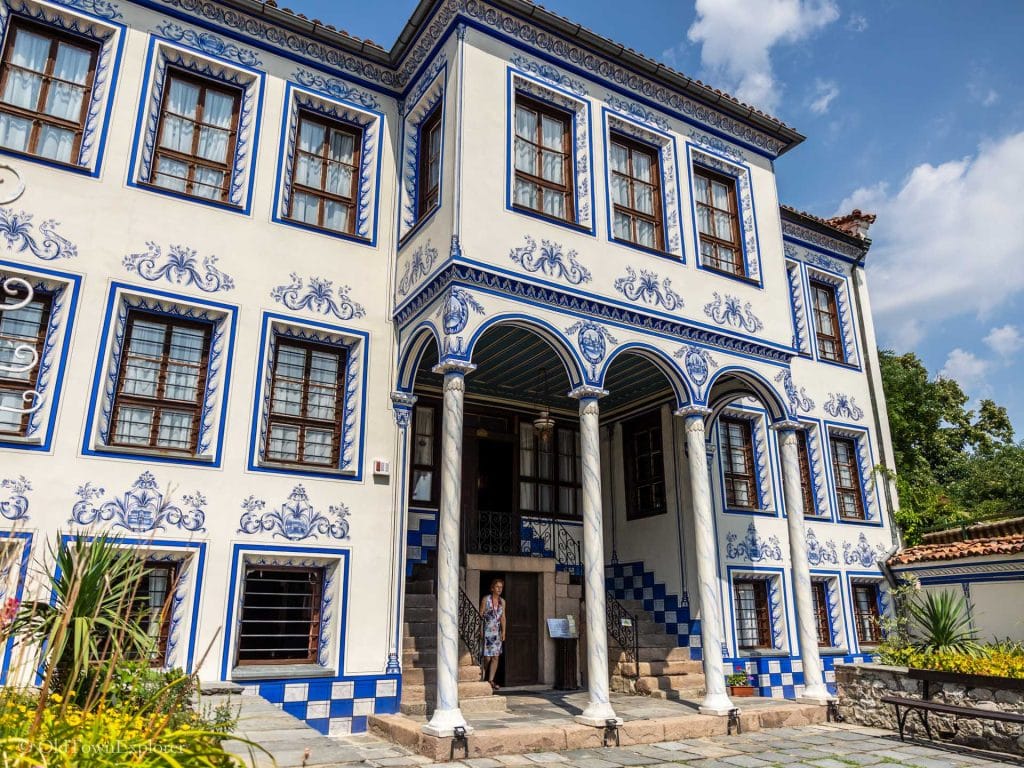
The House of Veren Stambolyan
Veren Stambolyan's house, constructed in the latter half of the 19th century, is a large symmetrical two-story building on the eastern slope of Dzhambaz Tepe. This building was a creative hub for several years, utilized by the Union of Bulgarian Artists and the Society of Plovdiv Artists.

Dzhumaya Mosque
The Dzhumaya Mosque is a significant Muslim shrine in the heart of the pedestrian zone. It was constructed on the site of an old church after the Ottoman army captured the city. The present mosque, known as Ulu Dzhumaya Mosque, was erected during the reign of Sultan Murad II and is one of the oldest Ottoman buildings in the Balkans.
The mosque features nine domes covered with lead sheets, a diagonal square grid of red bricks on a white stucco background, and intricate plant ornamentation adorning the interior. The mosque is a lively place of worship for the Muslim community in Plovdiv, who frequently visit it.

House of Nikola Nedkovich
Nikola Nedkovich's house was built in 1863 in the historic reserve. It has original artifacts and is a typical symmetric Plovdiv house. The ground floor has preserved ceiling carvings and murals, while the upper floor features period furniture. The yard has an underground tunnel connecting the cellar to the street and a covered passage to the main building.
The house was restored from 1964 to 1969 and made into a museum. In 2005, it was restored again with the help of a Bulgarian-Japanese program and is now an immovable cultural and historical value.

The Small Early Christian Basilica
Archaeologists discovered the small early Christian basilica during the construction of "Maria Louisa" Boulevard. The basilica is adjacent to a fortification wall with a tower dating back to the 2nd to 4th century AD. The basilica comprises a central nave with two aisles, one apse, and a narthex. It was built in the second half of the 5th century AD and has rich architectural decorations, including marble colonnades, a marble altar wall, and a synthronos.
The building was destroyed by fire but was later reconstructed and renovated. The basilica was operational until the end of the 6th century AD. During the excavation works, two donor inscriptions were discovered. One was carved on the lining marble slab from the altar of the basilica, while the other was in the form of a mosaic of red tesserae on a white background opposite the altar apse.

Archaeological Complex Nebet Tepe
Archeologists discovered the remains of the earliest known settlement at the peak of Nebet Tepe on the Three Hills. This settlement gradually turned into a town during the 12th century BC and is now believed to be the ancient Thracian town of Eumolpia. Eumolpia was one of the earliest urban centers in Southeastern Europe. The site contains fortifications from various ancient periods.
Ancient Peristyle Building “Eirene”
Archaeologists recently made a significant discovery in ancient Philippopolis, located at the center of Plovdiv, under the "Archaeological" underpass. During the underpass construction, archaeologists found a peristyle building belonging to a man named Desiderius. The building was a residential complex, and the beautiful mosaics on its floors indicated that Desiderius was far from ordinary.
The peristyle building was on an entire block, or "insula," surrounded by four streets. The main representative rooms surrounded the courtyard in the eastern part of the building. The service buildings, which contained many broken pieces of pottery, were situated in the southwest corner of the insula. Later on, an apse was added as part of the main entrance space of the representative area.
All rooms in the representative part of the house had colorful mosaic floors created using the opus tessellatum technique. The central room featured a mosaic image of a woman with the inscription "EIRHNH" beneath it, which was the source of the building's name.

Roman Forum of Philippopolis
The agora (also known as the Forum) of ancient Philippopolis can be found at the southern foothills of the Three Hills. This remarkable architectural structure covers a large square area, measuring about 100 meters by 112 meters. The area is paved with polished marble plates and surrounded by an arcade with Corinthian pilasters. The columns are evenly spaced at six-meter intervals and support a broad awning that covers a traffic alley known as the ambulatio. Trade premises are located next to the alley. The entire area is enclosed within a single, impressive construction, forming a square. According to archaeological research, this is the largest complex discovered in the territory of ancient Thrace.

Hissar Gate
There has been a gate at this location since ancient times. Beneath the street pavement (made of cobblestone), there are foundations from the Roman period, probably dating back to the 2nd century AD.
The Hissar Gate (also known as Hisar Kapia) underwent significant alterations during the medieval period, between the 11th and 13th centuries, which shaped its present appearance. The outer arch of the gate displays a unique construction technique where red brick pieces surround each stone, held together with plaster. This construction style is typical of the Bulgarian mastery during the Second Bulgarian Empire.

The Odeon of Philippopolis
The Antique Odeon and Antique Forum is the largest forum complex in Bulgaria and served as the center of the ancient city's administrative, economic, cultural, and religious life. The complex is located on the southern side of the central post office, with public works on the northern side. The first city Treasury of Moesia and Thrace was also located within the complex.
Within the northwest corner of the complex lies the Odeon, a covered theatre building that could accommodate between 300 and 350 people. Numerous discoveries have been made within the complex, including precious marble fragments, an inscription on the base of an emperor's statue, a gallery with preserved antique walls, original marble semi-columns, and 87 old silver coins that may have been hidden during the Gothic invasion.

Metropolitan Church St. Martyr Marina
The Metropolitan Church of St. Martyr Marina was constructed in 1851 by the masters from the Bratsigovo school, supervised by Nikola Tomchev-Ustabashiyski. The church is a basilica, typical of the Renaissance period, with three naves separated by two rows of columns with capitals and semicircular arches. Its dome is polyhedral in shape.
In 1858, painter Nikita Odrinchanin inscribed biblical scenes on the open colonnade-narthex in the temple's western part. The church's iconostasis was removed while constructing a new and bigger temple, but it was placed again when the church was completed. The iconostasis' left side has an icon of the Mother of God, the Blessed Virgin Mary, with the Divine Infant, while the right has an icon of Christ the Savior. Stanislav Dospevski painted both icons in 1868.
The wooden steeple of the St. Marina church is located in the northern part of the yard, over the entrance. It was completed in 1869-1870 and was refurbished in 1953.

Pharmacy Museum Hippocrates
The house was built in 1872 by Dr. Sotir Antoniadi, one of the first people in Plovdiv to hold a medical degree. The ground floor of the house had a pharmacy that was directly accessible from the street. The house was large and had an asymmetrical layout. To enter the residential area, one had to go through a small courtyard. The family lived on the floor above, which could be reached by a narrow corridor and a double-wing staircase. The ceilings were plastered and adorned with rosettes and floral ornaments. The overall design of the house reflected the modern functionality that was typical of intellectuals during the National Revival period.
The old pharmacy, which was once on the ground floor, has since been transformed into a museum exhibition called "Old Pharmacy Hippocrates." The interior decoration of the exhibition is reminiscent of the antique romantic style that was popular during the National Revival period in Plovdiv.

The Holy Assumption Cathedral
The Holy Assumption Cathedral is a Bulgarian church with a long history, dating back to the 9th and 10th centuries. Unfortunately, it was destroyed during the Ottoman invasion. However, in the 19th century, it was rebuilt with impressive dimensions and beautiful architecture. It was again restored to honor the 2000th anniversary of the Nativity of Christ. Today, the church has a unique ornamentation, which adds to its exceptional grace.

House Dr. Stoyan Chomakov
Dr. Stoyan Chomakov was a significant public figure during Bulgaria's National Revival era. He advocated for an independent Bulgarian Church. The Chomakov House is a notable monument located in Plovdiv's Old Town. It was built between 1862 and 1865 and features an impressive Neoclassical exterior. The interior includes a hall, a spacious hayet, four symmetrical rooms, two pantries, and a corridor leading to a bath and kitchen with a large fireplace.
After Bulgaria gained independence, Dr. Chomakov's heirs offered the house to Tsar Ferdinand as his residence. They emphasized its impressive appearance and central location in Trimontium's architectural ensemble.

Church of Saints Constantine & Helena
The Church of Saints Constantine and Helena is an ancient Christian church in the center of the Old Town of Plovdiv. It was built to honor the holy martyrs Severin and Memnos, who were beheaded in 304 for their Christian faith. The temple has been destroyed and rebuilt several times over the centuries, with the latest reconstruction carried out by Todor Moravenov and Valko Chalakov in 1810.
The church's unique iconostasis is made in the Baroque style, and the first row of icons was painted by the renowned Bulgarian painter Zahari Zograf. From 1864 to 1866, the church was completely painted by Stefan Andonov and Atanas Gyudzhenov of Pazardzhik.
Since July 2007, a priest has been appointed to perform regular ministrations, and the temple has been functioning continuously since then.

Balabanov House
Balabanov House gives you a different Revival-house story from Hindliyan House. The original early-19th-century house was demolished in 1935, and the present building was reconstructed between 1976 and 1979 from documented plans and records.
Look for the broad symmetrical plan, carved ceilings, period furnishings, and alafranga wall niches. Choose the interior when historic-house architecture is a priority; otherwise the courtyard and exterior still fit naturally into an Old Town walk.

St. Paraskeva Church
Legend has it that Tsar Ivan Asen II built a magnificent cathedral in Plovdiv dedicated to St. Petka of Epivates. However, when Lala Shahin Pasha conquered Plovdiv, he transformed the cathedral into a great mosque. The Orthodox population then built a new temple dedicated to St. Petka of Epivates but amended to St. Martyr Paraskeva, revered by the Greeks.
The temple was rebuilt in 1836, with the contribution of locals and surrounding Bulgarians. It remained closed until 1906, when it became Bulgarian again. The church's greatest attractions are its icons, including eight icons of the iconostasis created by Zahari Zograf. The Metropolitan's throne is another unique artifact with inlays of nacre and ivory.

Clock Tower
To the west of Three Hills, you'll find Sahat Tepe, home to the well-known Clock Tower. It's just a 5-6 minute walk from the Roman Stadium Square. The Tower has been around since at least 1623. It was built in its current form in 1812, standing at 17.5 meters tall. In 1883, a brand new large clock, made in Vienna, was installed.

Lamartin House
Lamartin House is a beautiful symmetrical building in Plovdiv's old city. It was constructed between 1829 and 1830 and is renowned for its unique adaptation to the complex terrain. The house has four symmetrical rooms of different sizes, well-glazed and richly decorated with geometric wood-carving.
In 1833, the famous French poet Alphonse de Lamartine stayed in the house for three days and wrote about its hospitable hosts. On the first floor is a small museum exhibition dedicated to Lamartine.

St. Dimitar Church
The St. Dimitar temple, located on a terrace on the north side of Dzhambaz tepe, is the tallest Christian church in Plovdiv. High stone walls enclose the temple; within it, there is a small chapel-holy spring and a belfry designed by Josef Schnitter.
The temple's architecture features a three-nave pseudo-basilica built by Stoyu Ivanov, six pairs of stone columns, Rhodope travertine vaults, white marble slabs, and a marble iconostasis. The icons of the old church are well-preserved, including images of the Virgin Mary and Jesus Christ.
It is worth noting that the temple was granted to the Russian colony in the city for a while following the departure of the Greeks.

Klianti House
The Klianti House is a historic two-story building in the Old Town Architectural and Historical Reserve of Plovdiv, Bulgaria. It was constructed in 1816, making it one of the oldest surviving houses from the Bulgarian Revival period. The house underwent significant renovations in 1846 when it was expanded to the north, creating a covered yard. The same skilled artisans who built The Holy Mother Assumption Church were responsible for constructing this building.
In 1882, the western portion of the house was destroyed, leading to the creation of two separate houses. In 1920, a part of the southeast corner was also removed. Despite these changes, the Klianti House remains an important architectural element within the reserve.
The house is renowned for its artistic decoration, particularly on the residential floor. The ceilings feature numerous wooden sculptures, polychrome geometric patterns, and colorful inlays dating back to 1817. The walls have richly decorated niches, cupboards, and backgammon wooden doors. Monumental compositions of vegetable ornaments adorn the house.
Initially, the building was a residential property for Georgi Klianti and his successors. Nowadays, the Klianti House is owned by the municipality and continues to be a cherished part of the cultural heritage of Plovdiv.

House of Georgi Danchov–Zografina
Danchov's House is a significant cultural heritage site in Plovdiv's Old Town. The house is an excellent example of an asymmetrical Plovdiv house and features beautiful wood-carved ceilings. It was built in the late 18th century and was once home to the famous Bulgarian painter and photographer Georgi Danchov-Zografina, who was a well-known revolutionary, an associate of Vasil Levski, a Diarbekir exile, and a volunteer during the Liberation War.
The house has been restored using authentic technologies, thanks to a joint project by the Chambers of Crafts in Koblenz and Plovdiv Municipality.

Pavliti House
Pavliti House, also known as the Blue House, was built between 1849 and 1850 and originally belonged to Georgi Pavliti (Politoglu), who was from Peshtera. The building is an excellent example of Early Revival residential architecture and has a symmetrical design. It is famous for its unique architectural elements, such as semicircular window openings, iron shutters, arched cornices, and rich artistic decorations.
Pavliti House is considered one of the most prominent buildings in Old Plovdiv and is officially recognized as an architectural, constructional, and artistic monument of culture. It is classified as an immovable cultural property of "national significance."
Over the years, the building has served many purposes, including being a representative hall for the Committee for Art and Culture. It has also been home to the "13 Centuries of Bulgaria" National Endowment Fund, the Student House, and the Municipal Foundation "Plovdiv 2019."

Saint Nedelya Church
The St. Nedelya Church is a large and spacious church built in the Revival style by chief master Petko Petkov-Boz. It has three naves and a three-apse altar, separated by six pairs of wooden columns. St. Nedelya was consecrated on September 19, 1832, by Plovdiv Metropolitan Nicephorus. In 1894, some architectural changes and additions were made, including the construction of a giant dome, which was completed in 1905.

Street of Crafts in the Old Town
The Street of Crafts is located in the Old Town on Strumna Street. This street descends from the Hissar Kapia gate on the northern slope of Nebet Tepe. Along the narrow cobbled street, you can find several Revival houses with skilled masters of traditional Bulgarian crafts. These craftsmen specialize in weaving, pottery, and woodcarving. If you visit this street, you can purchase unique souvenirs typical of the city and old folk art.

Saint Louis Cathedral
Saint Louis Cathedral is an important Catholic church located in Bulgaria. Until the beginning of 2006, it was the largest church in the country. The church is dedicated to its patron saint, Louis IX.
The church was constructed in the 1850s and boasts a neoclassical facade designed by architect Kamen Petkov. It originally had the first organ in Bulgaria, built in 1861, but later replaced by a larger one. The church suffered damage in a wildfire in 1931, but was rebuilt with a new pipe body added in 1991.
The bell tower, constructed in 1898, has five bells made in Bochum, Germany. The right side of the cathedral contains the tombstone of Bulgarian Princess Marie Louise, a frequent guest of the Bishop of Plovdiv and who had a strong spiritual connection with the Roman Catholic Church.
Regional Ethnographic Museum
The Regional Ethnographic Museum combines two reasons to stop: its collection and one of the Old Town's grandest Revival houses. The museum occupies Argir Kuyumdzhioglu's 1847 house, whose curved façade, projecting upper floor, courtyard, and interiors make the building part of the visit before you reach the exhibits.
Choose this interior when you want architecture and material culture in one stop. The displays cover clothing, crafts, household objects, and traditions from Plovdiv and the surrounding region; Plovdiv Museums can help you compare it with the city's archaeology, history, and art collections.
Nebet Tepe
Nebet Tepe is the Old Town stop to prioritize when you want fortification history and a high viewpoint in the same place. Archaeological remains on the hill preserve several phases of Plovdiv's defenses, including Roman and early Byzantine work.
Visit it while you are already among the Old Town houses and churches rather than treating the hill as a separate excursion. The climb is the main effort, and the open summit gives the archaeological remains a much wider setting than the Roman sites embedded in the streets below.
If you're still on the fence after reading about the 31 Best Things to See, check out "Is Plovdiv Worth Visiting." We review a long list of factors you should consider before reserving a room and booking your flight.
One Day in Plovdiv
One day is enough for Plovdiv's main sight pattern, but not for all 31 attractions at full depth. Keep the day centered on the Roman sites and Old Town, then choose only one or two substantial interiors.
Morning: Roman Stadium and the Old Town
Start around Dzhumaya Mosque and the Roman Stadium, then climb toward the Old Town. Prioritize the Ancient Theatre, Hisar Kapia, and the Revival-house streets; add Hindliyan House or the Regional Ethnographic Museum when you want one historic interior.
Midday: Nebet Tepe
Continue to Nebet Tepe while you are already in the Old Town. Its fortification remains and city views make more sense as part of the hill section than as a separate return trip later in the day.
Afternoon: Bishop's Basilica and the Roman Center
Return toward the lower center for the Bishop's Basilica, then add the Roman Forum and Odeon if you still have time. Protect time for the basilica rather than treating its mosaics like another quick street-level ruin.
What to Skip With One Day
Do not try to enter every Revival house, museum, church, and archaeological interior. Save secondary interiors for another day and use the smaller exterior stops to connect the few places that match your strongest interests.
Self-Guided Walking Tour of Plovdiv
This self-guided route connects the central Roman sites, churches, Old Town sights, and viewpoints in the order we walked them during our month in Plovdiv. Follow the full route when you want breadth; shorten the day by dropping interiors rather than rearranging the central walking sequence.
Plovdiv Walking Tour Route and Map
This route starts around Dzhumaya Mosque and the Roman Stadium, then connects the lower Roman center with the steeper streets and historic sights of the Old Town. The map follows the same stop order, so you can use it to see where the route climbs, where the main interiors sit, and which stops are easy to shorten or skip.
- Dzhumaya Mosque
- Roman Stadium
- Clock Tower
- Roman Forum of Philippopolis
- The Odeon of Philippopolis
- Metropolitan Church St. Martyr Marina
- Ancient Peristyle Building “Eirene”
- The Bishop's Basilica of Philippopolis
- Saint Louis Cathedral
- The Small Early Christian Basilica
- The House of Veren Stambolyan
- House of Georgi Danchov–Zografina
- Saint Nedelya Church
- Street of Crafts in the Old Town
- Hissar Gate
- House of Nikola Nedkovich
- House Dr. Stoyan Chomakov
- Archaeological Complex Nebet Tepe
- Balabanov House
- House of Stepan Hindliyan
- Pavliti House
- Church of Saints Constantine & Helena
- Pharmacy Museum Hippocrates
- Lamartin House
- St. Paraskeva Church
- Klianti House
- St. Dimitar Church
- Ancient Theatre
- The Holy Assumption Cathedral
The route starts around Dzhumaya Mosque and the Roman Stadium, passes through the lower Roman center, and then connects with the hillier Old Town sights. Interior visits determine how long the day becomes: the walking sequence itself can stay compact while museums, churches, and historic houses add substantial time.
City Tours in Plovdiv
You do not need a guided tour to see Plovdiv's main sights. The Roman Stadium, Old Town, Ancient Theatre, churches, and Revival houses fit together well on foot, but a guide can add context when the different layers of Roman, Ottoman, Orthodox, and Bulgarian history are a major reason for your visit.
Walking Tours
A walking tour makes the most sense when you want someone to connect the Roman remains in the lower city with the churches, houses, gates, and archaeological sites in the Old Town. This is especially helpful when you have limited time and want historical explanation without stopping at every museum.
History and Architecture Tours
Choose a history- or architecture-focused tour when the Ancient Theatre, Roman Stadium, early-Christian mosaics, Dzhumaya Mosque, and Revival houses are more important to you than simply seeing the landmarks. Plovdiv has enough overlapping periods that a knowledgeable guide can explain why buildings from very different eras sit so close together.
Private Tours
A private tour is most useful when you want to spend more time on a particular interest, such as Roman archaeology, churches, or Revival architecture, or when you want the walking route adjusted around the interiors you plan to visit.
Compare the tour options below if you would rather see Plovdiv with a guide than follow the self-guided route on your own.
Plovdiv Information and Travel Tips
Plovdiv's main sightseeing challenge is not distance but deciding how many interiors to add to a compact walking area. Historic houses, museums, churches, mosaics, and the Old Town hills can turn a short-looking route into a full day.
Start Around Dzhumaya Square
Dzhumaya Mosque and the exposed end of the Roman Stadium make a clear orientation point between the pedestrian center, Kapana, and the climb toward the Old Town. This is also where our self-guided route begins.
Choose Historic-House Interiors Instead of Entering Them All
Plovdiv has enough Revival houses to turn a short visit into a museum crawl. Pick Hindliyan House for a richly decorated original interior, the Regional Ethnographic Museum for a historic house plus collections, or Balabanov House when you want to compare a reconstructed grand symmetrical house.
Give the Bishop's Basilica Its Own Time
The Bishop's Basilica deserves more time than a quick ruin viewed from the street. Put it between clusters of exterior stops rather than squeezing it into the end of an already full Old Town walk.
Use Exterior Stops to Keep a Short Visit Moving
The Roman Stadium, Dzhumaya Mosque, Hisar Kapia, Roman Forum, and Odeon can add historical context without taking the same time as a museum or house interior. Save longer stops for the places that match your strongest interests.
Keep the Old Town Sights Together
Once you climb into the Old Town, see the historic houses, churches, Hisar Kapia, and Nebet Tepe before returning to the lower Roman center. Repeating the steep cobbled climb adds effort without adding another sight.
Check Important Interiors Before Your Visit
Opening arrangements can change for museums, churches, and archaeological interiors. Recheck current access when the Bishop's Basilica, a particular Revival house, or another interior would be a major disappointment to miss.
Compare Museums Before Choosing an Interior
If archaeology, regional history, art, or traditional culture is a main reason for your trip, decide which collection fits you before you start walking. Our Plovdiv Museums guide separates those choices in more detail.
Where to Stay to See the Best Things in Plovdiv
Stay around the central pedestrian area, Kapana, or the lower edge of the Old Town when seeing Plovdiv's main sights on foot is the priority. These areas keep the Roman Stadium, Dzhumaya Mosque, Kapana, and the Old Town climb close without requiring transport before you start sightseeing.
Kapana puts restaurants and evening activity close by but can be noisier, while the Old Town puts you among the historic houses at the cost of steeper cobbles and more awkward luggage access. The broader Plovdiv guide covers the rest of the stay decision.
Hotels and Apartments in Plovdiv
Compare the pedestrian center, Kapana, and the streets just below the Old Town when you want to walk to the largest number of sights.
Use the interactive map below to compare hotels and apartments in Plovdiv.
FAQs About Best Things to See in Plovdiv
These answers narrow the 31-sight list to the choices that matter most when time, walking effort, or interior visits are limited.
What are the best things to see in Plovdiv?
Start with the Ancient Theatre, Bishop's Basilica, Roman Stadium, Old Town Revival houses, Dzhumaya Mosque, and Nebet Tepe. Together they cover Roman Plovdiv, early Christianity, Ottoman architecture, Bulgarian Revival houses, and the city's historic hills.
What should I see first in Plovdiv?
Choose the Ancient Theatre first when you want one landmark that immediately explains Roman Plovdiv. For a walking route, start around Dzhumaya Mosque and the Roman Stadium before continuing toward the Old Town.
Is one day enough to see Plovdiv?
One day is enough for the main sights but not all 31 at full depth. Prioritize the Ancient Theatre, Roman Stadium, Old Town, Nebet Tepe, and Bishop's Basilica, then add only one or two museum or historic-house interiors.
Can you see the main Plovdiv sights on foot?
Yes, most of the principal sights in the center and Old Town connect naturally on foot. The steep and uneven cobbles around the Old Town and Nebet Tepe are a bigger consideration than the distance between attractions.
Which Plovdiv sight needs the most time?
The Bishop's Basilica deserves more time than most quick Roman or exterior stops because its mosaics fill a large indoor visitor space. A museum or Revival-house interior can take similar time when you want to look closely at the collections and rooms.
What is the best viewpoint in Plovdiv?
Nebet Tepe is the strongest choice when you want a viewpoint that also belongs naturally in the Old Town sightseeing route. The archaeological remains give the stop historical value as well as views across the city.
Which Plovdiv museum should I choose with limited time?
Choose the Regional Ethnographic Museum when you want a Revival house and cultural collections in one visit. Choose an archaeology-focused museum when ancient Philippopolis matters more; compare the collections in our Plovdiv Museums guide.
Do I need a guided tour to see Plovdiv?
No. The central sights and Old Town work well as a self-guided walk. A guide adds more value when you want deeper interpretation of Roman archaeology, Orthodox churches, Ottoman history, or the painted interiors of the Revival houses.
Is Plovdiv Old Town a UNESCO World Heritage Site?
No. Ancient Plovdiv is on Bulgaria's UNESCO Tentative List, but it is not an inscribed World Heritage Site. The Bishop's Basilica, Small Basilica, and Late Antique Irene Building form a separate serial property on Bulgaria's Tentative List.
The best things to see in Plovdiv work together because the city does not separate its Roman, Ottoman, and Bulgarian Revival layers into distant sightseeing districts. Start with the Ancient Theatre, Bishop's Basilica, Roman Stadium, Old Town houses, and Nebet Tepe, then use the smaller churches, gates, ruins, and house museums to spend more time on the parts of Plovdiv that interest you most.
For more detail on the buildings, continue with our Plovdiv Architecture page. Read Is Plovdiv Worth Visiting? when deciding how much time to give the city, or add Bachkovo Monastery and Asen's Fortress when you have time for a historic outing south of Plovdiv.
