
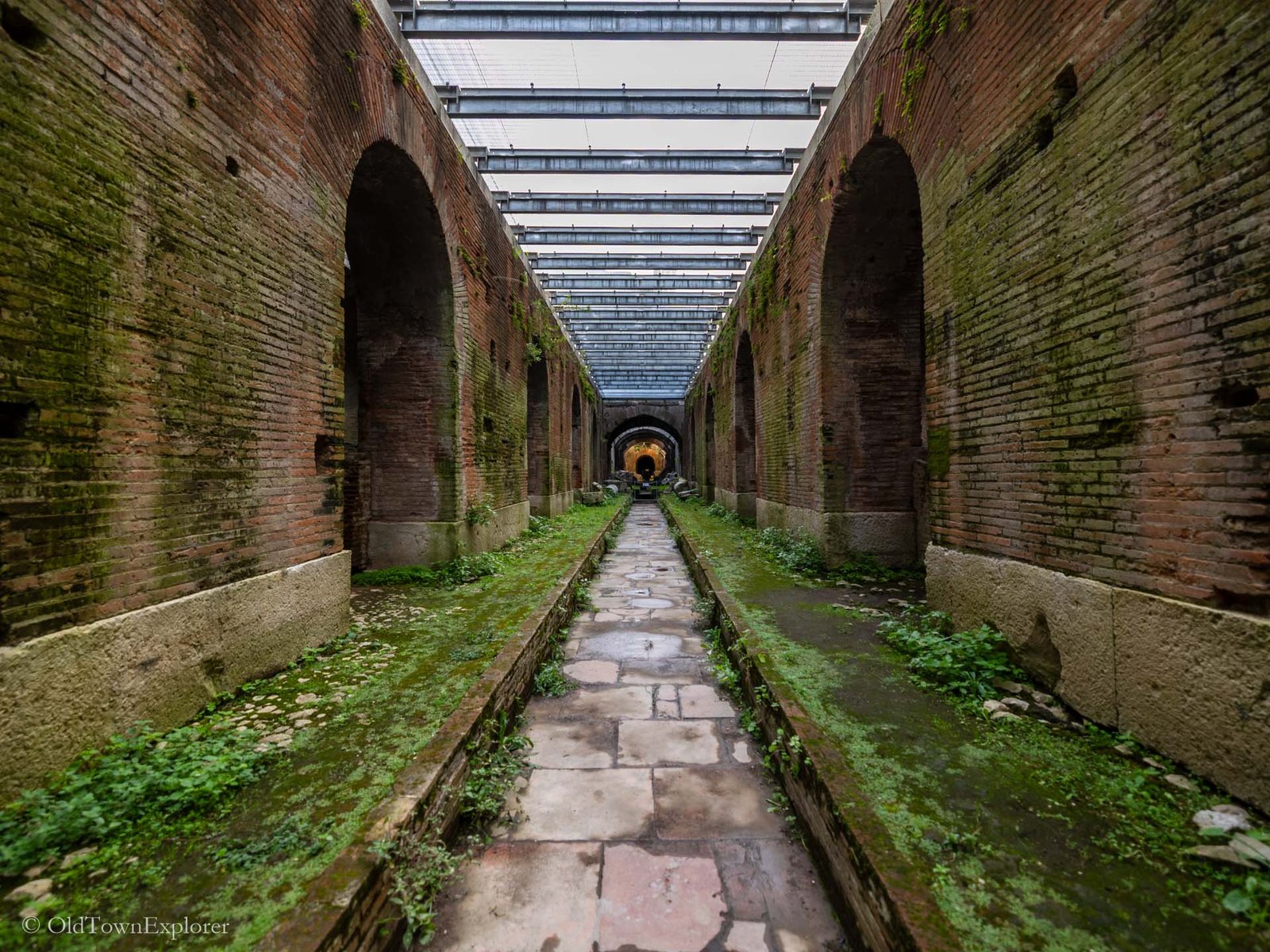
Discover Capua: History, Architecture & Must-See Attractions
Capua, Italy, offers a day of Roman archaeology centered on the Campanian Amphitheatre, Museum of the Gladiators, Mithraeum, and Archaeological Museum of Ancient Capua. These sights stand in Santa Maria Capua Vetere, the town occupying the site of ancient Capua. Modern Capua is a separate town nearby, so choose Santa Maria Capua Vetere when planning your arrival.
The amphitheatre is the main attraction, with surviving arches and underground passages that reveal how a Roman arena operated. The smaller Mithraeum provides a different experience: an underground sanctuary with painted walls and a star-covered vault. The town’s basilica and nineteenth-century theater add variety beyond the archaeological circuit.
Naples is a practical base for this day trip. Allow four to six hours in town, plus travel time, and reserve the Mithraeum before fixing your route. The archaeological museum’s regular galleries are temporarily closed for renovation, so confirm reopening before including an interior visit.
This post contains affiliate links that may earn us a small commission at no additional cost to you.
Capua at a Glance
Ancient Capua works best as a focused archaeological day trip, with time for the amphitheatre and a reserved Mithraeum visit. Add the central streets and later buildings when you want a fuller day.
- Destination to enter in maps: Santa Maria Capua Vetere
- Practical starting base: Naples; Caserta is another nearby option
- Main sights: Campanian Amphitheatre, Museum of the Gladiators, Mithraeum, and Archaeological Museum of Ancient Capua
- Additional stops: Republican Amphitheatre, Arch of Hadrian, Basilica of Santa Maria Maggiore, and Teatro Garibaldi
- Time to allow: Four to six hours in town, with travel time added separately
- Walking conditions: Mostly level urban streets, with uneven archaeological surfaces and steps underground
- Booking priority: Reserve the Mithraeum; check archaeological museum reopening
If time is short, concentrate on the amphitheatre complex and the Mithraeum if you have a confirmed reservation. The archaeological museum requires a separate opening check and should not be assumed available with the rest of the circuit.
History of Capua
Ancient Capua’s importance is easiest to understand through its surviving arenas, religious sites, and position on the Via Appia. Later changes explain why the ancient and modern towns now have different locations.
Etruscan and Samnite Capua
Before Roman rule, Capua developed through Etruscan and Samnite phases. Its position on the fertile Campanian plain supported a substantial settlement. The Archaeological Museum of Ancient Capua brings together material from the city and its surrounding territory, including finds that predate the imperial monuments.
Rome, the Via Appia, and Hannibal
The Via Appia connected Rome with Capua, making the city an important destination on one of the Roman world’s principal roads. During the Second Punic War, Capua sided with Hannibal after the Battle of Cannae in 216 BC. Roman recovery of the city brought punishment and the loss of privileges.
Spartacus and the Gladiator Schools
Spartacus’s revolt began at Capua in 73 BC. The large imperial amphitheatre visible today was built later, so it should not be treated as the arena in which he fought. The remains of the earlier Republican Amphitheatre and the Museum of the Gladiators help place the town’s gladiatorial history in context.
Imperial Arenas and Religious Life
During the Roman imperial period, Capua gained the monumental amphitheatre that anchors the archaeological visit. The Mithraeum preserves evidence of worship on a much smaller scale. The basilica of Santa Maria Maggiore, founded in the fifth century and repeatedly altered, marks a later chapter in the town’s religious history.
Ancient Capua and the New Town
After ninth-century destruction, a new Capua developed near the Volturno River. The ancient site became the town now called Santa Maria Capua Vetere. Its later streets, churches, and Teatro Garibaldi surround Roman remains that are dispersed through a living town rather than contained within one continuous excavation.
Architecture of Capua
Ancient Capua’s architecture ranges from a large public arena to a small underground sanctuary. Between these sites, later religious and civic buildings show how the town continued to develop.
Roman Arena Construction
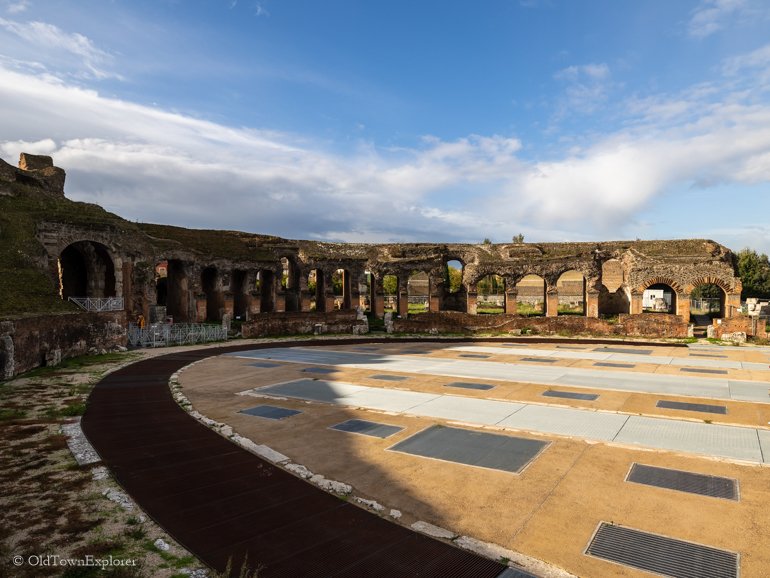
The Campanian Amphitheatre uses an elliptical plan, repeated arches, and vaulted circulation spaces. Look at how the surviving structure separates the arena from the passages beneath and around it. The open remains make the building’s internal organization easier to examine than its missing upper seating levels.
Underground Rooms and Painted Surfaces
The Mithraeum is a compact place of worship reached below street level. Its painted vault and central image of Mithras contrast with the arena’s exposed masonry. The two sites reward different kinds of attention: structure and scale at the amphitheatre, close observation of decoration in the sanctuary.
Monuments Along the Ancient Road
The Arch of Hadrian adds a roadside monument to the archaeological walk. Its surviving masonry provides a useful contrast to the amphitheatre’s curved plan. The arch stands apart from the principal museum route, so include it as a short extension rather than assuming it lies inside the amphitheatre grounds.
A Basilica Altered Over Centuries
Santa Maria Maggiore has early Christian origins, but its appearance reflects many later rebuilding campaigns. Its five-aisle arrangement is a distinctive feature. The interior shows how a longstanding religious site could expand and acquire new decoration without keeping the appearance of its first building.
Nineteenth-Century Theater Architecture
Teatro Garibaldi brings the walk forward to the late nineteenth century. Its façade draws on the Paris Opéra, with an elaborate entrance composition and references to theater and music. It provides a clear architectural contrast to the Roman ruins and the basilica.
Architectural Attractions in Capua
The main sights occupy three areas within Santa Maria Capua Vetere: the amphitheatre complex, the museum and Mithraeum streets, and the later town center. The four principal archaeological attractions deserve separate stops, even though some share a ticket or site entrance.
The Amphitheatre Complex and Western Extension
Campanian Amphitheatre
- Architect: Unknown
- Style: Roman imperial amphitheatre
- Built: Late first–second centuries AD, with work under Hadrian and Antoninus Pius
- Address: Piazza Adriano 36, Santa Maria Capua Vetere
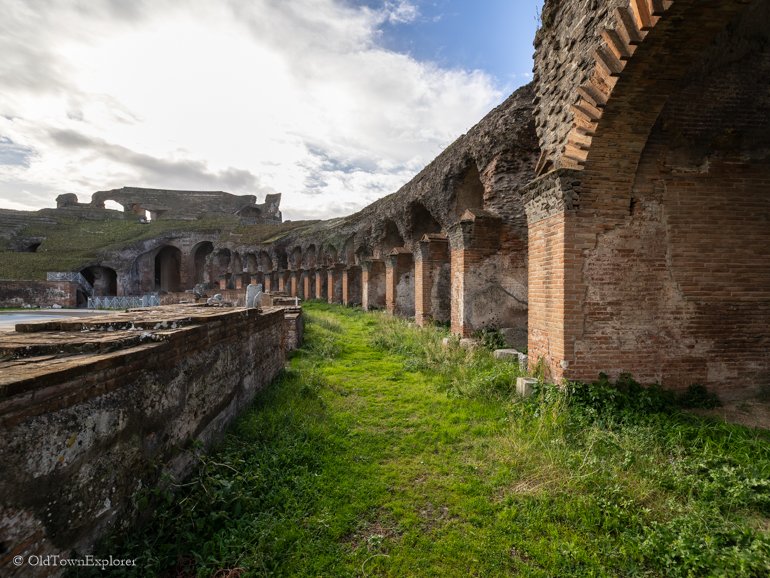
The Campanian Amphitheatre is the largest surviving monument of ancient Capua. Its elliptical arena, remaining arches, and underground spaces reveal different parts of a Roman entertainment building. Follow the open visitor route and allow time for the accessible lower passages; individual areas may be restricted during conservation work.
Museum of the Gladiators
- Architect: Unknown
- Style: Museum exhibition within the amphitheatre complex
- Built: Building date unknown; museum opened in 2003
- Address: Amphitheatre complex, Piazza Adriano 36, Santa Maria Capua Vetere
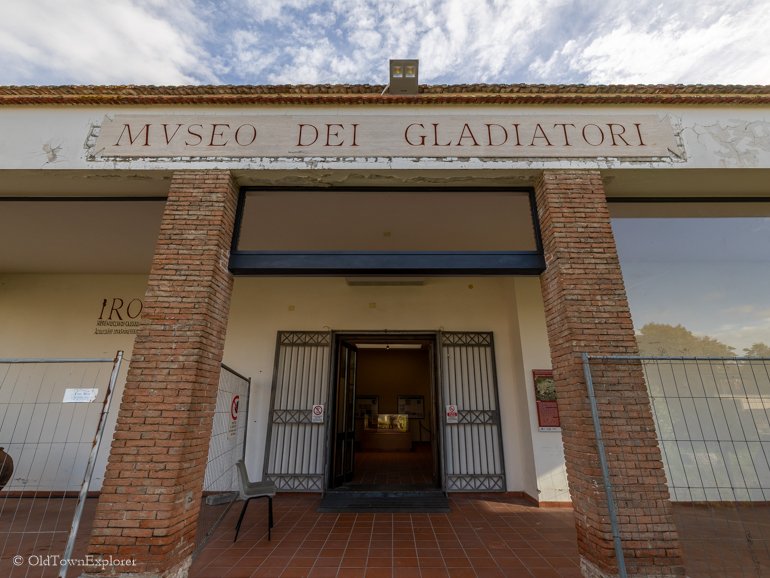
The Museum of the Gladiators explains the neighboring arena through architectural fragments, reconstructions, and displays about gladiatorial equipment. It is a separate museum from the Archaeological Museum of Ancient Capua on Via Roberto d’Angiò. Visit it alongside the amphitheatre to connect surviving decoration with the building you have just explored.
Republican Amphitheatre
- Architect: Unknown
- Style: Roman Republican amphitheatre
- Built: Approximately 130–90 BC
- Address: Amphitheatre complex, Piazza Adriano 36, Santa Maria Capua Vetere
The earlier Republican Amphitheatre survives as much lower remains within the archaeological area. It belongs to the period associated with Capua’s gladiator schools and Spartacus’s revolt. Compare its scale with the later imperial arena, and look for the interpretation explaining the relationship between the two.
Arch of Hadrian
- Architect: Unknown
- Style: Roman monumental arch
- Built: Roman period; precise date uncertain
- Address: Via del Lavoro 1, Santa Maria Capua Vetere
The Arch of Hadrian, also called Arco Felice or Arco di Capua, stands near the western end of Corso Aldo Moro. Its name links it with the emperor, although the exact construction date is uncertain. Treat it as an exterior stop and use the available pavements and crossings when approaching the roadside remains.
Via Roberto d’Angiò and Vico Mitreo
Archaeological Museum of Ancient Capua
- Architect: Unknown
- Style: Former cavalry barracks adapted as a museum
- Built: Mid-nineteenth-century building; museum inaugurated in 1995
- Address: Via Roberto d’Angiò 44, Santa Maria Capua Vetere
The Archaeological Museum of Ancient Capua occupies former cavalry barracks incorporating the site of the medieval Sant’Erasmo tower. Its collections trace the ancient city through finds from graves, urban spaces, and sanctuaries. Regular exhibition access is temporarily suspended for renovation; confirm reopening before planning a gallery visit, and ask separately about any special event access.
Mithraeum
- Architect: Unknown
- Style: Roman underground sanctuary with painted decoration
- Built: Roman imperial period; discovered in 1922
- Address: Vico Mitreo 5, Santa Maria Capua Vetere
The Mithraeum preserves a painting of Mithras killing a bull beneath a star-painted vault. The descent and enclosed chamber create a very different visit from the open amphitheatre. Entry requires a reservation, with small groups admitted at arranged times; confirm your appointment before traveling.
The Later Town Center
Basilica of Santa Maria Maggiore
- Architect: Unknown for the original building; subsequently altered by multiple craftsmen and designers
- Style: Early Christian basilica plan with extensive later alterations
- Built: Begun in 432 and consecrated in 442; repeatedly enlarged and remodeled
- Address: Piazza Matteotti, Santa Maria Capua Vetere
The Basilica of Santa Maria Maggiore is the principal church associated with the town’s name. Its five aisles and later decoration make it a useful stop after the Roman sites. The early foundation and subsequent alterations explain why the present interior combines different periods. Enter respectfully when the church is open and worship is not being interrupted.
Teatro Garibaldi
- Architect: Antonio Curri
- Style: Eclectic theater architecture inspired by the Paris Opéra
- Built: 1889–1896
- Address: Corso Giuseppe Garibaldi 78, Santa Maria Capua Vetere
Teatro Garibaldi opened in 1896 with a performance of Verdi’s La forza del destino. Its façade includes statues representing Comedy and Tragedy and medallions of composers. Pause outside during the central walk, or contact the theater about access to the auditorium and its historical exhibition.
Walking Tour in Capua
This route connects the main archaeological area with the museum streets and later town center. Start at the amphitheatre unless your Mithraeum appointment requires a different order, then finish toward the basilica and railway station.
Starting Point and Time to Allow
Begin at the amphitheatre entrance on Piazza Adriano. The route takes several hours once visits and lunch are included, so allow four to six hours in town rather than treating it as a quick exterior circuit. If arriving by train, add the walk from Santa Maria Capua Vetere station before your first booked stop.
Suggested Walking Route
Use this sequence as a starting point, adjusting the museum and sanctuary stops to confirmed access. The arch is optional, and the archaeological museum should be visited inside only after reopening has been confirmed.
- Campanian Amphitheatre: Explore the arena structure and the lower passages open to visitors.
- Museum of the Gladiators: Visit the adjacent displays to understand the amphitheatre’s decoration and gladiatorial use.
- Republican Amphitheatre: Look at the earlier arena remains before leaving the archaeological complex.
- Arch of Hadrian: Add the exterior stop on Via del Lavoro if time allows, then return toward the town center.
- Mithraeum: Go to Vico Mitreo for your reserved visit, changing the route order if your appointment falls earlier.
- Archaeological Museum of Ancient Capua: Continue to Via Roberto d’Angiò 44 if reopening or special access has been confirmed; otherwise omit this stop.
- Teatro Garibaldi: Follow the central streets to Corso Giuseppe Garibaldi and examine the theater façade.
- Basilica of Santa Maria Maggiore: Finish at Piazza Matteotti, visiting the church if open before returning to the station or your pickup point.
The amphitheatre complex and reserved Mithraeum visit form the essential archaeological route. The arch, museum, theater, and basilica extend it according to time and access. Skip the closed museum rather than making an unnecessary detour, and leave a buffer for the return journey.
Shorter Visits and Breaks
With only a few hours, concentrate on the amphitheatre complex and one confirmed sanctuary appointment. For a full day, include lunch between the archaeological area and the later center.
How to Get to Capua from Naples
For the ancient ruins, travel to Santa Maria Capua Vetere. Capua has its own railway station and town center, so selecting the correct destination matters more than choosing a particular departure time.
By Train
Search Trenitalia for Naples to Santa Maria Capua Vetere on your travel date. Compare direct journeys with connections through Caserta, and check the named departure station in Naples. Choose your return train at the same time, particularly if you plan a late afternoon visit.
EAV’s Naples–Piedimonte Matese line also serves Santa Maria Capua Vetere. Its railway service operates Monday through Saturday, excluding public holidays, and some departures can involve replacement buses. Read the current timetable for the service you intend to use rather than assuming all Naples departures follow the same arrangements.
Santa Maria Capua Vetere’s main station is south of the principal archaeological area. Plan the onward walk to your first attraction, or arrange a taxi if you need to avoid walking before a timed appointment.
By Bus
EAV provides a Sunday and public-holiday bus service on the Naples–Santa Maria Capua Vetere–Piedimonte Matese route. Check the holiday bus timetable for the actual departure and arrival stops. The Naples boarding point is on Via Galileo Ferraris near the Ramada Hotel, rather than a railway platform.
Replacement buses on other days may use different arrangements. Confirm where you will arrive in Santa Maria Capua Vetere and how to reach the archaeological area before choosing this option.
By Car or Taxi
Enter the Campanian Amphitheatre or its Santa Maria Capua Vetere address in your navigation app. Plan parking near the archaeological area, then explore the main sights on foot. A car is more useful if you intend to continue to modern Capua or another destination after the visit.
For a taxi or private transfer, specify Santa Maria Capua Vetere and the attraction address when booking. Agree on the return pickup point and fare arrangement, and allow enough time for the walk back from your final stop.
Getting Around Capua
The principal ancient Capua sights can be linked on foot within Santa Maria Capua Vetere. The main practical differences are between urban walking, uneven archaeological ground, and the steps into underground spaces.
Walking Between the Main Sights
The amphitheatre complex, Mithraeum, and archaeological museum are separate stops within the town. Carry a saved map with the individual entrances marked. Add the basilica and theater when you have time for the later center, and treat the Arch of Hadrian as an extension.
Steps and Archaeological Surfaces
Mostly level streets do not mean that every interior is equally accessible. The amphitheatre has uneven surfaces and lower passages, while the Mithraeum requires a descent into a small underground chamber. Ask the site about the specific areas you want to visit if steps or enclosed spaces are a concern.
Continuing to Modern Capua
Modern Capua lies outside this walking route. Treat it as a separate transfer by local transport, taxi, or car if you want to add its historic center or Museo Campano. Trying to walk both towns and complete the archaeological visits would change the scale of the day.
Making the Most of Your Day Trip to Capua
Build the day around the amphitheatre and your Mithraeum reservation. The museum’s renovation and the timing of your journey determine how much of the remaining town you can comfortably include.
Morning: Amphitheatre and Gladiator Museum
Start at the amphitheatre while the outdoor part of the visit is more comfortable. Explore the main arena and available lower passages, then visit the Museum of the Gladiators and locate the Republican Amphitheatre remains. Keeping these stops together avoids returning to the same complex later.
Midday: Arch or Lunch Break
Add the Arch of Hadrian if it fits the time before your sanctuary appointment. Otherwise, head toward the center for lunch. Campanian dishes and pizza make straightforward choices for a sightseeing day; our Italy food guide introduces regional specialties to try during your stay.
Afternoon: Mithraeum and Town Center
Reach the Mithraeum before your confirmed entry time. If the archaeological museum has reopened, allow time for its galleries afterward. During the closure, continue to Teatro Garibaldi and Santa Maria Maggiore instead, using the later buildings to broaden the day beyond Roman archaeology.
Late Afternoon: Return to Naples
Finish near the town center and walk back to the station or agreed pickup point. Keep your return service and boarding location available on your phone. Save a full visit to the Royal Palace of Caserta for another day if you want time for its interiors and gardens.
Tips for Visiting Capua
A successful visit depends on the correct arrival town and confirmed access to the smaller sites. These tips help you organize the archaeology, walking, and return transport without relying on every attraction being open.
Choose Santa Maria Capua Vetere
Use the full town name when buying transport tickets and searching for directions. The amphitheatre, Mithraeum, and Archaeological Museum of Ancient Capua are here. Modern Capua and its Museo Campano belong to a separate part of the area.
Start Early at the Amphitheatre
Begin with the outdoor archaeological area before lunch and the hotter part of the day. An early arrival also leaves more flexibility around the Mithraeum appointment and your return train.
Reserve the Mithraeum First
Arrange the sanctuary visit before committing to a transport schedule. Reservations are made through the archaeological circuit at +39 338 6353806. Ask for the exact meeting point and arrival time, and keep the confirmation available during your visit.
Check Archaeological Museum Reopening
The regular galleries are temporarily closed for renovation. Check the museum’s visitor information before traveling. A special event or limited opening does not necessarily mean the full exhibition route is available.
Avoid Assuming Monday Access
Monday is the usual weekly closing day for the archaeological circuit, although special holiday arrangements can differ. Check the date-specific notices before planning a Monday visit. Church and theater access follow their own arrangements.
Prepare for Digital or Card Ticketing
Use Musei Italiani or the on-site card-payment machines for circuit tickets. Have a payment card and keep the ticket QR code accessible. Confirm the current price and included sites rather than relying on an older combined-ticket description.
Wear Shoes for Uneven Ground
Choose comfortable shoes with grip for the archaeological surfaces and steps. Take particular care in the amphitheatre’s lower areas and on the Mithraeum descent. Travelers needing step-free access should ask about specific routes before arrival.
Choose Mild Weather and Carry Water
Spring and autumn generally suit a day divided between open ruins and town walking. In summer, carry water and sun protection and leave time for an indoor or lunch break. In wet weather, allow for slippery surfaces and adjust the outdoor extensions.
Check the Actual Return Service
Compare weekday, Sunday, and public-holiday transport separately. EAV’s holiday bus arrangements differ from its weekday railway service. Confirm the return boarding point and leave time to reach it after the last attraction.
Keep the Day Focused
The archaeological complex, Mithraeum, and central buildings make a substantial visit. Add modern Capua or Caserta only when you are willing to shorten this route and arrange another transfer. Both deserve more than a hurried stop after a full archaeological day.
FAQs About Capua, Italy
Is Capua Worth Visiting as a Day Trip?
Yes, especially if you enjoy Roman arenas, archaeology, and smaller religious sites. The amphitheatre is the main reason to go, while a reserved Mithraeum visit adds a distinctive painted interior. The later town center gives you more to see when museum access is limited.
Are Capua and Santa Maria Capua Vetere the Same Place?
No. Ancient Capua occupied the site of present-day Santa Maria Capua Vetere, where the amphitheatre and principal archaeological attractions stand. Modern Capua is a separate town near the Volturno River. Select Santa Maria Capua Vetere for this sightseeing route.
How Long Should I Spend in Ancient Capua?
Allow four to six hours in town for the archaeological complex, a reserved Mithraeum visit, lunch, and some central sights. A visit limited to the amphitheatre complex can be shorter. Add travel time separately and allow longer when the archaeological museum’s galleries are available.
Did Spartacus Fight in the Amphitheatre Visible Today?
The large imperial amphitheatre postdates Spartacus’s revolt in 73 BC. The earlier Republican arena belongs to his period. Visit its remains and the Museum of the Gladiators to understand the distinction.
Do I Need to Book the Mithraeum?
Yes. Entry is by reservation in small groups, so arrange your visit with the archaeological circuit before traveling. Buying a circuit ticket does not replace the appointment.
Is the Archaeological Museum of Ancient Capua Open?
Regular gallery access is temporarily suspended for renovation. Confirm reopening directly before including a museum visit. Special events may provide limited access without reopening the complete exhibition route.
Are the Two Museums the Same Attraction?
No. The Museum of the Gladiators is beside the amphitheatre and focuses on the arena and its use. The Archaeological Museum of Ancient Capua is on Via Roberto d’Angiò and covers the city and surrounding territory. The Museo Campano is another separate museum in modern Capua.
Can I Visit Without a Car?
Yes. Travel to Santa Maria Capua Vetere by train or an appropriate bus service, then walk between the principal sights. Check the arrival stop and your return service carefully. A taxi can help if the station walk or timed sanctuary appointment makes the day difficult.
Should I Choose Ancient Capua or Caserta?
Choose ancient Capua for Roman archaeology and the Mithraeum. Choose the Royal Palace of Caserta for eighteenth-century royal interiors and extensive gardens. Combining both in one day reduces the time available at each, so separate visits work better when you want to explore thoroughly.
When Is the Best Time to Visit Capua?
Choose a mild, dry day with confirmed site access. Spring and autumn are comfortable choices for the outdoor remains, while summer visits benefit from an early start. Your Mithraeum reservation and the archaeological museum’s opening status matter as much as the season.
Plan the rest of your stay with our Naples guide and Naples architecture guide. For a different day trip, the Royal Palace of Caserta offers royal apartments and gardens beyond the archaeological focus of ancient Capua.
Our Italy architecture guide places Roman structures, early Christian churches, and later civic buildings within the country’s wider architectural history.
