
Bulgaria Wine
Explore Bulgaria Wine: Wine Regions & Grape Varieties
Bulgaria wine changes noticeably by region. The Thracian Lowland and Struma Valley are strong places to start with local reds, while the Danube Plain and Black Sea region add lighter reds and whites. Look first for Mavrud or Rubin in the south, Gamza in the north, and Melnik-family reds in the southwest. Dimyat and Misket names give you the next white-wine choices.
Start in Plovdiv when the trip centers on Mavrud, Rubin, and the Thracian Lowland. Veliko Tarnovo fits a northern route through the Danube Plain, while Melnik and Sandanski put southwest wine country directly on the itinerary.
We spent a month in Plovdiv and several days in Veliko Tarnovo while traveling through Bulgaria. In Plovdiv, we also attended a wine event where a Bulgarian winemaker presented several wines and explained how they were made. Compare the main wine regions, local grapes, and tasting bases before deciding whether to add a winery day.
Bulgaria Wine at a Glance
Bulgaria is easiest to taste by choosing one inland base and then adding a contrasting wine region. Plovdiv puts southern reds first, Veliko Tarnovo brings northern bottles into the trip, and Melnik or Sandanski shifts the focus to southwest grapes.
Key wine points:
- Best starting points: Plovdiv for Thracian Lowland reds; Veliko Tarnovo for northern wines; Melnik and Sandanski for the local red grapes of the Struma Valley.
- Core wine pattern: Local grapes sit beside Merlot, Cabernet Sauvignon, Chardonnay, and other international varieties, so start with Bulgarian grapes before ordering familiar ones.
- Main wine regions: Thracian Lowland, Danube Plain, Black Sea, Rose Valley, and Struma Valley.
- Main grapes: Mavrud and Rubin in the south, Gamza in the north, Melnik-family grapes in the southwest, and Dimyat and Misket grapes for white wine.
- Key wine styles: Fuller southern reds, lighter northern reds, dry and aromatic whites, plus smaller amounts of rosé, sparkling, and sweet wine.
- Tasting choice: Start with wine bars and local bottles in a city, then add a winery day when it fits the route and transport plan.
For a first tasting, choose one southern red, one northern red, and one local white. That gives you a stronger contrast than trying to sample every grape in one sitting.
Wine Regions in Bulgaria
Bulgaria has five wine-growing regions. The Bulgarian Ministry of Agriculture's vineyard survey lists the Danube Plain, Black Sea region, Rose Valley, Thracian Lowland, and Struma Valley.
Start south for Mavrud and Rubin, north for Gamza, east for Dimyat, or southwest for Melnik-family reds. The Rose Valley adds Misket wines to a route through central Bulgaria.
Thracian Lowland Wine
The Thracian Lowland spreads across much of southern Bulgaria, including the areas around Plovdiv, Haskovo, Stara Zagora, and Sakar. Mavrud and Rubin are the first local red grapes to look for, alongside Merlot, Cabernet Sauvignon, and Syrah.
Stay in Plovdiv when you want wine bars in the evening and winery trips into the surrounding wine country. Plan the city tasting and nearby winery stops with Plovdiv Wine.
Danubian Plain Wine
The Danubian Plain runs across northern Bulgaria, with wine areas around Vidin, Pleven, Ruse, Svishtov, and Veliko Tarnovo. Gamza and Pamid are local red names to watch for, while Dimyat and Red Misket add white-wine choices alongside international grapes.
Choose the north when you want lighter reds and local whites instead of a trip centered on the warmer southern regions. Plan wine bars, bottle shopping, and nearby winery stops with Veliko Tarnovo Wine.
Black Sea Wine
The Black Sea area runs along Bulgaria’s eastern side and is closely tied to white wine. Dimyat, Varnenski Misket, Vrachanski Misket, Sauvignon Blanc, Chardonnay, Riesling, Traminer, and Muscat-style wines are common label cues, with wineries around Varna, Pomorie, Burgas, Shumen, and nearby coastal areas.
Choose this region when the trip includes seafood, coastal towns, lighter white wines, and a wine route that does not depend on Plovdiv or the Struma Valley.
Struma River Valley Wine
The Struma River Valley in southwestern Bulgaria follows the river corridor around Blagoevgrad, Melnik, Sandanski, Petrich, and nearby villages. The region is closely tied to Shiroka Melnishka Loza, Melnik 55, Sandanski Misket, Merlot, and Cabernet Sauvignon.
This is the clearest region for tasting Melnik-family reds in place, especially when the trip already includes southwest Bulgaria or a route toward Greece or North Macedonia.
Rose Valley Wine
The Rose Valley, also called the Sub-Balkan wine region, sits between the Balkan Mountains and Sredna Gora. Red Misket is the main local white grape to know, with Traminer, Chardonnay, Riesling, Pamid, Merlot, Cabernet Sauvignon, and other varieties also grown around Sliven, Karnobat, Karlovo, Slavyantsi, and Sungurlare.
The Rose Valley fits trips that combine wine with central Bulgaria, rose-oil towns, Kazanlak, Karlovo, and mountain-edge routes rather than a single city wine base.
Grape Varieties in Bulgaria
Local grape names are the quickest way to make a Bulgarian wine list look different from one elsewhere in Europe. For red wine, start with Mavrud or Rubin in the south, Gamza in the north, or a Melnik-family bottle in the southwest. For white wine, look for Dimyat, Red Misket, Tamyanka, or Sandanski Misket.

Red Grapes
Mavrud is the main Bulgarian red grape to know first. It is closely tied to the Thracian Lowland, especially the Plovdiv and Asenovgrad area, and usually makes dry reds with firm tannins, dark fruit, spice, and enough structure for grilled meats, kavarma, lamb, and aged cheese.
Rubin is a Bulgarian crossing of Syrah and Nebbiolo. It is common in southern Bulgaria and often appears as a varietal wine or in blends with Mavrud, Merlot, Cabernet Sauvignon, or Syrah. Choose Rubin when the meal needs a deeper red with more color and body than Gamza or Pamid.
Shiroka Melnishka Loza and Melnik 55 are closely tied to the Struma River Valley around Melnik, Petrich, and Sandanski. These wines are strong southwest Bulgaria choices with grilled meats, stews, lamb, and dishes with peppers, mushrooms, or dried herbs.
Gamza, also known as Kadarka in parts of Central and Eastern Europe, is associated mainly with northern Bulgaria and the Danubian Plain. It tends to make lighter, fresher reds with lower tannin than Mavrud or Rubin, making it a good choice with sausages, poultry, pork, and mixed plates.
Pamid is a historic Bulgarian red grape that usually makes light reds for early drinking. It is less central to modern wine travel than Mavrud, Rubin, or Melnik-family grapes, but it is still a label name to recognize in northern and southern Bulgaria.
Start red-wine tasting with Mavrud or Rubin in Plovdiv, Gamza in northern Bulgaria, and Melnik-family reds in the Struma River Valley.

White Grapes
Dimyat is an important Bulgarian white grape, especially in eastern and northern areas. It usually makes dry white wines suited to fish, salads, white brined cheese, vegetable dishes, and lighter appetizers.
Red Misket is a pink-skinned grape used for white wine and is closely associated with the Rose Valley and Sub-Balkan areas. It is a good choice for aromatic white wine with banitsa, cheese, salads, poultry, and lighter vegetable dishes.
Tamyanka, often written as Tamianka, is a Bulgarian Muscat-style grape name. It makes aromatic white wines that can work as an aperitif or with fruit, soft cheeses, salads, and lightly spiced dishes.
Sandanski Misket is tied to southwestern Bulgaria and the Struma River Valley. It is a strong white-wine counterpoint to Melnik-family reds, especially when the meal includes cheese, vegetables, poultry, or lighter regional dishes.
Chardonnay, Sauvignon Blanc, Riesling, Muscat Ottonel, Traminer, and Gewürztraminer are also common in Bulgaria. These grapes are familiar entry points, but local varieties give the clearest sense of regional difference.
For white wine, compare Dimyat from eastern or northern Bulgaria, Red Misket from the Rose Valley, Tamyanka from selected producers, and Sandanski Misket from the southwest.
Wine Styles in Bulgaria
After the grape names, the next choice is style: fuller southern reds, lighter northern reds, dry or aromatic whites, and smaller amounts of rosé, sparkling, and sweet wine.
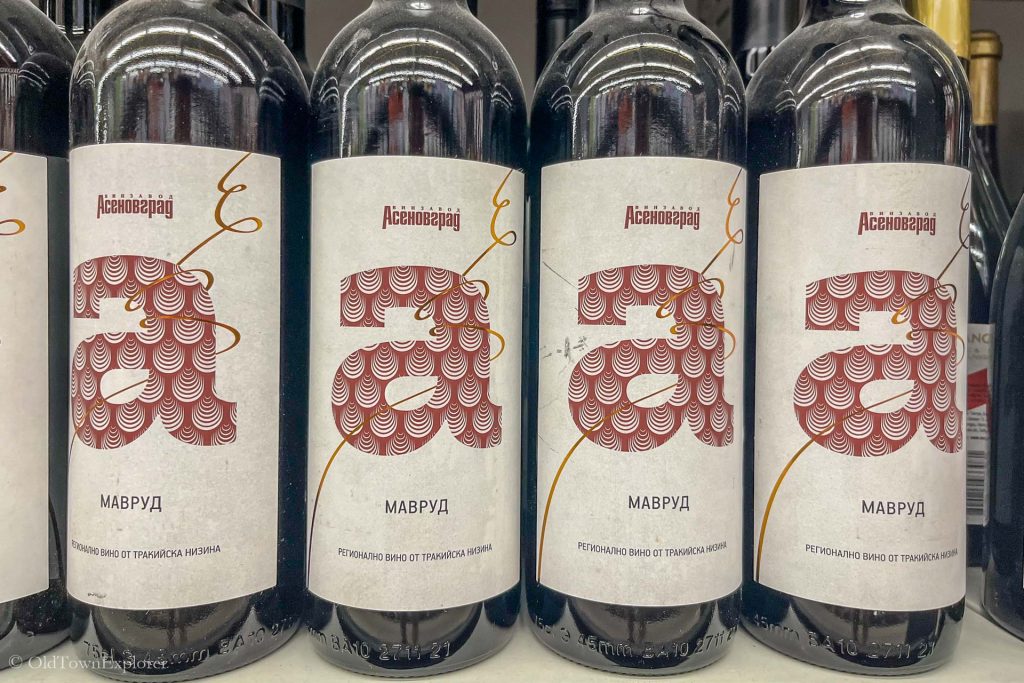
Red Wines
Red wine gives the strongest regional comparison between southern Bulgaria, the north, and the Struma Valley.
- Mavrud and Rubin: Look for structured, fuller reds in the Thracian Lowland and other parts of southern Bulgaria.
- Melnik-family reds: Shiroka Melnishka Loza and Melnik 55 put the Struma Valley clearly apart from Bulgaria's other red-wine regions.
- Gamza and Pamid: Choose these when you want a lighter red than many Mavrud or Rubin bottles.
- International reds: Merlot, Cabernet Sauvignon, and Syrah appear beside local grapes, especially in southern Bulgaria.
Start with Mavrud or Rubin around Plovdiv, Gamza in northern Bulgaria, and a Melnik-family red if the route reaches the southwest.
Dry and Aromatic White Wines
White wine becomes more prominent on the Black Sea coast, in the Rose Valley, and across parts of northern Bulgaria.
- Dimyat: Look for dry white wine in eastern and northern Bulgaria, especially when fish, salads, or fresh cheese are on the table.
- Red Misket: A white wine from a pink-skinned grape associated especially with the Rose Valley and nearby Sub-Balkan areas.
- Tamyanka: Choose it when you want a more aromatic white than a typical dry Dimyat.
- Sandanski Misket: A southwest white-wine choice when the same route also includes Melnik reds.
For a first white-wine comparison, taste Dimyat against one Misket wine before moving to Chardonnay or Sauvignon Blanc.
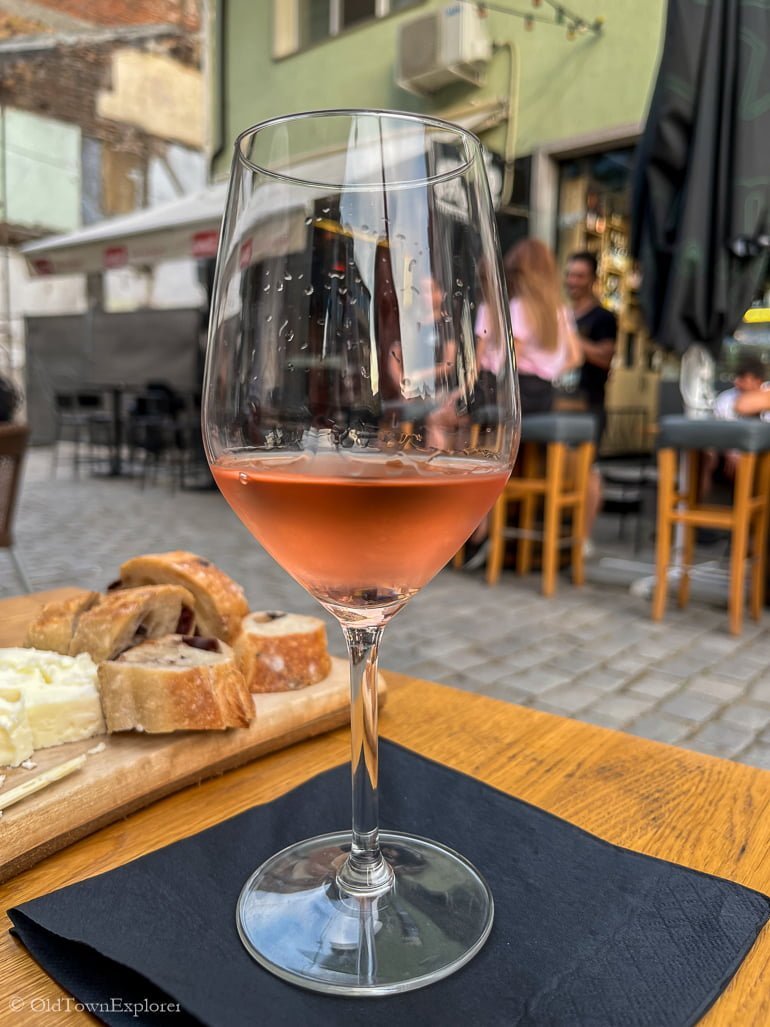
Rosé, Sparkling, and Sweet Wines
Rosé, sparkling, and sweet wines add variety, but they are not the first styles you need to understand Bulgaria's regional wine differences.
- Rosé: Choose it with salads, grilled vegetables, fresh cheese, or a lighter warm-weather meal.
- Sparkling wine: Bulgarian producers make sparkling wines from local and international grapes, so grape and producer matter more than looking for one national sparkling style.
- Sweet wine: Look for dessert or late-harvest bottles when a producer makes them rather than treating sweet wine as a required stop on every Bulgarian tasting.
Learn Bulgaria through still reds and whites first. Add rosé, sparkling, or dessert wine when a producer, wine bar, or meal gives you a good reason.
How to Choose and Taste Bulgaria Wine
Choose Bulgarian wine by region first, then grape. Mavrud and Rubin point toward the Thracian Lowland, Gamza toward northern Bulgaria, Melnik-family grapes toward the Struma Valley, and Dimyat toward the east. Misket names are the next white-wine clue to learn.
Wine Labels, Classifications, and Appellations in Bulgaria
Bulgarian wine labels may use the EU terms PDO and PGI. Under the Bulgarian Ministry of Agriculture's wine definitions, PDO wine comes from a defined area and its grapes originate there; for PGI wine, at least 85% of the grapes come from the named area.
Thracian Lowland (Тракийска низина) PGI is one concrete label example in the European Commission register. For a casual bottle, start with grape and region. Check PDO or PGI when you want the label to tell you more about origin.
Wine Tasting in Bulgaria
Start in Plovdiv when Mavrud, Rubin, and the Thracian Lowland are the priority. Start in Veliko Tarnovo when northern Bulgaria is already on the itinerary and you want to taste Danube Plain wines without building the whole trip around wineries.
Outside the cities, decide who is driving before planning winery stops. Melnik and Sandanski put the Struma Valley directly on a southwest route, while the Black Sea and Rose Valley fit more naturally when those areas are already part of the trip.
Rakia may appear beside wine at wineries or meals, but it is a spirit rather than a wine. Taste it separately when you want to compare Bulgaria's wine styles clearly.

Food Pairings with Bulgaria Wine
Match the weight of the wine to the meal rather than looking for one national pairing:
- Mavrud: Kavarma, lamb, beef, grilled pork, aged cheese, and roasted vegetables
- Rubin: Sach, grilled meats, charcuterie, stews, and smoked dishes
- Melnik and Melnik 55: Kapama, chomlek, lamb, pork, mushrooms, and pepper-based dishes
- Gamza: Sausages, poultry, pork, grilled vegetables, spinach pie, and lighter meat dishes
- Dimyat: Black Sea fish, mussels, salads, white brined cheese, and vegetable appetizers
- Red Misket and Tamyanka: Banitsa, soft cheese, salads, poultry, fruit, and lighter pastry dishes
- Sandanski Misket: Cheese, vegetables, poultry, trout, and southwest Bulgarian dishes
Food makes Bulgarian wine easier to choose: southern reds fit meat and stews, northern reds fit lighter plates, and local whites fit cheese, fish, salads, and vegetable dishes. Bulgaria Food covers the dishes and products that shape those pairings.
FAQs About Bulgaria Wine
What wine is Bulgaria known for?
Bulgaria is known for local grapes such as Mavrud, Rubin, Melnik, Gamza, Pamid, Dimyat, Red Misket, Tamyanka, and Sandanski Misket. Mavrud and Rubin are the main red grapes to try first near Plovdiv, while Melnik-family grapes define much of the Struma River Valley.
What are the main Bulgaria wine regions?
The main travel-facing Bulgaria wine regions are the Thracian Lowland, Danubian Plain, Black Sea area, Rose Valley, and Struma River Valley. The Thracian Lowland is strongest for southern reds, the Danubian Plain for northern wines, the Black Sea area for whites, the Rose Valley for Red Misket, and the Struma River Valley for Melnik grapes.
Where should I taste wine in Bulgaria?
Plovdiv is the clearest base for wine-focused travel because it connects city wine bars with wineries in the Thracian Lowland. Veliko Tarnovo is a better base for northern Bulgaria and the Danubian Plain, while Melnik and Sandanski are the clearest southwest route for Melnik-family grapes.
What Bulgarian red wine should I try first?
Start with Mavrud or Rubin if the trip begins in Plovdiv or the Thracian Lowland. Try Gamza for a lighter northern red and Melnik or Melnik 55 if the trip includes the Struma River Valley.
What Bulgarian white wine should I try first?
Start with Dimyat, Red Misket, Tamyanka, or Sandanski Misket. Dimyat is a strong choice with fish and cheese, Red Misket fits Rose Valley and Sub-Balkan wines, Tamyanka gives an aromatic Muscat-style option, and Sandanski Misket connects to southwest Bulgaria.
What does PGI mean on Bulgarian wine?
PGI means Protected Geographical Indication. It is part of the EU wine-protection system and identifies wine connected to a protected geographic area. For most travelers, grape, producer, region, and tasting base are still the fastest ways to choose Bulgarian wine.
Can you visit wineries in Bulgaria?
Yes, but plan each winery stop individually. Check directly with the winery before setting out, then arrange a driver, tour, or other transport if you plan to taste. The Thracian Lowland, Struma Valley, northern Bulgaria, and Black Sea region can all fit winery visits into a wider trip.
What food pairs with Bulgarian wine?
Mavrud and Rubin pair well with kavarma, sach, lamb, beef, pork, and aged cheese. Dimyat, Red Misket, Tamyanka, and Sandanski Misket pair better with white brined cheese, banitsa, salads, vegetables, fish, mussels, poultry, and lighter appetizers.
For wine bars, bottle shopping, and winery planning from a city base, choose Plovdiv Wine for the Thracian Lowland or Veliko Tarnovo Wine for northern Bulgaria.
Match Bulgarian bottles to local dishes with Bulgaria Food. Return to Bulgaria when wine is one part of a wider route.