
Emilia-Romagna Food
Explore Emilia-Romagna Food: Local Products & Traditional Dishes
Emilia-Romagna food connects dairy farming, pork curing, grain production, orchards, and the Adriatic coast. Parmigiano-Reggiano, Prosciutto di Parma, balsamic vinegar, and Piadina Romagnola are central products.
Bologna is the easiest base for markets, filled pasta, and regional shops. Parma centers cheese and cured-ham routes, while Modena and Reggio Emilia lead to vinegar producers and nearby dairies.
While traveling through Italy, we spent a month in Bologna exploring Emilia-Romagna food. A city stay gives you time to compare pasta shops and salumerie; a visit to a nearby dairy, ham producer, or acetaia connects those purchases with the places where they are made.
Emilia-Romagna Food at a Glance
A food trip through Emilia-Romagna changes character between the cured-meat country around Parma and Piacenza, the pasta and vinegar traditions of central Emilia, and Romagna’s flatbreads and Adriatic seafood.
Choose your starting point around the food you most want to try:
- City eating: Bologna for markets, mortadella, tagliatelle al ragù, and tortellini in brodo
- Cheese and cured meat: Parma for Parmigiano-Reggiano and Prosciutto di Parma; Piacenza for coppa, pancetta, and salame
- Balsamic vinegar: Modena and Reggio Emilia for their separate traditional DOP vinegars; Modena also produces the broader IGP
- Local specialties: Ferrara for pumpkin cappellacci and twisted bread; Romagna for piadina, Squacquerone, olive oil, and coastal fish dishes
- Seasonal shopping: spring asparagus, summer orchard fruit, and autumn mushrooms and chestnuts
Keep countryside visits within one production area each day. A dairy-and-ham day near Parma or an acetaia visit near Modena leaves more time at the producers than a route crossing the whole region.
Food Products in Emilia-Romagna
Emilia-Romagna’s food products range from aged cheese and cured pork to orchard fruit, fresh pasta, and olive oil. Some belong to one small production area; others share a protected zone with neighboring regions.
DOP and IGP are the Italian equivalents of PDO and PGI. These protected designations identify products made under a registered specification. Check the complete name on the label when buying a particular protected product.
Protected Designation of Origin
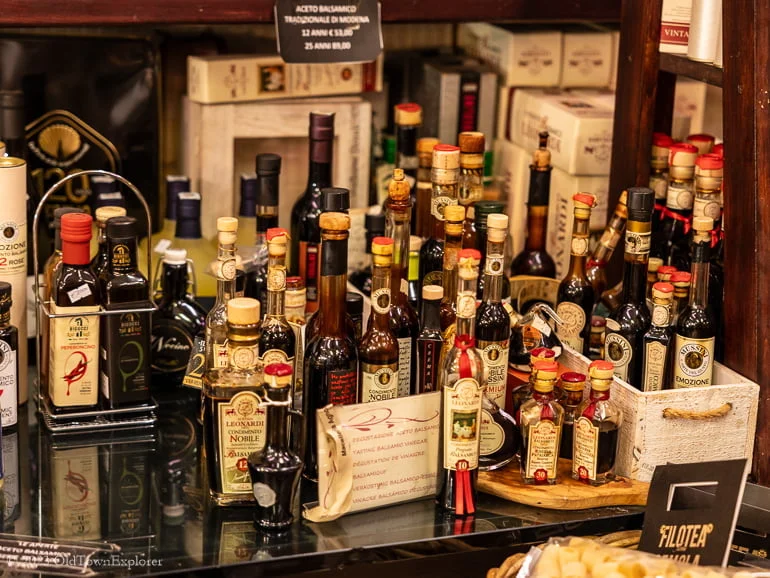
Traditional Balsamic Vinegar of Modena DOP
Aceto Balsamico Tradizionale di Modena DOP
Made from cooked grape must in Modena province, this vinegar matures in a succession of wooden barrels for at least 12 years. The designation extravecchio requires at least 25 years.
Its concentrated sweet-and-sour flavor suits small finishing drops over Parmigiano-Reggiano, grilled vegetables, strawberries, or ice cream. An acetaia tasting helps explain the differences between maturations before you choose a bottle.
Traditional Balsamic Vinegar of Reggio Emilia DOP
Aceto Balsamico Tradizionale di Reggio Emilia DOP
Reggio Emilia has its own traditional balsamic vinegar, made from cooked grape must and aged in wooden barrels for at least 12 years. Its production area is Reggio Emilia province.
The lobster, silver, and gold seals reflect tasting assessments rather than a simple sequence of age statements. Try it by the drop with cheese, risotto, or roast meat; tasting several bottles at an acetaia makes the differences easier to judge.
Garlic of Voghiera DOP
Aglio di Voghiera DOP
This white garlic grows in a defined area around Voghiera in Ferrara province. Its bulbs contain large cloves, and it is sold fresh, partly dried, or dried.
Look for it at produce stalls and food shops around Ferrara. Use it in sauces, roast vegetables, or dressings where its garlic flavor is central; dried bulbs are a more practical purchase for a longer stay than freshly harvested ones.
Casciotta d'Urbino DOP
Casciotta d’Urbino combines sheep’s milk with a smaller proportion of cow’s milk. Short maturation produces a soft cheese with a mild, milky flavor and a slight acidity.
Its main association is with Urbino and the Marche, but the protected milk-supply area also includes parts of the Valmarecchia now in Rimini province. Serve it as a table cheese with bread or cured meat, rather than expecting the texture of an aged grating cheese.
Coppa Piacentina DOP
Coppa Piacentina is made from the pork neck muscles, salted, seasoned, tied, and matured in Piacenza province. Aging lasts at least six months, producing firm slices with red meat threaded by white fat.
Thin slices work well as an antipasto with bread and local cheese. A salumeria in Piacenza is a useful place to compare coppa with the province’s protected pancetta and salame, alongside a wine from the Colli Piacentini.
Formaggio di Fossa di Sogliano DOP
This cheese matures partly in underground pits, where packed wheels develop irregular shapes, a crumbly texture, and a persistent aroma. It can be made from sheep’s milk, cow’s milk, or a mixture, so the flavor varies between types.
The protected area spans Romagna and the Marche. Around Sogliano al Rubicone, try a small portion with bread, honey, or fruit preserves before buying a larger piece; its intensity differs substantially from fresh local cheeses.
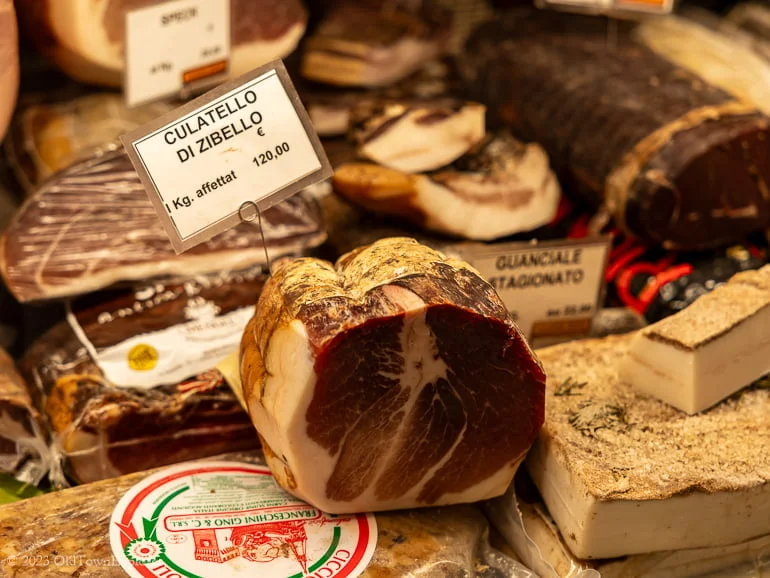
Culatello di Zibello DOP
Culatello di Zibello comes from a trimmed, boneless portion of the pork hind leg. It is salted, enclosed in a natural casing, tied into a pear shape, and matured for at least ten months in the lower Parma plain.
It is usually served in thin slices as an antipasto. Zibello and the surrounding Po-side countryside are the places to connect a tasting with its production landscape; Parma’s specialty shops offer a city alternative.
Grana Padano DOP
Grana Padano is a hard cow’s-milk cheese with a granular texture, matured for at least nine months. Its protected production area extends across much of the Po Valley and includes part of Emilia-Romagna.
Young and longer-aged wheels differ in firmness and intensity. Compare the age on the label when buying it for eating in pieces or grating over pasta, and distinguish its production area and minimum maturation from those of Parmigiano-Reggiano.
Extra virgin olive oil Brisighella DOP
Olio extravergine di oliva Brisighella DOP
Brisighella’s protected oil comes from a small hill area that includes Brisighella and neighboring municipalities. Nostrana di Brisighella olives give it grassy and artichoke-like aromas, with noticeable bitterness and pepperiness.
Try it on plain bread or simply cooked vegetables to taste the oil itself. A mill visit fits a trip through the hills around Brisighella; keep the bottle away from heat and light after purchase.
Extra virgin olive oil Colline di Romagna DOP
Olio extravergine di oliva Colline di Romagna DOP
This extra-virgin olive oil comes from designated parts of the Forlì-Cesena and Rimini hills. Its olive aroma, bitterness, and peppery finish make it useful for dressing vegetables, beans, fish, and bread.
The production area gives a coastal stay an inland food excursion. At a mill or specialist shop, compare it with Brisighella DOP and ask to taste the current oil before selecting a bottle for cooking or finishing dishes.
Pancetta Piacentina DOP
Pancetta Piacentina is pork belly that is salted, seasoned, rolled, tied, and matured in Piacenza province. Slicing across the roll exposes alternating layers of pink meat and white fat.
It is served thinly sliced with bread and other salumi, and can also flavor cooked dishes. Comparing it with Coppa Piacentina and Salame Piacentino shows how different cuts and preparation methods shape the province’s three protected cured meats.
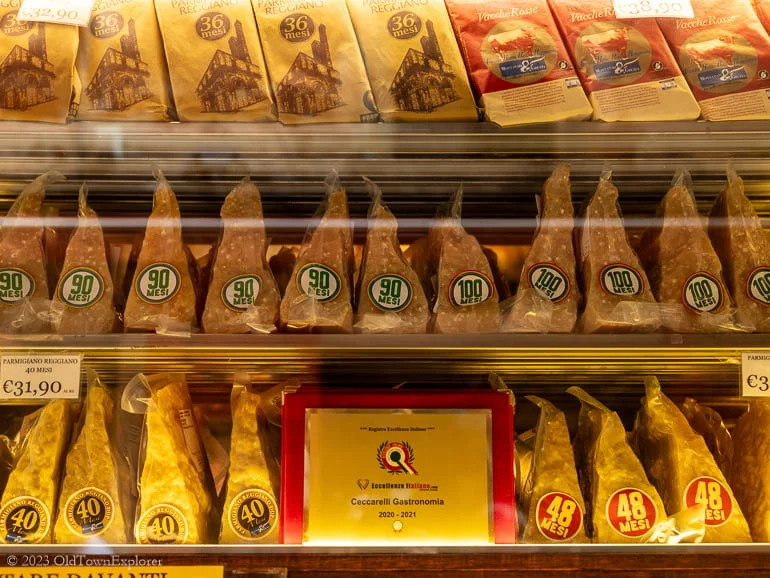
Parmigiano-Reggiano DOP
Parmigiano-Reggiano is made from raw cow’s milk, natural whey starter, and calf rennet. The curd is cooked in copper kettles, formed into wheels, salted in brine, and aged for at least 12 months.
Its production zone includes Parma, Reggio Emilia, Modena, and parts of Bologna and Mantua provinces. A dairy tasting lets you compare ages: younger cheese is milder, while longer maturation produces a more crumbly texture and stronger flavor.
Potato of Bologna DOP
Patata di Bologna DOP
Patata di Bologna is the protected yellow-fleshed Primura potato grown in Bologna province. Its smooth skin and fairly firm cooked texture make it useful for several everyday preparations.
Look for the designation at produce shops rather than assuming any potato grown locally is DOP. It can be boiled for salads, roasted, or used in soups and purées, making it a practical market purchase when staying somewhere with a kitchen.
Prosciutto di Modena DOP
Prosciutto di Modena is a dry-cured pork leg made in a defined hill area covering parts of Modena, Bologna, and Reggio Emilia provinces. The minimum maturation period is 14 months.
Order it thinly sliced with bread, melon, or figs, or alongside other local salumi. For a production visit, choose a prosciuttificio in the protected area rather than assuming the hams are cured in central Modena.
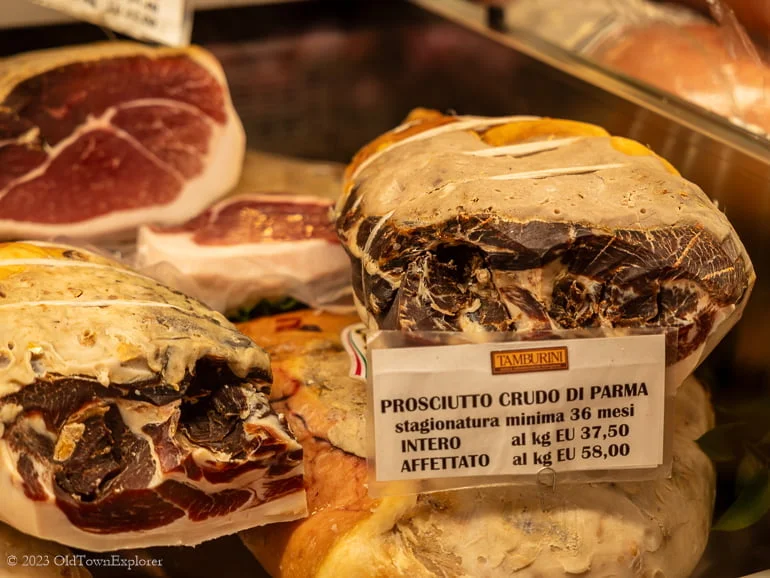
Prosciutto di Parma DOP
Prosciutto di Parma is dry-cured ham made in the hills south of Parma. Pork leg and salt are central to its production, followed by a minimum maturation of 14 months.
The five-pointed ducal crown identifies certified Parma ham. Try it thinly sliced on its own before adding bread or fruit; a visit to a hill producer explains the salting, resting, and maturation behind the finished slices.
Provolone Valpadana DOP
Provolone Valpadana is a cow’s-milk stretched-curd cheese made in several shapes, including pear-like and cylindrical forms. Its Po Valley production zone includes Piacenza and extends beyond Emilia-Romagna.
The main distinction at the cheese counter is between dolce, a milder style, and piccante, a more assertive one. Choose dolce for a softer-flavored table cheese or melting; piccante gives a firmer, sharper addition to a cheese plate.
Salami from Piacenza DOP
Salame Piacentino DOP
This cured pork salami is made in Piacenza province with lean meat, fat, salt, and seasonings including garlic, pepper, and wine. The sliced surface has clearly visible pieces of fat within the red meat.
It is a staple of local antipasti and salumerie. Taste it beside Coppa Piacentina and Pancetta Piacentina, with plain bread between them, to compare a minced sausage with whole-muscle coppa and rolled pork belly.
Salamini Italiani alla Cacciatora DOP
These small cured pork salami have a compact shape and a relatively mild flavor. Salt, pepper, and garlic season the meat; the protected production area covers several Italian regions, including Emilia-Romagna.
Their size makes them convenient for a small antipasto or picnic, but the name alone does not establish a specifically Emilian origin. Check the producer’s address if you want to buy one made within the region.
Squacquerone of Romagna DOP
Squacquerone di Romagna DOP
Squacquerone is a very soft, fresh cow’s-milk cheese with a milky flavor and slight tang. Its brief maturation produces a loose, spreadable texture rather than a firm wheel.
In Romagna, piadina filled with Squacquerone and arugula is a familiar combination; cured ham is another common addition. Buy it for eating during your stay and keep it refrigerated, rather than treating it like a travel-stable aged cheese.
Protected Geographical Indication
Balsamic vinegar of Modena IGP
Aceto Balsamico di Modena IGP
This vinegar combines grape must and wine vinegar, with production in Modena and Reggio Emilia provinces. It undergoes at least 60 days of refinement; the label invecchiato requires at least three years of aging.
Styles range in sweetness, acidity, and density. Use it for dressings, marinades, or finishing dishes according to the bottle’s character, and distinguish it from the two traditional DOP vinegars made solely from cooked grape must.
Lamb of Central Italy IGP
Agnello del Centro Italia IGP
This protected lamb comes from a production area spanning several central Italian regions, including Emilia-Romagna. The designation concerns the animals’ origin and production requirements, rather than one regional recipe.
Look for it at butchers and on menus serving roast, grilled, or braised lamb. Rosemary and garlic are familiar accompaniments, but the cut and cooking method matter more to the meal than expecting a single standardized preparation.
Amarene Brusche di Modena IGP
Amarene Brusche di Modena is a sour-cherry jam, made from cherries and sugar, with a tartness that remains apparent after cooking. The protected name refers to the preserve, not to all fresh cherries grown around Modena.
The permitted sour cherries include Amarena di Castelvetro, the short- and long-stemmed Amarena di Vignola, Amarena di Montagna, Amarena di Salvaterra, Marasca di Vigo, Meteor, Mountmorency, and Pandy. Try the jam on bread, in a crostata, with gelato, or alongside cheese; a jar is easier to carry than fresh summer fruit.
Reggio Emilia watermelon IGP
Anguria Reggiana IGP
Anguria Reggiana grows on the Reggio Emilia plain. The designation includes round, oval, and elongated types, valued for sweet, crisp flesh and sold during the summer harvest.
It is a seasonal market purchase rather than a year-round preserved specialty. Buy a cut portion for immediate eating or a whole fruit if you have room to store it during a longer stay; its size makes it less suited to onward travel.
Altedo green asparagus IGP
Asparago Verde di Altedo IGP
This green asparagus comes from a defined lowland area in Bologna and Ferrara provinces. It is a spring crop, with tender spears used in pasta, risotto, egg dishes, and simple vegetable preparations.
Altedo gives the product its name, but the growing area extends beyond the town. Look for the protected label at spring produce stalls, and choose a straightforward preparation if you want to taste the asparagus itself.
Cappellacci di Zucca Ferraresi IGP
These large parcels of egg pasta contain pumpkin, grated cheese, and nutmeg. Their folded shape and sweet-savory filling distinguish them from the small meat-filled tortellini associated with Bologna and Modena.
In Ferrara, they are served with butter and sage or with ragù. Fresh pasta shops also sell them for cooking at home; check the storage instructions and plan to eat them during your stay.
Vignola cherry IGP
Ciliegia di Vignola IGP
These sweet cherries come from the foothill area around Vignola, across parts of Modena and Bologna provinces. Varieties include Bigarreau Moreau, Mora di Vignola, Durone dell’Anella, Anellone, Giorgia, Durone Nero I, Samba, Van, Durone Nero II, Durone della Marca, Lapins, Ferrovia, and Sweet Heart.
Different varieties extend the harvest from late spring into summer. Ask which is in season when buying fresh fruit; these sweet cherries differ from the sour cherries used for Amarene Brusche di Modena jam.
Coppa of Parma PGI
Coppa di Parma IGP
Coppa di Parma is salted, seasoned, matured pork neck, with alternating lean meat and fat visible in each slice. Its protected production area covers several provinces in Emilia-Romagna and Lombardy.
Serve it thinly sliced with bread or as part of an antipasto. The Parma and Piacenza coppas have separate protected names and requirements, so compare the full labels when buying rather than treating them as interchangeable designations.
Coppia Ferrarese PGI
Coppia Ferrarese IGP
Ferrara’s twisted bread joins two pieces of dough into a central body with four curled ends. The dough includes wheat flour, sourdough, lard, and olive oil.
The slender ends are crisp, while the center is softer. Buy it from a bakery in Ferrara to eat with local salumi or cheese, or alongside a meal; the contrast between the thin horns and central crumb is clearest when it is fresh.
Cotechino Modena PGI
Cotechino Modena IGP
Cotechino contains minced pork, fat, rind, and seasonings in a sausage casing. It needs cooking and is sold both fresh and precooked, so preparation depends on the product you buy.
It is associated with winter meals and New Year lentils, and is also served with mashed potatoes. The protected zone extends beyond Modena; at a butcher or shop, check whether the sausage is ready to reheat or requires a longer cook.
Mushroom of Borgotaro IGP
Fungo di Borgotaro IGP
The protected name covers several species of wild porcini gathered in woods around Borgo Val di Taro and Albareto in Parma province, and Pontremoli in Tuscany. Their firm texture suits pasta, risotto, and sautéed mushroom dishes.
Fresh availability depends on the season and growing conditions. Dried porcini are a more practical purchase for later cooking; read the origin and protected designation when comparing packages.
Chestnut of Castel del Rio IGP
Marrone di Castel del Rio IGP
This large, sweet chestnut grows in the Santerno Valley in Bologna’s Apennines. The flesh separates relatively easily from its inner skin, which helps when using it in both sweet and savory dishes.
Autumn is the time to look for fresh marroni and roasted chestnuts around Castel del Rio. They also appear in soups, cakes, and other preparations; packaged chestnut products can extend their usefulness beyond the fresh harvest.
Mantua Melon IGP
Melone Mantovano IGP
Melone Mantovano includes smooth-skinned and netted melons grown in a zone crossing Lombardy and parts of Emilia-Romagna. Its name refers to Mantua, but the protected area also reaches into Modena, Ferrara, and Bologna provinces.
The sweet flesh is eaten fresh, in salads, or with sliced prosciutto. Look for it in summer markets, and choose a ripe fruit for eating during your stay rather than carrying it between destinations.
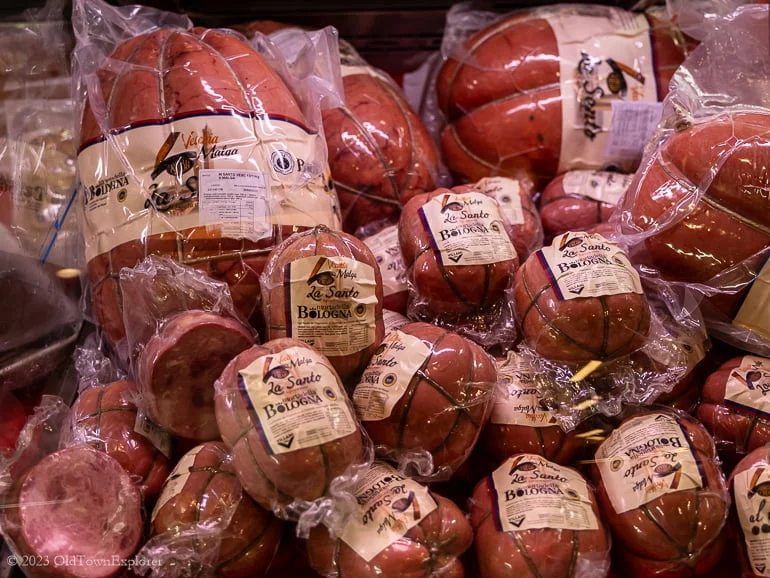
Mortadella Bologna IGP
Mortadella is a cooked pork sausage with finely ground pink meat and visible cubes of white fat. Seasoning gives it an aromatic, mild flavor; some versions also contain pistachios.
Bologna is closely associated with it, although the protected production zone is much wider. Order it thinly sliced in a sandwich or cubed with an aperitivo, and recognize it as an ingredient in tortellini and balanzoni fillings.
Pampepato of Ferrara IGP
Pampapato di Ferrara IGP / Pampepato di Ferrara IGP
This low, domed cake contains cocoa, almonds, candied citrus, and spices beneath a dark-chocolate coating. Its dense texture makes it suitable for serving in small slices.
It is associated with Ferrara’s Christmas baking but is also sold packaged outside the holiday period. Look for it in pastry shops and specialty stores, especially if you want a local sweet that is easier to carry than a cream-filled pastry.
Pear from Emilia-Romagna IGP
Pera dell’Emilia-Romagna IGP
The designation covers Abate Fetel, Cascade, Conference, Decana del Comizio, Kaiser, Max Red Bartlett, Passa Crassana, Williams, Santa Maria, and Carmen pears. Their shapes, skins, textures, and harvest periods differ.
Abate Fetel is recognizable by its long neck, while Kaiser has russet skin. Ask a produce seller which pears are ready to eat and which will keep longer; variety and ripeness are more useful buying guides than treating all regional pears alike.
Peach and nectarine from Romagna IGP
Pesca e Nettarina di Romagna IGP
Romagna’s protected peaches and nectarines include yellow- and white-fleshed varieties. Peaches have downy skin, while nectarines are smooth; both are important summer orchard crops.
The succession of varieties changes what is available through the season. Buy ripe fruit for eating fresh, or firmer fruit if it needs to last a little longer. Flesh color and variety affect flavor and texture, so skin color alone is a poor guide.
Piadina Romagnola PGI
Piadina Romagnola IGP / Piada Romagnola IGP
Piadina is a round flatbread made with wheat flour, water, salt, and lard or olive oil, then cooked on a hot plate. The Rimini style is generally thinner and larger than the thicker version found farther inland.
It is eaten warm, often folded around Squacquerone, arugula, salumi, or vegetables. Ask about the dough’s fat as well as the filling when choosing a vegetarian version.
Rice from the Po Delta IGP
Riso del Delta del Po IGP
This rice grows in the lowlands of Ferrara and Rovigo provinces, spanning Emilia-Romagna and Veneto. The protected name covers specified varieties suited to dishes such as risotto.
The Delta’s rice fields offer a different agricultural landscape from the region’s dairy and orchard areas. When buying a packet, check the variety as well as the geographical label: cooking time and the finished texture depend on the grain you choose.
Salama da Sugo PGI
Salama da Sugo IGP
Ferrara’s salama da sugo combines pork, fat, wine, and spices in a natural casing. It matures before being cooked slowly in water, developing a soft interior and strongly flavored juices.
It is commonly served with mashed potatoes, whose mild flavor balances the seasoned meat. This is a cooked specialty to order as part of a meal, rather than a dry salami to slice cold; check preparation instructions carefully if buying one.
Salami Cremona IGP
Salame Cremona IGP
Salame Cremona is a cured pork salami with visible fat and garlic among its seasonings. Its protected production zone covers parts of several northern Italian regions, including Emilia-Romagna.
It can be served sliced with bread, cheese, or preserved vegetables. If your aim is to compare products made locally, check the producer’s address; the Cremona name does not mean every certified salami was made in the city itself.
Salame Felino IGP
Salame Felino takes its name from the town of Felino, south of Parma, and is produced within Parma province. It combines pork meat and fat with salt, pepper, and garlic.
The sliced salami has an irregular distribution of white fat within the red meat and a relatively mild seasoning. Try it in a Parma antipasto alongside ham or coppa; Felino also gives a countryside visit a specific salami focus.
Shallots of Romagna PGI
Scalogno di Romagna IGP
These small bulbs grow in designated areas of Bologna, Forlì-Cesena, and Ravenna provinces. Their pungent flavor combines onion-like and garlic-like qualities, making them useful in sauces, dressings, and cooked vegetable or meat dishes.
They are sold fresh or dried, and also appear in preserves. Dried shallots are practical for an apartment kitchen; preserved ones offer a ready-to-eat accompaniment to cheese or salumi.
Vitellone Bianco dell’Appennino Centrale IGP
This designation covers beef from Chianina, Marchigiana, and Romagnola cattle slaughtered between 12 and 24 months old. The production area extends across central Italy and includes parts of Emilia-Romagna.
At a butcher or restaurant, ask which breed and cut are available. Steaks, roasts, and braises use different parts of the animal, so the cut and cooking method help you choose a meal alongside the protected origin.
Zampone Modena PGI
Zampone Modena IGP
Zampone contains seasoned pork meat, fat, and rind stuffed into the skin of a pig’s foreleg. The casing gives it its recognizable shape and distinguishes it from cotechino.
It is cooked before serving, often with lentils or mashed potatoes, and is closely associated with winter celebrations. Shops sell fresh and precooked versions; choose according to the cooking facilities and time available during your stay.
Erbazzone Reggiano IGP
Erbazzone is a savory pie from Reggio Emilia province, with thin pastry surrounding spinach and chard, Parmigiano-Reggiano, onion, and breadcrumbs. Pork fat is part of the protected preparation.
It is baked and sold in pieces, making it suitable for a bakery lunch or snack. The IGP was registered in March 2026. Despite the leafy filling, the protected product is unsuitable for vegetarians because it contains lard.
Other Traditional Products
Amarena Cherry
Amarena
Amarena cherries are sour cherries, often sold preserved in sweet syrup for serving with gelato, yogurt, cakes, and drinks. The tart fruit and syrup give a different result from eating fresh sweet cherries.
Bologna’s Fabbri company, founded by Gennaro Fabbri, is associated with these preserved cherries; its recipe was developed by his wife, Rachele. Choose cherries in syrup for spooning over desserts and sour-cherry jam for spreading or baking.
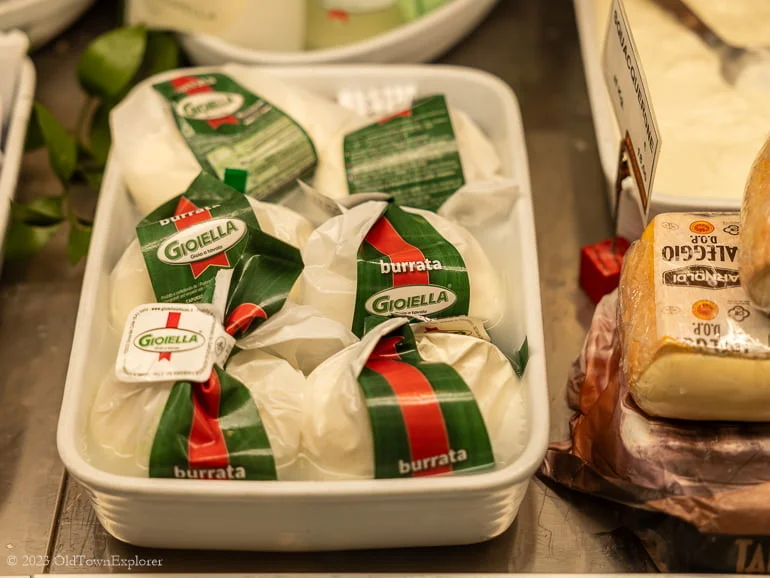
Burrata
Burrata is a fresh cheese from Puglia: a pouch of stretched curd enclosing cream and shredded curd. Cutting it opens the soft filling, which contrasts with the firmer outer layer.
It is also available in Emilia-Romagna, where it may be served with tomatoes, bread, olive oil, or cured ham. Buy it for eating during your stay, keep it chilled, and serve it with simple accompaniments that leave the cream filling apparent.
Tosone
Tosone consists of fresh curd trimmings taken while Parmigiano-Reggiano wheels are being shaped. Before salting and aging turn that cheese into a hard wheel, these strips are soft, mild, and milky.
Look for them at dairies and local food shops in Parmigiano-Reggiano country. They can be eaten fresh or used where a soft cheese will melt, including warm bread fillings. Unlike aged Parmigiano-Reggiano, tosone needs refrigerated storage and prompt use.
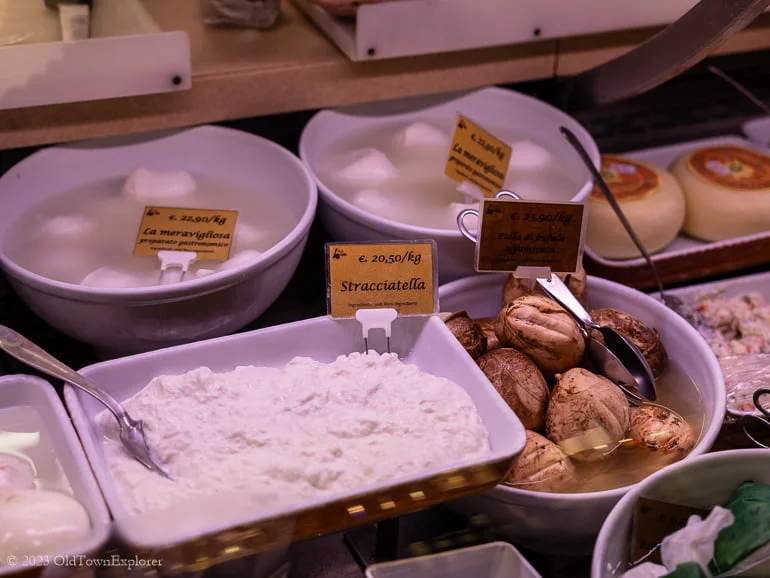
Stracciatella
Stracciatella cheese combines fine strands of stretched curd with cream. Its name refers to the ragged pieces, and it is the soft filling enclosed inside burrata.
Associated with Puglia’s dairy tradition, it is also sold on its own in Emilia-Romagna. Serve it with bread, tomatoes, or vegetables when you want a fresh, creamy cheese. Keep it chilled and distinguish the cheese from the soup and gelato that share its name.
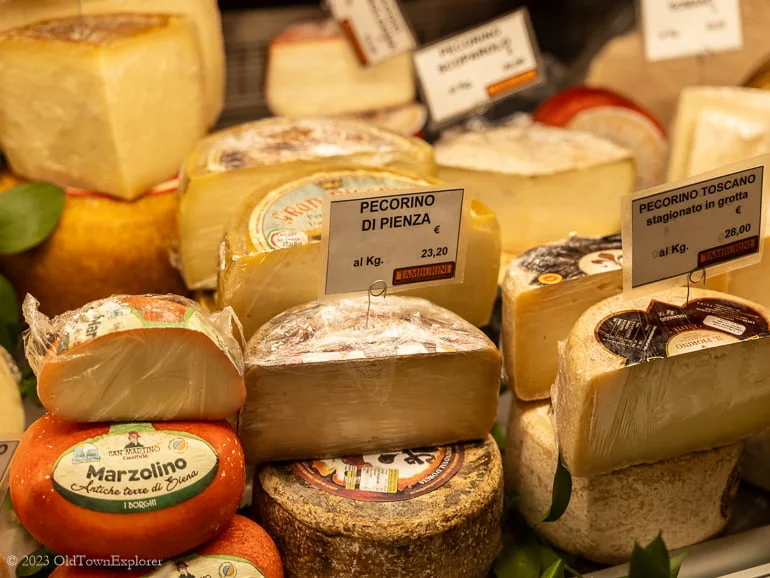
Pecorino
Pecorino is a broad name for sheep’s-milk cheese, covering fresh, partly matured, and aged styles. Its texture and strength depend on the producer and maturation, rather than one universal aging period.
Sheep’s-milk cheeses are part of the food traditions of Romagna and the Apennines. Ask where a cheese was made and how long it has aged: younger pecorino suits a cheese plate with bread and salumi, while firmer versions can be grated over pasta.
Food by Area in Emilia-Romagna
The region’s food follows the dairy plains, pork-curing districts, orchards, river lowlands, and coast. These four areas help you choose which products and dishes to concentrate on during a stay.
Piacenza and Parma
Piacenza’s protected products center on coppa, salame, and pancetta, while the surrounding hills and plains add cheese, mushrooms, grains, and wine. Parma and the lower Po plain connect Parmigiano-Reggiano dairies with Prosciutto di Parma, Culatello di Zibello, Coppa di Parma, and Salame Felino.
Parma is the stronger base for producer visits, while Piacenza suits salumerie, rural inns, and routes toward the western Apennines. Keep stops within one province unless the day is planned around a single through-route.
Reggio Emilia, Modena, and Bologna
Reggio Emilia and Modena share Parmigiano-Reggiano production but have separate traditional balsamic vinegar DOPs. Reggio Emilia also contributes Erbazzone reggiano and Anguria reggiana, while Modena adds ham, cotechino, zampone, sour-cherry preserves, and the balsamic vinegar IGP.
Bologna is the main city base for markets, salumerie, mortadella, egg pasta, and filled pasta. Lambrusco and Pignoletto accompany many of these foods; Emilia-Romagna Wine explains their styles, along with Sangiovese and regional tasting routes.
Ferrara and the Po Delta
Ferrara connects Coppia ferrarese, Aglio di Voghiera, Cappellacci di zucca ferraresi, Pampapato, and Salama da sugo. The Po Delta adds protected rice and a stronger connection with lagoons, wetlands, freshwater, and Adriatic products.
Ferrara is the practical city base, but rice, garlic, farms, and Delta products lie across a broad lowland area. Select one city-and-countryside route rather than treating every protected name as a walkable Ferrara product.
Romagna and the Apennines
Romagna’s registered products include Piadina Romagnola, Squacquerone, Scalogno di Romagna, peaches and nectarines, Brisighella and Colline di Romagna oils, and Formaggio di fossa di Sogliano. The Adriatic coast adds fish, shellfish, and brodetto traditions.
The Apennine areas add Fungo di Borgotaro, Marrone di Castel del Rio, pasture products, and mountain cooking. Coastal and hill routes require different bases, and inland producer stops are easier to group by valley or province.
Traditional Dishes of Emilia-Romagna
Egg pasta, filled pasta, and breads served with salumi shape many meals in Emilia. Romagna adds cheese-filled cappelletti and passatelli, while the Adriatic coast brings fish stews. Local names matter: a crescentina in Bologna is different from one around Modena.
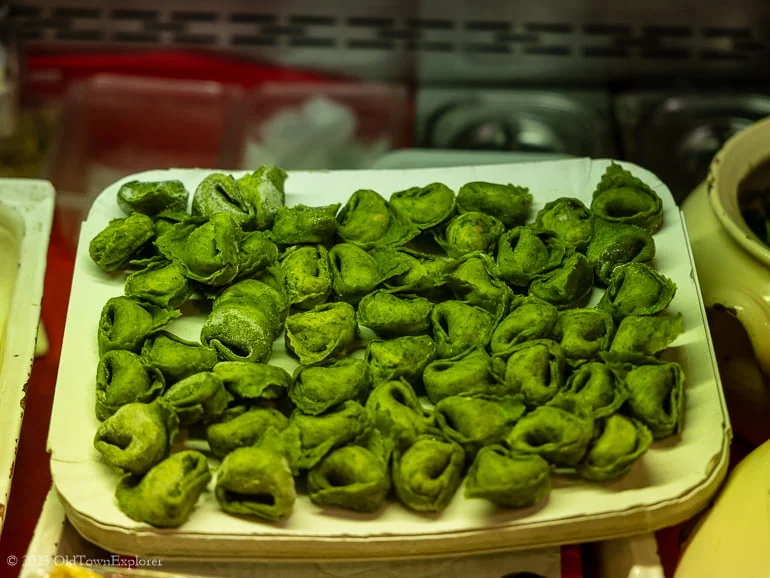
Balanzoni Bolognese
Balanzoni are large, folded parcels of green egg pasta from Bologna. Spinach colors the dough, while the filling combines ricotta, mortadella, Parmigiano-Reggiano, egg, and greens.
They are commonly served with butter and sage, which leaves the filling’s flavor apparent. Recognize them as a different choice from the smaller, meat-filled tortellini: the mortadella contributes pork flavor, but ricotta gives balanzoni a softer filling.
Crescentina
In Bologna, crescentine are pieces of dough fried until they puff, leaving a crisp exterior around an airy center. Doughs vary, with flour, liquid, fat, and a raising agent.
They are served warm with cured meats and soft cheeses, or with jam and chocolate-hazelnut spreads. Related fried breads have different local names: gnocco fritto around Modena, pinzino in Ferrara, torta fritta in Parma, and chisulen in Piacenza. Around Modena, however, crescentina also names the small round bread commonly called tigella.
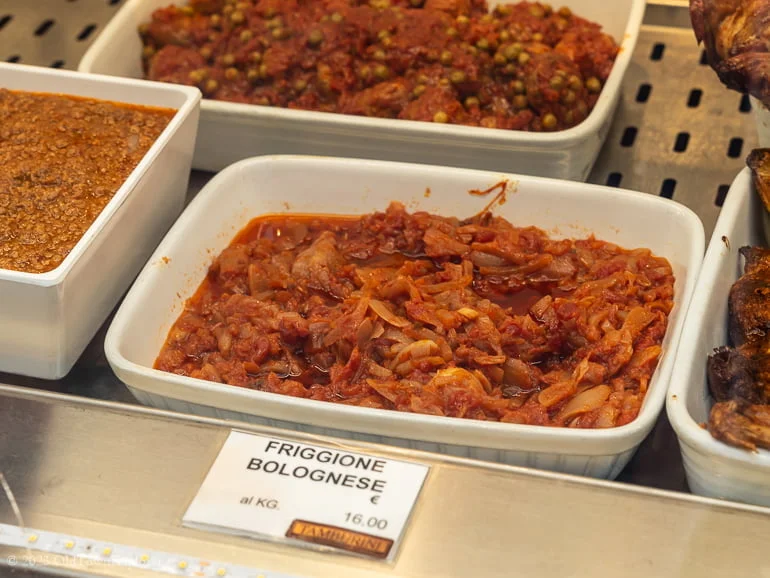
Friggione
Friggione, also called frizòn or frizàn, is Bologna’s slowly cooked mixture of onions and tomatoes. The onions become soft and sweet, with tomatoes providing acidity.
It accompanies bread, polenta crostini, boiled meat, or sausages. Medicina onions are associated with its preparation. Traditional recipes use lard, while other versions use olive oil; some include pancetta, so a vegetable-based appearance does not establish that a serving is vegetarian.
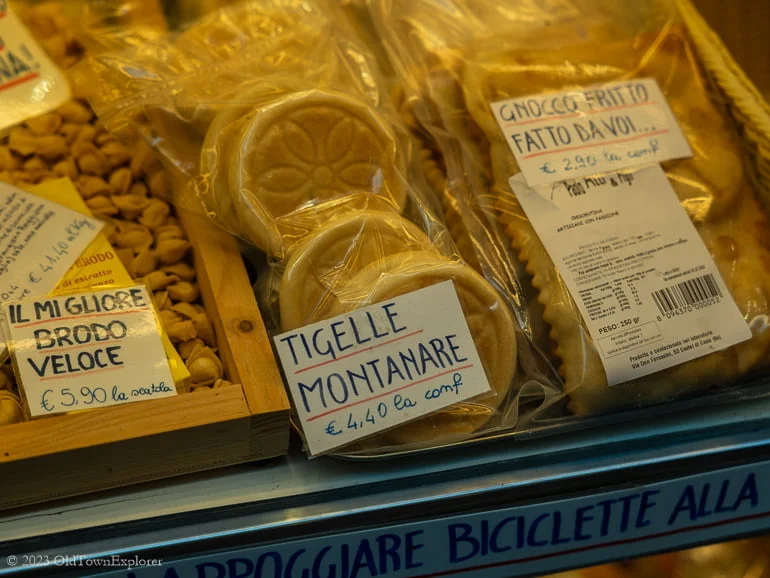
Tigella
Tigelle, more precisely called crescentine modenesi, are small round breads associated with the Modena Apennines. The name tigella comes from the clay discs once used to cook the dough; modern versions are also made on metal plates.
Split them while warm and fill them with salumi, cheese, or vegetables. A traditional filling is cunza, a mixture of pork fat, garlic, and rosemary, often finished with Parmigiano-Reggiano. Unlike Bologna’s crescentine, these breads are not deep-fried.
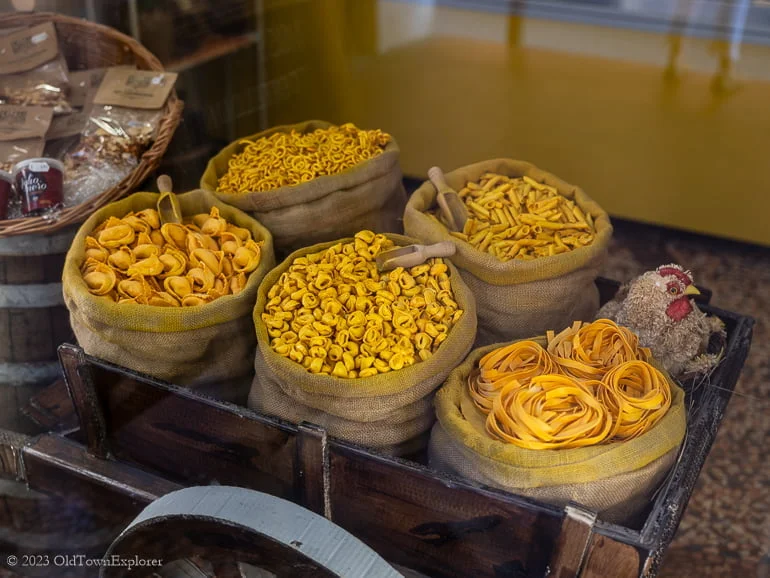
Tortellini
Tortellini are small folded rings of egg pasta associated with Bologna and Modena. The Bolognese filling combines pork loin, prosciutto crudo, mortadella, Parmigiano-Reggiano, egg, and nutmeg.
The traditional serving is in brodo, cooked and served in meat broth. Sauced versions also appear, but broth makes a useful first choice for tasting the pasta and filling without a heavy coating. Check both filling and broth when considering dietary restrictions.

Tortelloni
Tortelloni are larger folded parcels of egg pasta, commonly filled with ricotta, spinach or other greens, and grated cheese. Butter and sage are a familiar accompaniment in Bologna and Modena.
The size and filling distinguish them from tortellini, rather than simply making them a larger portion of the same pasta. Other fillings, including pumpkin, occur locally; read the filling and sauce together when choosing from a menu.
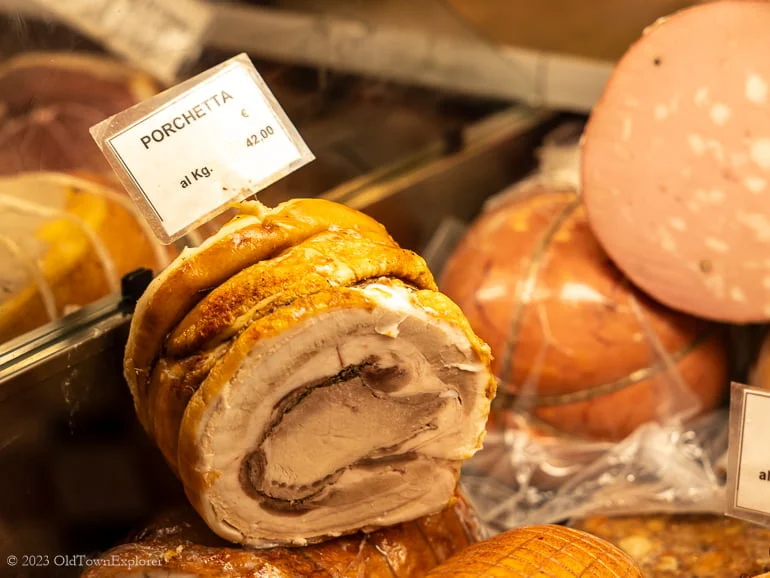
Porchetta
Porchetta is boned pork seasoned with herbs and spices and roasted with its skin. It is served in slices, either warm or cold, and often becomes a bread-roll filling.
It is shared with wider central Italian traditions rather than originating exclusively in Emilia-Romagna. At a market or food shop, it offers a cooked-pork alternative to dry-cured salumi; the seasoning and proportion of meat, fat, and skin vary between producers.
Tagliatelle al Ragù
Bologna’s tagliatelle are ribbons of egg pasta served with a slowly cooked meat ragù. The sauce combines minced meat with a finely chopped vegetable base and tomato, with recipes varying between kitchens.
The broad pasta carries the sauce differently from spaghetti. On a Bologna menu, tagliatelle al ragù is the familiar local pairing to look for when you want the dish commonly described abroad as spaghetti Bolognese.
Lasagne Verdi alla Bolognese
Green lasagne layer spinach egg pasta with meat ragù, béchamel, and Parmigiano-Reggiano before baking. The spinach is in the pasta itself, rather than a separate vegetable filling.
They are a substantial first course associated with Bologna, usually served in a cut portion. Their combination of pasta, dairy, and ragù gives a different way to try the same meat-sauce tradition found in tagliatelle al ragù.
Cappelletti
Cappelletti are folded, hat-shaped pasta associated especially with Romagna. Around Ravenna, the filling commonly combines soft cheese, such as ricotta or raviggiolo, with grated cheese, egg, and nutmeg; other local versions contain meat.
They are traditionally served in broth and are associated with Christmas and family celebrations. A cheese filling does not mean the finished dish is vegetarian, because meat broth is common. Ask about the local filling rather than assuming it matches Bologna’s tortellini.
Passatelli
Passatelli are short strands made from breadcrumbs, Parmigiano-Reggiano, and eggs, flavored with nutmeg and sometimes lemon zest. They are pressed into shape rather than rolled and cut from pasta dough.
Romagna is a strong place to look for them, traditionally served in broth. Dry versions with other sauces also appear. Their bread-and-cheese mixture gives a different texture from egg pasta, making them a useful alternative when comparing regional first courses.
Anolini
Anolini are small filled pasta discs associated with Parma and Piacenza. Fillings vary locally: some use slow-cooked beef or its concentrated cooking juices with breadcrumbs, aged cheese, egg, and nutmeg, while others emphasize cheese and breadcrumbs.
They are commonly cooked and served in meat broth, particularly for festive meals. Ask how the filling is made when ordering; the local variation matters more than treating every anolino as the same recipe.
Adriatic Brodetto
Brodetto di pesce
Brodetto is a coastal fish stew made with a mixture of fish and, in some versions, shellfish. The selection follows local fishing and the kitchen’s recipe, with bread often served alongside the broth.
Look for it on Romagna’s Adriatic coast when you want a meal centered on seafood rather than pasta and cured pork. Ask which fish are included and whether they are served on the bone before ordering.
Markets, Producers & Food Experiences
City food shops let you compare products in one place, while countryside visits show how cheese, ham, vinegar, and oil are made. Choose a production area first, then combine nearby stops rather than building a day around distant names.
City Markets and Specialty Shops
Bologna, Parma, Modena, Reggio Emilia, and Ferrara provide the strongest city bases for comparing regional products without driving between farms. Markets, salumerie, formaggerie, pasta shops, bakeries, and specialty stores carry cheese, cured meat, vinegar, bread, fresh pasta, preserves, and seasonal produce.
The official Bologna and Modena food itinerary begins in Bologna’s Quadrilatero and connects city food traditions with Modena. Use the cities for comparison and shopping, then reserve rural travel for production visits.
Dairies, Ham Producers, Vinegar Producers, and Olive Mills
Caseifici make cheese, prosciuttifici cure whole hams, salumifici make cured meats, acetaie mature vinegar, and frantoi mill olives. These terms help distinguish a producer visit from a city food shop.
Parma and Reggio Emilia suit dairy routes; Parma and the lower Po plain suit ham and culatello; Modena and Reggio Emilia suit vinegar; Romagna’s hills suit olive oil. Producer access varies, so confirm current visits and sales directly before traveling.
Regional Food Routes
The Strada del Culatello groups food and rural stops in the lower Parma plain. The Ferrara food and wine route covers products and landscapes across Ferrara province.
The Food Valley Bike route connects Parma and Busseto through western food-production areas. For other parts of the region, Emilia-Romagna Food Valley offers food museums, producer experiences, and itineraries that can be matched to your base.
Planning Your Regional Food Experience
Plan around a city base, a manageable countryside area, and the foods in season. Cheese, cured meat, and vinegar are available throughout the year, while fresh produce gives a trip a more seasonal focus.
Choosing a Base
Bologna suits a stay built around walking to markets, pasta shops, and salumerie. Parma is a better starting point for a trip centered on dairies and cured-ham production, while Modena or Reggio Emilia puts traditional balsamic vinegar closer to the center of the itinerary.
Choose Ferrara for its bread, pumpkin pasta, and access to the eastern lowlands. In Romagna, decide whether you want coastal fish meals or inland olive oil, cheese, and hill towns before choosing where to stay. For rural visits, check transport to the actual producer before booking.
Seasonality and Shopping Notes
Use the season and your storage facilities to decide what to buy:
- Spring: asparagus, spring vegetables, and fresh greens follow short local market cycles
- Summer: cherries, peaches, nectarines, melons, watermelons, and early pears change with the variety and harvest
- Autumn: mushrooms, chestnuts, later pears, and pumpkins become more prominent
- Longer availability: aged cheese, cured meat, vinegar, olive oil, rice, flour, preserves, dry sweets, and packaged bread products remain on sale beyond harvest
- Refrigeration: Squacquerone, fresh pasta, filled pasta, and other chilled dairy or prepared foods need controlled storage during onward travel
For a purchase to carry onward, sealed vinegar, oil, rice, or preserves are simpler choices than fresh dairy or uncooked filled pasta. Ask the shop to package aged cheese or cured meat for your journey, and check your destination’s import rules before taking animal products across a border.
FAQs About Emilia-Romagna Food
A food-focused stay can center on city markets, countryside producers, or one area’s dishes. Seasonality and ingredients help narrow the choice further.
What food is Emilia-Romagna known for?
Emilia-Romagna is known for Parmigiano-Reggiano, Prosciutto di Parma, Culatello di Zibello, mortadella, Piacenza cured meats, traditional balsamic vinegar, egg pasta, filled pasta, fried breads, piadina, orchard fruit, and Adriatic seafood.
How many protected food products does Emilia-Romagna have?
Emilia-Romagna has 45 DOP and IGP food names produced wholly or partly within the region: 19 DOP and 26 IGP. Erbazzone reggiano IGP, registered in March 2026, is the newest addition. Some registered production areas cross into other Italian regions.
Which products should a first-time visitor try?
Start with Parmigiano-Reggiano DOP, one province-specific cured meat, one of the protected balsamic vinegars, and a product tied to the route. Examples include Culatello near the lower Parma plain, Erbazzone around Reggio Emilia, Cappellacci in Ferrara, or Piadina and Squacquerone in Romagna.
How does food differ between Emilia and Romagna?
Emilia has the strongest concentration of aged cow’s-milk cheese, cured pork, balsamic vinegar, egg pasta, filled pasta, and fried breads. Romagna adds piadina, Squacquerone, olive oil, shallots, stone fruit, hill products, and stronger Adriatic seafood traditions.
Where are the main food bases?
Bologna is the easiest city base for markets and regional comparison. Parma suits dairy and cured-ham routes, Modena and Reggio Emilia suit vinegar and cheese, Ferrara suits Po Delta and local prepared foods, and Romagna requires a coastal or hill base depending on the route.
Which Emilia-Romagna products are seasonal?
Fresh asparagus, cherries, peaches, nectarines, pears, melons, watermelons, mushrooms, chestnuts, and other produce follow harvest cycles. Aged cheese, cured meat, vinegar, oil, rice, preserves, and packaged goods have longer availability.
Can vegetarians find regional food?
Vegetable-filled pasta, some piadina fillings, breads, and produce dishes can offer options, but check the whole preparation. Piadina dough may contain lard, pasta may be served in meat broth, and cheeses may use animal rennet. Erbazzone Reggiano IGP contains pork fat, despite its vegetable filling. These ingredient checks also apply to many dishes elsewhere in Italy.