
Discover Levanto: History, Architecture & Must-See Attractions
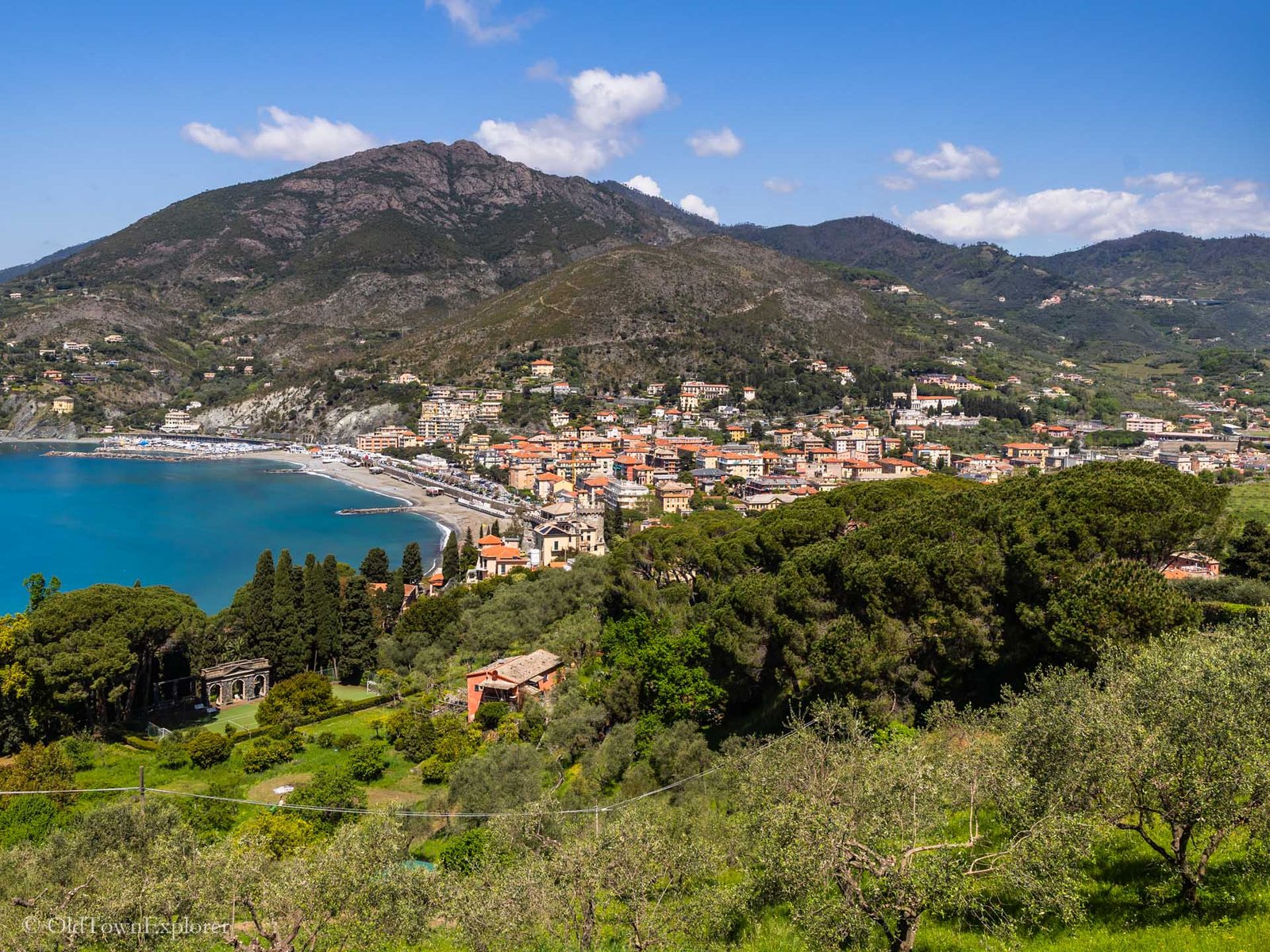
Levanto, Italy, combines a medieval town center with a broad bay just beyond the northern end of Cinque Terre. A short train journey from Riomaggiore brings you to streets lined with painted houses, a striped Gothic church, and a raised civic loggia. The town also makes a practical starting point for the hike over Punta Mesco to Monterosso al Mare.
Levanto has more level ground around its center and seafront than the steeply stacked villages of Cinque Terre. Its old town still involves sloping lanes and steps, particularly around San Giacomo and the castle. You can spend half a day exploring the architecture and waterfront, or combine a shorter town walk with the hike for a full day outdoors.
We took the train from Riomaggiore to Levanto and then hiked to Monterosso al Mare. Levanto is also worth considering as a base for a longer Cinque Terre stay, with short rail connections, access to the hiking network, potentially cheaper accommodation, and larger grocery stores for everyday shopping.
This post contains affiliate links that may earn us a small commission at no additional cost to you.
Levanto at a Glance
Levanto sits on the Ligurian coast immediately northwest of Monterosso al Mare. Its station, historic center, and beach fit into a manageable town visit, while Punta Mesco separates the bay from Cinque Terre.
These are the main decisions for a day trip:
- Starting base: Riomaggiore, with direct regional trains to Levanto
- Main sights: Sant’Andrea, Loggia Comunale, Casa Restani, and the castle exterior
- Town visit: Three to four hours for a walk, selected interiors, and lunch
- Hiking option: Allow about three to four additional hours to reach Monterosso via Punta Mesco
- Walking conditions: Mostly gentle ground near the beach; steps and slopes in the old town; sustained climbing on the hike
- Longer-stay appeal: Short train rides to the villages, accommodation value, and convenient grocery shopping
The hike finishes in Monterosso’s Fegina area, near its railway station. You can return to Riomaggiore from there without walking back to Levanto.
History of Levanto
Levanto’s historic center developed around coastal trade, religious buildings, and defenses above the bay. Later expansion added streets beyond the medieval core, leaving a visible contrast between narrow old-town lanes and the more open center.
A Medieval Trading Settlement in the Twelfth and Thirteenth Centuries
Levanto’s sheltered landing place connected maritime trade with routes inland. Merchant houses and storage spaces developed around the lower town. The large ground-floor arches at Casa Restani help explain how commercial buildings accommodated goods as well as domestic life.
Churches and Defenses in the Thirteenth Century
Construction of Sant’Andrea began in 1222, while walls and towers protected the medieval settlement. The church, castle site, and surviving defenses concentrate around the eastern side of the old town. Their position becomes clearer as you climb away from the beach.
Expansion Beyond the Medieval Core from the Fifteenth Century
As the population grew, development spread west of the old town. Via Garibaldi and the later town expansion extended the commercial streets beyond the earlier settlement. Today, the street’s painted fronts contrast with the exposed masonry and narrower passages nearer the medieval landmarks.
Religious and Defensive Changes in the Sixteenth and Seventeenth Centuries
The castle and walls underwent later rebuilding, while religious communities added new buildings. San Giacomo’s oratory was constructed in the late sixteenth century and consecrated in 1600. The former Augustinian convent, now Ospitalia del Mare, belongs to this later phase of the town’s religious architecture.
Restoration and New Uses in the Nineteenth and Twentieth Centuries
Restoration changed how several medieval buildings appear today. Alfredo d’Andrade directed work at Sant’Andrea around the turn of the twentieth century, and Casa Restani’s upper windows also underwent restoration. The conversion of the former Augustinian convent into Ospitalia del Mare brought a historic complex into modern use.
Architecture of Levanto
Levanto rewards attention to individual fronts, arches, and changes in street level. Walk from the commercial streets into the medieval core, then climb toward the religious buildings and castle to see how the town changes with the ground.
Light and Dark Stone at Sant’Andrea
Sant’Andrea’s horizontal bands alternate white Carrara marble with dark local green stone. The strong color contrast makes the church easy to recognize from its square. Look more closely at the pointed arches and small decorative details along the upper façade.
Arches in Merchant Houses
Casa Restani’s substantial ground-floor arches distinguish it from the surrounding residential fronts. Buildings used for trade needed broad openings beneath their upper living spaces. Along nearby streets, look for changes between large commercial openings and smaller domestic windows.
An Open Civic Loggia
A loggia is a roofed space open along one or more sides. Levanto’s Loggia Comunale faces Piazza del Popolo through five arches supported by stone columns and end piers. Its raised floor separates the sheltered civic space from the square without closing it off.
Painted Façades on the Commercial Streets
Via Garibaldi has houses with painted decoration around windows and doors. Some details suggest architectural depth through paint rather than projecting stonework. Comparing these fronts with Casa Restani and Sant’Andrea reveals several different treatments of the town’s buildings.
Walls and Towers Following the Hillside
The defenses respond to the slope above the medieval center. The clock tower occupies high ground, while the castle overlooks the eastern side of the bay. Their elevated positions explain both the former defensive layout and the climbing involved in visiting this part of town.
Buildings Altered Across Several Periods
Medieval origins do not mean every visible feature is medieval. Nostra Signora della Costa retains a later Baroque façade, and restoration reshaped parts of Sant’Andrea and Casa Restani. For broader context on these styles, explore Italian architecture.
Architectural Attractions in Levanto
The main architectural stops lie within the town center and the adjoining hillside. Begin with the civic and merchant buildings, continue through the San Giacomo area, and finish around Sant’Andrea and the castle.
Piazza del Popolo and the Merchant Streets
Loggia Comunale
- Architect: Unknown
- Style: Medieval civic architecture
- Built: Thirteenth century; later restoration
- Address: Piazza del Popolo 4, 19015 Levanto, Italy
The Loggia Comunale is a raised, open civic building facing Piazza del Popolo. Five brick arches span the front, resting on dark stone columns and end piers. Side openings make it possible to appreciate the structure from more than one approach. Its sheltered interior contrasts with the open square below.
Casa Restani
- Architect: Unknown
- Style: Medieval merchant-house architecture
- Built: Fourteenth to fifteenth centuries; upper windows restored in the early twentieth century
- Address: Via Grillo 30, 19015 Levanto, Italy
Casa Restani preserves the form of a substantial merchant house near the civic center. Look for the broad ground-floor arches and the grouped openings above. The upper windows include restoration work, so the present façade combines surviving fabric with later reconstruction. It is a short exterior stop on the way between the commercial streets and Piazza del Popolo.
San Giacomo and the Hillside Defenses
Oratorio di San Giacomo
- Architect: Unknown
- Style: Late sixteenth-century religious architecture
- Built: Late sixteenth century; consecrated in 1600
- Address: Salita San Giacomo, 19015 Levanto, Italy
The Oratorio di San Giacomo was built for a confraternity whose history predates the present building. Its restrained façade and single-hall form contrast with the larger parish church. Notice the relief above the entrance before continuing along Salita San Giacomo. The oratory and nearby Nostra Signora della Costa make a convenient pair of stops.
Nostra Signora della Costa
- Architect: Unknown
- Style: Medieval church origins with a later Baroque façade
- Built: Medieval origin; later alterations
- Address: Salita San Giacomo 6, 19015 Levanto, Italy
The remains of Nostra Signora della Costa stand close to San Giacomo’s oratory. The surviving façade reflects later alterations to an older religious site. Above the doorway, a sixteenth-century marble relief depicts Saint George and the dragon with the Da Passano family arms. Treat this as a stop to examine the surviving exterior.
Torre dell’Orologio and the Medieval Walls
- Architect: Unknown
- Style: Medieval defensive architecture with later alterations
- Built: Medieval defenses; rebuilt and altered in subsequent centuries
- Location: Hillside above the San Giacomo area, along the eastern defensive perimeter
The Torre dell’Orologio stands at a high point in Levanto’s former defensive circuit. Its position gave a view over the settlement and approaches to the bay. Surviving wall sections show how the defenses followed the hillside. Add the climb when time and conditions allow, without depending on access to the tower interior.
Sant’Andrea, the Castle, and the Former Convent

Chiesa di Sant’Andrea
- Architect: Original architect unknown; restoration directed by Alfredo d’Andrade
- Style: Ligurian Gothic with later alterations and restoration
- Built: Begun in 1222; later expansion and restoration
- Address: Piazza Sant’Andrea, 19015 Levanto, Italy
Sant’Andrea is Levanto’s principal parish church, distinguished by alternating bands of white marble and dark local stone. The pointed arches and rose window give the façade its Gothic character. Later expansion and restoration changed the building beyond its original medieval form. The square gives you room to examine the front before continuing uphill.

Castello di Levanto
- Architect: Unknown; local builders
- Style: Fortified architecture with medieval origins and later rebuilding
- Built: Castle documented in 1165; surviving structure rebuilt and altered later
- Address: Via al Castello 2, 19015 Levanto, Italy
The Castello di Levanto occupies an elevated position above Sant’Andrea and the eastern waterfront. A round tower and substantial walls distinguish it from the religious buildings below. Its present appearance reflects later rebuilding of an older defensive site. The castle is privately owned, so plan to view the exterior from public approaches.
Former Augustinian Convent — Ospitalia del Mare
- Architect: Unknown
- Style: Early modern convent architecture with modern adaptation
- Built: Late sixteenth to seventeenth centuries; restored for reuse in 2000
- Address: Via San Nicolò 1, 19015 Levanto, Italy
The former Augustinian convent now houses Ospitalia del Mare. Its substantial masonry and arched spaces reflect the religious complex that preceded its modern use. The building sits in the historic center close to the seafront. Include the exterior on the town walk; accommodation and event spaces should not be assumed open for sightseeing.
Seafront Villas

Villa Pallastrelli
- Architect: Unknown
- Style: Liberty, the Italian form of Art Nouveau
- Built: From 1906
- Address: Via Gaetano Semenza 5, 19015 Levanto, Italy
Villa Pallastrelli is a Liberty villa beside Levanto’s seafront promenade. Its early twentieth-century residential design contrasts with the medieval buildings in the old town. Look at the balconies and sea-facing façade during the waterfront part of your walk. The property includes private holiday accommodation, so plan an exterior stop from the public promenade.
Walking Tour in Levanto
A town walk connects Levanto’s civic buildings, merchant house, hillside religious sites, and waterfront. The hike to Monterosso is a separate extension that substantially increases the time and effort required.
Starting Point and Walking Time
Start at Levanto railway station and walk toward Piazza Cavour and Via Garibaldi. Allow two to three hours for the town route with exterior stops and a selected church interior, plus extra time for lunch. The clock-tower climb is optional, and the numbered stops do not depend on every building being open.
Suggested Walking Route
Follow the commercial streets into the medieval center, make the hillside stops, and finish at the beach. This order lets you see the main buildings before deciding whether to continue toward Punta Mesco.
- Walk from the station to Piazza Cavour, then continue along Via Garibaldi to look at the painted building fronts.
- Head into the historic center to Casa Restani on Via Grillo, where the ground-floor arches and upper windows distinguish the merchant house.
- Continue to Piazza del Popolo and examine the raised Loggia Comunale from the square.
- Climb Salita San Giacomo to the Oratorio di San Giacomo and nearby Nostra Signora della Costa.
- Add the climb toward Torre dell’Orologio if you want to see the upper defensive perimeter and have enough time.
- Return to the lower old-town lanes and continue to Piazza Sant’Andrea for the striped church façade and an interior visit if it is open.
- Walk uphill toward Via al Castello to view Castello di Levanto from the public approach.
- Return through the old town to the former Augustinian convent at Ospitalia del Mare on Via San Nicolò.
- Finish at the seafront for a break, then return to the station or head toward the Punta Mesco trail.
If you are also hiking to Monterosso, omit the clock-tower detour and keep the town stops brief. For a day focused on Levanto, take longer at Sant’Andrea and finish with lunch and time beside the bay.
Hiking from Levanto to Monterosso al Mare
We hiked from Levanto to Monterosso after arriving by train from Riomaggiore. The route climbs from Levanto toward Punta Mesco, then descends to Monterosso’s Fegina waterfront. Allow about three to four hours, including pauses, and expect steps, uneven ground, and a sustained climb.
The marked route combines trail 591 from Levanto toward Sant’Antonio al Mesco with trail 590 toward Monterosso. An additional visit to the hermitage ruins near Punta Mesco depends on your pace and the day’s conditions. Check the national park’s trail information before setting out, and leave enough daylight for the descent.
At Monterosso, the station is in Fegina, so you can take a train back to Riomaggiore without retracing the hike. Continuing into Monterosso’s old town adds more walking after reaching the waterfront.
How to Get to Levanto from Riomaggiore
The train is the straightforward choice for this day trip, especially when you plan to finish in Monterosso. Seasonal boats are another option when the sailing schedule gives you enough time ashore.
By Train
We took the train from Riomaggiore to Levanto. Direct regional services connect the two stations; allow roughly twenty to thirty minutes, depending on the train. Check Trenitalia’s journey planner for your travel date and choose a service that stops at Levanto.
From Levanto station, allow about ten to fifteen minutes to walk into the center, with the beach a little farther on. If you hike to Monterosso, plan the return journey from Monterosso station rather than buying an itinerary that depends on returning to Levanto.
The Cinque Terre Treno MS Card includes specified regional train travel between Levanto and La Spezia. Compare its current conditions and price with the individual journeys you intend to make; a card is not automatically the least expensive choice for a simple outward trip and return.
By Seasonal Ferry
Navigazione Golfo dei Poeti’s seasonal Cinque Terre service includes both Riomaggiore and Levanto. Consult the operator’s service calendar and dated sailing timetables before choosing the boat. Available sailings and landing points depend on the season and sea conditions.
Arriving by boat brings you to the waterfront rather than the station. For a hiking day, check that the arrival leaves sufficient daylight for the route to Monterosso, and keep a train alternative if boats cannot operate.
Levanto as a Base for Visiting Cinque Terre
Levanto can be a convenient, less expensive base for visiting Cinque Terre, particularly for a longer stay in an apartment. The combination of rail access, hiking connections, accommodation options, and everyday shopping makes it worth comparing with staying in one of the five villages.
Short Train Journeys to the Five Villages
Monterosso is the first village southeast of Levanto and is only about five to ten minutes away by train. Regional trains also connect Levanto with Vernazza, Corniglia, Manarola, and Riomaggiore. Staying near the station or on an easy walking route to it makes repeated day trips more convenient.
A Hiking Connection Through Monterosso
The trail over Punta Mesco connects Levanto with Monterosso and the wider hiking network linking the five villages. You can begin a hiking day in Levanto and return by train from a village farther along the coast. Check which onward paths are open before planning a continuous walk, since closures and access arrangements can change the route.
Potentially Cheaper Accommodation
Accommodation in Levanto can cost less than comparable options in the five villages, which can make a meaningful difference over a longer stay. Compare apartments or rooms for the same dates and include the cost of your planned train journeys. Also check the walk to the station: a hillside property can add considerable effort to each day.
Larger Grocery Stores for Daily Shopping
Levanto’s larger grocery stores make regular shopping more convenient than relying on the small shops in the Cinque Terre villages. For example, Conad City on Via Martiri della Libertà 20 is within town. For a longer stay with a kitchen, access to groceries makes it easier to buy breakfast supplies, prepare meals, and pack hiking lunches.
The trade-off is the journey back after each village visit. Choose Levanto when daily convenience and value matter more than stepping directly from your accommodation into one of the five villages.
Making the Most of Your Day Trip to Levanto
Decide before departure whether the day is mainly a Levanto visit or a town walk followed by the hike to Monterosso. The hike needs a substantial part of the day, so it changes how much time you can spend at the buildings and beach.
Morning: Arrive by Train and Explore the Historic Center
Take an early train from Riomaggiore, then walk through Piazza Cavour and Via Garibaldi toward Casa Restani and the Loggia Comunale. Continue to the San Giacomo area and Sant’Andrea. If you intend to hike, keep exterior stops brief and omit the optional clock-tower climb.
Midday: Visit Sant’Andrea and Prepare for the Afternoon
Visit Sant’Andrea’s interior if it is open, then view the castle from the public approach. Return toward the lower town for food and water. Focaccia makes a convenient portable lunch; a sit-down meal suits the day better if you are staying in Levanto. Regional specialties are covered in more detail in Liguria food.
Afternoon: Hike to Monterosso or Stay by the Bay
For the hiking option, set out toward Punta Mesco with enough daylight and time for pauses. The climb and descent deserve the afternoon rather than being squeezed between lengthy town visits. For a Levanto-only day, finish the old-town walk around Ospitalia del Mare and spend the remaining time along the seafront.
Late Day: Return from Your Finishing Town
If you hike, take the train to Riomaggiore from Monterosso’s Fegina station. If you remain in Levanto, walk back to Levanto station. Check departure options before leaving the waterfront, and leave space for a missed train or a slower finish to the walk.
Tips for Visiting Levanto
Levanto is easy to reach without a car, but the town visit and the Punta Mesco hike require different preparation. These tips help you choose the right pace, leave enough time for the trail, and assess the town as a possible base.
Start Early If You Plan to Hike
An early train leaves time for a short architecture walk before setting out toward Monterosso. Avoid spending most of the day in Levanto and beginning the hike with only a narrow daylight margin.
Wear Shoes Suited to Uneven Trails
The town’s paving and steps call for comfortable walking shoes. For Punta Mesco, wear proper hiking footwear with grip; the route includes uneven surfaces and a steep descent toward Monterosso.
Choose Mild Weather for the Hike
Spring and early autumn are sensible starting points when you want to combine town walking with hiking. Choose the actual day by its forecast and trail conditions. In summer, start early and allow for heat; in cooler months, account for shorter daylight.
Check Trail Conditions Before Leaving Town
Consult the national park’s trail information and weather alerts before taking the Punta Mesco route. A hiking connection between towns does not guarantee every onward path through Cinque Terre is open.
Carry Water and Food from Levanto
Buy what you need before starting the hike, rather than depending on refreshments along the trail. Levanto’s shops make it convenient to pick up water, a packed lunch, and a snack before leaving the center.
Keep the Clock-Tower Climb Optional
The tower and walls add interest to the town walk, but they also add uphill walking. If you are continuing to Monterosso, prioritize Sant’Andrea, the loggia, and the castle exterior and save your energy for the trail.
Explore the Center on Foot
The station, commercial streets, historic center, and beach can be connected on foot. Slopes and stairs become more noticeable near San Giacomo and the castle, so allow more time there than the short distances suggest.
Plan Wine Around the Evening and Your Return Train
Fuoriporta Enoteca, at Via Domenico Viviani 10, has tastings of Terre di Levanto wines in town. Its advertised tasting schedule is in the evening, so check the opening day and arrange the return train if you want to include it. It fits a Levanto-only visit or an evening during a longer stay more easily than the hike to Monterosso.
Compare the Full Cost of a Longer Stay
When considering Levanto as a base, compare accommodation, train journeys, and the convenience of preparing meals. Check the property’s distance and gradient from the station and grocery stores, since daily shopping and rail access are part of the town’s appeal.
FAQs About Levanto
Is Levanto Worth Visiting as a Day Trip from Riomaggiore?
Yes, especially if you want a medieval town walk and the option of hiking to Monterosso. Sant’Andrea, the civic loggia, merchant-house architecture, and the bay give the town visit enough variety for a half day. Adding Punta Mesco makes it a full-day outing.
Where Is Levanto, Italy?
Levanto is on the Ligurian coast in the province of La Spezia, immediately northwest of Monterosso al Mare. It lies beyond the five Cinque Terre villages and shares their coastal railway connection.
How Much Time Do You Need in Levanto?
Allow three to four hours for the historic center, selected interiors, waterfront, and lunch. If you also hike to Monterosso, reserve roughly three to four additional hours for the trail and pauses, plus train travel. Shorten the town walk if you want to combine both comfortably.
Is Levanto or Monterosso Better for a Day Visit?
Choose Levanto for its civic loggia, merchant house, striped parish church, and a look at a potential longer-stay base. Choose Monterosso if you want to spend the day within Cinque Terre itself. The hike over Punta Mesco lets you combine a shorter Levanto visit with an arrival at Monterosso.
Is Levanto Easy to Walk Around?
Much of the center and seafront is on relatively gentle ground, and the station is within walking distance. San Giacomo, the clock tower, and the castle involve slopes or steps. The hike to Monterosso is more demanding than the town walk.
How Long Is the Hike from Levanto to Monterosso?
Allow about three to four hours with pauses for the route over Punta Mesco. Your pace, detours, and conditions affect the time. The route climbs above the coast before descending to Fegina; it is not a level seaside promenade.
Is Levanto a Good Base for Visiting Cinque Terre?
Yes, particularly for a longer stay when accommodation value and everyday shopping matter. Short train rides reach the five villages, the Punta Mesco trail connects with Monterosso and the wider hiking network, and larger grocery stores make self-catering convenient.
Is Levanto Cheaper Than Staying in Cinque Terre?
It can be. Accommodation may cost less than comparable rooms or apartments in the five villages, but the difference depends on your dates and property. Compare the total stay cost, including trains, and check how easily you can walk between the accommodation, station, and shops.
Can You Taste Local Wine in Levanto Without a Car?
Yes. Fuoriporta Enoteca on Via Domenico Viviani has Terre di Levanto tastings within town. Check its evening opening arrangements and the return train before adding it to a day trip. For the regional wine background, explore Liguria wine.
When Is the Best Time to Visit Levanto?
For a town walk and hike, choose a mild, dry day in spring or early autumn, with enough daylight for the route. Summer suits time beside the bay, but hiking requires more attention to heat. The forecast and current trail conditions matter more than the month alone.
For planning time in the five villages, continue with Explore Cinque Terre. For the buildings you encounter elsewhere in the country, explore Italy architecture.
