
Campania Food
Explore Campania Food: Local Products & Traditional Dishes
Campania food draws on volcanic growing areas, coastal fishing, buffalo dairying, and inland orchards and pastures. Mozzarella di Bufala Campana, Vesuvian tomatoes, Pasta di Gragnano, and Colatura di Alici di Cetara are central products.
Naples is the broadest base for pizzerias, markets, street food, and pastry shops. The Sorrento and Amalfi coasts add lemons and seafood, while Paestum and Cilento connect buffalo dairy, artichokes, anchovies, and dried figs.
We spent a month in Naples researching Campania’s food firsthand. The regional scope below covers protected products, traditional dishes, local differences, seasonal choices, and the venue types that make each area easier to explore.
Campania Food at a Glance
Best Food Bases
- Naples Food: pizzerias, street food, markets, pastry shops, seafood trattorias, and the broadest range of regional dishes
- Sorrento Peninsula and Amalfi Coast: lemons, Provolone del Monaco, seafood, Colatura di Alici di Cetara, gnocchi, and zucchini pasta
- Paestum and Cilento: buffalo-milk cheese, artichokes, anchovies, dried figs, olive oil, and farm restaurants
These bases separate the region’s largest city food scene from its lemon-growing coasts and the agricultural plain south of Salerno.
Core Food Identity
- Volcanic and alluvial growing areas producing tomatoes, spring onions, apples, leafy vegetables, and orchard fruit
- Buffalo dairying on the Caserta and Sele plains, with fresh stretched-curd cheese and whey ricotta
- Coastal fishing and preservation, including clams, mussels, anchovies, and salt-aged anchovy extract
Campania’s strongest food pattern is the connection between farms, fishing towns, pasta production, city kitchens, and pastry shops.
Signature Products and Dishes
- Mozzarella di Bufala Campana DOP, Pasta di Gragnano IGP, Pomodorino del Piennolo del Vesuvio DOP, and Colatura di Alici di Cetara DOP
- Pizza Napoletana STG, ragù napoletano, pasta e patate con provola, gnocchi alla Sorrentina, and salsiccia e friarielli
- Sfogliatella, pastiera, babà, torta caprese, delizia al limone, struffoli, and zeppole
A first comparison should include one protected dairy product, one pasta or pizza dish, one coastal preparation, and one pastry.
Main Areas and Local Differences
- Naples, Campi Flegrei, and Vesuvius: pizza, fried street food, tomato products, seafood, ragù, and city pastries
- Caserta, Paestum, and the Sele Plain: buffalo dairy, Melannurca apples, artichokes, rocket, cauliflower, and fresh vegetables
- Irpinia and Sannio: chestnuts, hazelnuts, cured pork, aged cheese, legumes, soups, and inland meat dishes
The coast and plains give the region many of its protected fresh products, while the inland provinces add forest crops, salumi, cheese, and longer-cooked dishes.
Eating and Shopping Notes
- DOP and IGP names protect defined products and production areas; Pizza Napoletana STG protects a traditional specification rather than one geographic zone
- Fresh mozzarella and ricotta require cold storage, while dry pasta, bottled oil, dried figs, preserves, and packaged nuts travel more easily
- Caseifici, pastifici, frantoi, salumerie, pescherie, pizzerie, trattorie, rosticcerie, and pasticcerie each cover a different part of the regional food route
Read the full protected name on the label, especially for tomatoes, lemons, olive oil, cheese, and products whose registered zones extend beyond one province.
Local Food Products in Campania
Campania has separate DOP, IGP, and STG registers covering cheeses, tomatoes, vegetables, fruit, olive oil, dry pasta, preserved anchovies, and traditional specifications. The Regione Campania protected-product register also separates recognized names from applications still under review.
Buffalo-Milk Mozzarella and Ricotta
Mozzarella di Bufala Campana DOP is a fresh pasta-filata cheese made from water-buffalo milk. It is sold in forms such as balls, bocconcini, nodini, ovolini, and braids, with an affumicata label when naturally smoked.
Ricotta di Bufala Campana DOP is made by heating the whey left from mozzarella production. Both designations cover areas beyond a single Campania province, but the Caserta and Salerno plains provide the region’s clearest concentration of caseifici and buffalo farms.
Provolone del Monaco
Provolone del Monaco DOP is a semi-hard pasta-filata cow’s-milk cheese from the Sorrento Peninsula and Monti Lattari area. The specification requires at least six months of aging.
The paste is compact and elastic, with small openings. Younger cheese is buttery and mildly sharp; longer aging produces a firmer texture and a more pronounced finish. It is served in slices and grated or melted into pasta dishes.
Pasta di Gragnano
Pasta di Gragnano IGP is dry durum-wheat pasta made in Gragnano with local water. Bronze-die extrusion gives the pasta a rough surface that holds sauces, while controlled drying produces a firm finished product.
Long and short shapes are sold in pastifici, food shops, and supermarkets. Spaghetti, paccheri, ziti, fusilli, and candele suit different sauces, but the protected name applies to pasta meeting the registered production specification rather than to every package carrying the word Gragnano.
San Marzano and Piennolo Tomatoes
Pomodoro San Marzano dell’Agro Sarnese-Nocerino DOP protects processed whole peeled tomatoes and peeled fillets made from approved fruit grown and processed in the registered area. It should not be used as a blanket label for every fresh elongated tomato.
Pomodorino del Piennolo del Vesuvio DOP is a small, thick-skinned Vesuvian tomato sold fresh or tied into hanging clusters called piennoli. The suspended clusters retain usable fruit into winter and suit sauces, fish, bread, and pizza.
Colatura di Alici di Cetara
Colatura di Alici di Cetara DOP is an amber liquid obtained as European anchovies mature under salt. The registered product is tied to the province of Salerno and the fishing town of Cetara.
A small amount seasons spaghetti, vegetables, potatoes, or toasted bread. It is highly concentrated, so taste the dish before adding more salt.
Amalfi and Sorrento Lemons
Limone Costa d’Amalfi IGP and Limone di Sorrento IGP are separate protected products with different cultivars and production zones. The Amalfi Coast product uses the Sfusato Amalfitano, while the Sorrento designation covers the peninsula and Capri.
Both have aromatic peels used in pastries, savory dishes, preserves, sorbet, and lemon liqueur. Read the full IGP name rather than treating Amalfi and Sorrento lemons as one interchangeable designation.
Fico Bianco del Cilento
Fico Bianco del Cilento DOP protects dried figs from a Cilento ecotype of the Dottato cultivar. The registered product is the dried fruit, not every fresh white fig grown in southern Campania.
The figs may be sold plain, filled, coated, or oven-finished according to the permitted form. Their low moisture makes them easier to transport than fresh fruit, and they appear in food shops, farm stores, and confectionery products.
Piana del Sele Vegetables
Carciofo di Paestum IGP is a round, compact, thornless artichoke from the Piana del Sele. It is sold fresh and used raw when tender or cooked in pasta, fritters, stews, and side dishes.
Rucola della Piana del Sele IGP covers packaged wild rocket grown in specified Salerno municipalities. Cavolfiore della Piana del Sele IGP is a separate protected name, so the three vegetables should not be grouped under one generic Paestum label.
Cipollotto Nocerino
Cipollotto Nocerino DOP is a small white spring onion from the Agro Nocerino-Sarnese and adjoining Pompeian-Stabian growing area. It has tender leaves and a mild bulb and is normally sold fresh in bunches.
Its main market season runs through spring into early summer. It is eaten with tomatoes and salads, cooked into pasta and vegetable dishes, or used as a garnish.
Melannurca Apples, Giffoni Hazelnuts, and Chestnuts
Melannurca Campana IGP is a small, crisp, tart apple whose color is traditionally developed after harvest in ground-level beds called melai. It is sold fresh and processed into juice, preserves, baked desserts, and liqueurs.
Nocciola di Giffoni IGP uses the Tonda di Giffoni variety from the Picentini and Irno areas and is suited to roasting and pastry. Campania also has several separate chestnut and marron IGPs, including Castagna di Montella, Castagna di Roccamonfina, Marrone di Roccadaspide, and Marrone or Castagna di Serino.
Campania Olive Oil and Table Olives
Olio Campania IGP covers extra-virgin olive oil whose olives are grown, harvested, and milled within the region. Campania also has five more geographically limited olive-oil DOPs: Cilento, Colline Salernitane, Irpinia–Colline dell’Ufita, Penisola Sorrentina, and Terre Aurunche.
Oliva di Gaeta DOP is a naturally fermented table olive from the Itrana variety. Its registered zone lies mainly in Lazio and also includes Sessa Aurunca and Cellole in Caserta province, so it should not be presented as exclusive to Campania.
Cured Meats and Inland Cheeses
Capocollo, soppressata, salsiccia, pecorino, and caciocavallo appear in inland areas including Irpinia, Sannio, Cilento, and the Vallo di Diano. Production methods vary by town, butcher, dairy, and farm.
Many names in this group are regional traditional products rather than standalone EU DOP or IGP registrations. Check the complete label for the producer, place of production, milk or meat type, curing or aging method, and any protected designation.
Traditional Dishes in Campania
Campania’s prepared dishes range from pizzeria and street-food staples to slow-cooked pasta sauces, vegetable dishes, coastal seafood, Easter breads, and pastry-shop sweets. Many names have a strong city or subregional association, and ingredients change between households and restaurants.
Pizza Napoletana
Pizza Napoletana STG is a round, soft-centered pizza prepared under a registered traditional specification. STG status protects the named method and characteristics rather than limiting production to Campania.
Marinara and Margherita are the main reference styles in Naples, while pizza a portafoglio is smaller and folded for eating by hand. Pizzerias may also serve fried pizza filled with ricotta, provola, cicoli, or salami.
Ragù Napoletano and Genovese
Ragù napoletano is a tomato sauce cooked slowly with larger pieces or rolls of meat. The sauce dresses pasta, while the meat may be served as a separate course.
Genovese is a Neapolitan pasta sauce based on long-cooked onions and meat despite its name. Ziti, candele, or another substantial dry pasta can carry either sauce, and meat cuts vary by kitchen.
Pasta e Patate con Provola
Pasta e patate con provola combines mixed or short pasta with potatoes and melted provola. Traditional preparation often finishes the pasta in the same pot so the starch and softened potatoes create a dense consistency.
Some versions add pancetta, tomato, cheese rind, celery, or other aromatics. It is strongly associated with Naples and is more commonly found in trattorias and home-style kitchens than in formal tasting menus.
Pasta alla Nerano and Gnocchi alla Sorrentina
Spaghetti alla Nerano is associated with Marina del Cantone and uses fried zucchini, cheese, and pasta water to form a coating around the spaghetti. Provolone del Monaco may be used, though restaurant blends vary.
Gnocchi alla Sorrentina are potato gnocchi baked or finished with tomato, basil, and fiordilatte or mozzarella. Both dishes belong most directly to the Sorrento Peninsula rather than to every part of Campania.
Spaghetti alle Vongole and Pasta with Colatura
Spaghetti alle vongole combines long pasta with clams, olive oil, garlic, and parsley. Tomato appears in some versions, while others keep the sauce white.
Spaghetti con colatura di alici uses Cetara’s salt-aged anchovy liquid with olive oil, garlic, parsley, or chili. The condiment is added carefully because both it and the pasta water contribute salt.
Minestra Maritata
Minestra maritata is a soup in which leafy vegetables are cooked with pork, sausage, or other meat components. The name refers to the pairing of greens and meat rather than to a wedding.
Escarole, cabbage, chicory, and other greens may appear, while the meat and broth change by household and season. It is most closely associated with cooler weather and festive family meals.
Salsiccia e Friarielli
Salsiccia e friarielli pairs pork sausage with friarielli, the leafy tops of a local turnip type, sautéed with oil, garlic, and chili. It is served as a plate, a sandwich filling, or a pizza topping.
The combination is closely associated with Naples and its surrounding area. Friarielli are not the same as broccoli florets, and English menu translations may call them turnip greens or broccoli rabe.
Coniglio all’Ischitana
Coniglio all’Ischitana is rabbit cooked with tomato, garlic, herbs, and wine in the style associated with Ischia. The sauce is often used for pasta before the rabbit is served.
Restaurant recipes vary in herb mix, tomato quantity, and cooking vessel. It belongs most directly to Ischia’s inland cooking rather than to the seafood dishes commonly expected from an island.
Alici ’Mbuttunate
Alici ’mbuttunate are opened anchovies filled or layered with breadcrumbs, cheese, herbs, egg, or another seasoned mixture, then fried or baked. Cilento versions may use local cheese and herbs.
The dish appears in coastal trattorias, home kitchens, and antipasto selections. It should not be confused with Colatura di Alici, which is a bottled condiment made through salt maturation.
Parmigiana di Melanzane
Parmigiana di melanzane layers fried or baked eggplant with tomato, cheese, and basil before final baking. Recipes differ in breading, frying method, cheese choice, and number of layers.
The dish is found across southern Italy and should not be claimed as exclusively Campanian. In Campania it is common in trattorias, rosticcerie, family meals, and prepared-food counters.
Casatiello, Tortano, and Panuozzo
Casatiello and tortano are savory ring breads associated with Easter in and around Naples. Both may contain cheese, salami, cicoli, or other pork products; casatiello is commonly identified by whole eggs baked into the top.
Panuozzo di Gragnano is a long bread made from pizza-style dough, baked and split for fillings such as cheese, vegetables, sausage, or cured meat. It belongs with prepared breads and street food rather than with dry pasta products.
Sfogliatella, Pastiera, and Babà
Sfogliatella is sold in a layered riccia form and a smooth shortcrust frolla form, commonly filled with semolina, ricotta, candied citrus, and spices. Pastiera is a baked tart made with cooked wheat, ricotta, eggs, and orange-blossom aroma and is strongly associated with Easter.
Babà is a yeast cake soaked in rum syrup and sold plain, filled, or topped. Naples pastry shops provide the widest everyday access to all three, though recipes and sizes vary.
Torta Caprese and Delizia al Limone
Torta caprese is a chocolate-and-almond cake associated with Capri and is normally made without wheat flour, though cross-contact and recipe substitutions remain possible. Delizia al limone is a small sponge dessert filled and coated with lemon cream.
The first is tied to Capri and the Gulf of Naples; the second is closely associated with Sorrento and the lemon-growing coast. Pasticcerie may sell individual portions or larger cakes.
Struffoli and Zeppole
Struffoli are small fried dough pieces coated with honey and decorated, especially around Christmas. Zeppole di San Giuseppe are fried or baked pastries filled with pastry cream and topped with sour cherries, associated with Saint Joseph’s Day.
Other foods also use the word zeppola, including savory fried dough. Ask whether the menu refers to the cream-filled pastry, a plain sweet fritter, or a savory street-food preparation.
Food by Area in Campania
Naples, Campi Flegrei, and the Vesuvian Area
Naples has the region’s densest concentration of pizzerias, street-food counters, markets, trattorias, seafood restaurants, and pastry shops. Pizza, ragù, Genovese, pasta e patate, fried foods, sfogliatella, pastiera, and babà are easiest to compare in the city.
East of Naples, Vesuvian and Agro Sarnese-Nocerino routes connect Piennolo tomatoes, San Marzano tomato processing, Cipollotto Nocerino, and orchards. A visit to Pompeii can be paired with one focused producer or food stop rather than an attempt to cover the full growing area in a single day.
Caserta and the Volturno Plain
Caserta province and the Volturno plain are primary Campania bases for buffalo farms, mozzarella and ricotta caseifici, Melannurca apples, and northern olive production. Fresh dairy is the main reason to plan a morning producer stop with suitable cold storage.
The Royal Palace of Caserta provides a practical cultural anchor for a day in the province. Add one dairy or farm-shop stop rather than choosing a long list of producers spread across the plain.
Sorrento Peninsula, Capri, and Amalfi Coast
The Sorrento Peninsula and Monti Lattari connect Provolone del Monaco, Limone di Sorrento, Pasta di Gragnano, gnocchi alla Sorrentina, pasta alla Nerano, olive oil, dairy products, and coastal fish. Capri adds torta caprese and dishes associated with island produce and seafood.
The Amalfi Coast has its own lemon IGP, Cetara’s colatura and anchovy dishes, terraced agriculture, and small coastal food shops. Road and ferry travel can limit how many towns fit into one day, so choose either a Sorrento–Gragnano route or an Amalfi–Cetara route.
Salerno, Paestum, and Cilento
South of Salerno, the Sele plain combines buffalo dairies with Carciofo di Paestum, Rucola della Piana del Sele, cauliflower, and other market vegetables. Paestum is a practical base for pairing an archaeological visit with one caseificio or farm stop.
Cilento adds Fico Bianco del Cilento, olive oil, anchovies, legumes, farmhouse breads, and inland agriturismi. Coastal villages and hill towns are spread out, making a car the simplest option for producer-led routes.
Irpinia and Sannio
Irpinia and Sannio shift the emphasis toward chestnuts, hazelnuts, cured pork, aged cheese, legumes, soups, grain dishes, and inland meats. Avellino and Benevento provide service bases, while smaller towns and farms carry more of the production detail.
These provinces also overlap with major wine areas. Use Campania Wine for grapes, appellations, and tasting routes, then keep the food route focused on markets, dairies, salumerie, bakeries, and agriturismi.
Where to Try Campania Food
Food Markets and Specialty Shops
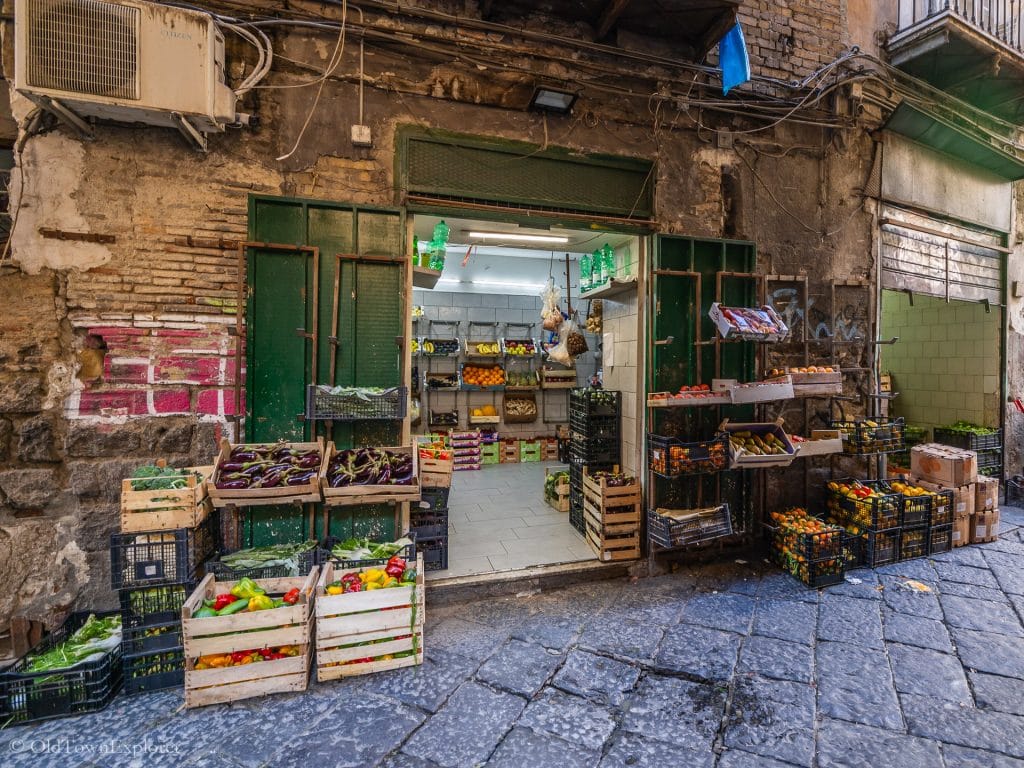
Markets and neighborhood food shops are the easiest places to compare tomatoes, vegetables, fruit, cheese, cured meat, olives, bread, dry pasta, nuts, and preserved seafood. Naples gives the widest city selection, while Sorrento, Salerno, Caserta, Benevento, and Avellino provide smaller provincial bases.
Use salumerie for cheese and cured meat, pastifici for dry pasta, pescherie for seafood, and pasticcerie for sfogliatella, pastiera, babà, and other sweets. Confirm refrigeration needs before buying fresh dairy for onward travel.
Pizzerias, Trattorias, and Street Food
Pizzerie are the main setting for Pizza Napoletana, folded pizza, and fried pizza. Trattorie and osterie are more likely to carry ragù, Genovese, pasta e patate, minestra maritata, rabbit, vegetables, and daily seafood preparations.
Rosticcerie and street-food counters sell fried pizza, cuoppi, crocchè, frittatine di pasta, arancini, and savory baked goods. Order smaller portions across several stops rather than treating each item as a full restaurant course.
Producers, Farms, and Food Routes
Caseifici on the Caserta and Sele plains provide the clearest connection to buffalo mozzarella and ricotta. Gragnano’s pastifici, Sorrento and Amalfi lemon farms, Cetara anchovy processors, olive mills, orchards, hazelnut producers, and Cilento farm shops cover other major product routes.
Producer visits, tastings, and direct sales do not follow one regional schedule. Check the producer’s current access arrangements before traveling, and group stops within one plain, peninsula, coast, or inland province.
Seasonal and Ordering Notes
- DOP: Denominazione di Origine Protetta, the Italian form of PDO
- IGP: Indicazione Geografica Protetta, the Italian form of PGI
- STG: Specialità Tradizionale Garantita, the Italian form of TSG
- Caseificio: dairy or cheese producer
- Pastificio: pasta producer
- Frantoio: olive mill
- Salumeria: shop specializing in cured meat, cheese, and prepared foods
Cipollotto Nocerino and Carciofo di Paestum have limited fresh seasons, while Piennolo tomatoes can remain available in hanging clusters into winter. Dry pasta, oil, dried figs, packaged nuts, preserves, and bottled colatura have longer sales periods. Recipes and cross-contact practices vary, so confirm allergens and preparation directly.
FAQs About Campania Food
What food is Campania known for?
Campania is known for buffalo-milk mozzarella and ricotta, Pasta di Gragnano, Vesuvian and Agro Sarnese-Nocerino tomatoes, Amalfi and Sorrento lemons, Colatura di Alici di Cetara, olive oil, pizza, slow-cooked pasta sauces, coastal seafood, and Neapolitan pastries.
Which Campania food products have protected status?
The region’s recognized DOP and IGP names cover cheeses, tomatoes, spring onions, dried figs, olive oils, table olives, artichokes, lemons, apples, cherries, hazelnuts, chestnuts, rocket, cauliflower, dry pasta, anchovy extract, and a cross-regional cattle product. Pizza Napoletana has STG status, which protects a traditional specification rather than one geographic production zone.
Which products should a first-time visitor try?
Start with Mozzarella di Bufala Campana DOP, Pasta di Gragnano IGP, one of the two protected tomato products, and Colatura di Alici di Cetara DOP. Add a product tied to the day’s route, such as Provolone del Monaco near the Sorrento Peninsula, Carciofo di Paestum on the Sele plain, or Fico Bianco del Cilento farther south.
Where are the main food bases in Campania?
Naples is the broadest base for prepared dishes, street food, markets, seafood, and pastries. Sorrento and the Amalfi Coast suit lemon, cheese, anchovy, and coastal routes. Paestum and Cilento suit buffalo dairy, vegetables, dried figs, olive oil, and agriturismi, while Caserta, Irpinia, and Sannio provide separate inland routes.
What is the difference between San Marzano and Piennolo tomatoes?
Pomodoro San Marzano dell’Agro Sarnese-Nocerino DOP protects approved whole peeled tomatoes and peeled fillets from its registered area. Pomodorino del Piennolo del Vesuvio DOP is a smaller Vesuvian tomato sold fresh or preserved in suspended clusters. The names cover different products, areas, and specifications.
What Campania foods are seasonal?
Fresh spring onions, artichokes, cherries, lemons, apples, hazelnuts, chestnuts, figs, and many vegetables follow harvest and market cycles. Piennolo tomatoes can remain available into winter through hanging storage, while dried figs, oil, pasta, nuts, preserves, cheese, and bottled colatura have longer availability.
Can vegetarians find traditional Campania dishes?
Pizza marinara, some vegetable dishes, gnocchi alla Sorrentina, pasta alla Nerano, pasta e patate, and many pastries may be vegetarian, but recipes vary. Broth, lard, anchovy, cheese, meat garnish, and shared frying oil can change the result. Compare the wider regional picture with Italy Food and confirm ingredients directly.