
Italy Wine
Explore Italy Wine: Wine Regions & Grape Varieties
Italy wine is produced in all 20 regions. Alpine vineyards and northern lakes lead toward mountain whites, Nebbiolo, and traditional-method sparkling wine. Central hill towns are closely tied to Sangiovese, while the south and islands add Aglianico, Primitivo, volcanic wines, coastal whites, and dried-grape or fortified styles.
Start in Turin for Piedmont, Florence or Siena for Tuscany, and Verona or Venice for Veneto. Bologna puts Lambrusco and Emilia-Romagna food together, while Naples and Lecce open very different southern routes through Campania and Puglia.
We have spent extended time in Italy, including month-long stays in Turin, Venice, Bologna, and Como, as well as Rome, Naples, Lucca, and Lecce. We have also stayed in Florence, Siena, Orvieto, Perugia, Genoa, Trieste, and the Cinque Terre. The main decisions are which region fits the trip, which grape or style to order first, and whether to taste in a city or add a winery day.
Italy Wine at a Glance
Italy becomes easier to taste once each bottle is tied to a region, grape, style, and practical base. A first trip does not need every famous appellation.
Key wine-planning points:
- Best starting points: Turin for Piedmont; Florence or Siena for Tuscany; Verona or Venice for Veneto; Bologna for Emilia-Romagna; Naples for Campania; Lecce for Puglia
- Core wine identity: Native and regional grapes often matter more than familiar international varieties, and many labels lead with an appellation or place rather than the grape name
- Main wine regions: Piedmont, Tuscany, Veneto, Sicily, Campania, Puglia, Lombardy, Friuli-Venezia Giulia, Emilia-Romagna, Abruzzo, Umbria, and Marche
- Main grapes: Sangiovese, Nebbiolo, Barbera, Aglianico, Montepulciano, Primitivo, Negroamaro, Nero d’Avola, Glera, Garganega, Verdicchio, Vermentino, Fiano, Greco, and Falanghina
- Key wine styles: Structured reds, dry coastal and mountain whites, sparkling wine, rosato, volcanic wine, dried-grape wine, passito, fortified wine, and skin-contact white wine
- Main tasting choice: Begin in a city enoteca or wine bar, then add one rural wine area when transport, appointments, and the rest of the itinerary make sense
For a first comparison, choose one northern wine, one central Sangiovese, one southern red, one dry white, and one sparkling wine. That range is more useful than collecting several similar appellations from the same region.
Wine Regions in Italy
Italy’s 20 regions grow wine under very different conditions, from high Alpine terraces and cool lake districts to central hills, volcanic slopes, warm southern plains, and Mediterranean islands. Find the region on your itinerary, then compare its grapes, bottle styles, and most practical tasting base.
Check the Federdoc regional wine maps when an appellation boundary, permitted grape, or protected production area matters.
Abruzzo
Abruzzo’s vineyards sit between the Apennines and the Adriatic. Montepulciano leads the red wines, while Trebbiano, Pecorino, Passerina, and Cococciola give the region a broad white-wine side.
These are the main regional cues:
- Key grapes: Montepulciano, Trebbiano d’Abruzzo, Pecorino, Passerina, and Cococciola
- Main wines and styles: Montepulciano d’Abruzzo, Cerasuolo d’Abruzzo rosato, Trebbiano d’Abruzzo, Pecorino, and dry Adriatic whites
- Tasting base: Pescara or Chieti for the coast and central vineyards, with routes toward Teramo, the foothills, and the mountain interior
Our Abruzzo Wine page compares Montepulciano, Cerasuolo, Trebbiano, Pecorino, the Adriatic coast, and the inland wine areas in more depth.
Aosta Valley
Aosta Valley wine comes from small, steep Alpine vineyards near France and Switzerland. High elevation, fragmented sites, and local grapes distinguish these bottles from the broader northern Italian wine map.
Look for these mountain-wine names:
- Key grapes: Prié Blanc, Petite Arvine, Fumin, Petit Rouge, Vien de Nus, Mayolet, and Nebbiolo
- Main wines and styles: Blanc de Morgex et de La Salle, Torrette, Donnas, Enfer d’Arvier, Chambave Muscat, dry Alpine whites, and light to structured mountain reds
- Tasting base: Aosta, with routes west toward Morgex and La Salle or east toward Chambave, Nus, and Donnas
Choose Aosta Valley when mountain scenery and small local varieties matter more than a dense sequence of famous appellations or large tasting estates.
Basilicata
Basilicata is centered on Aglianico grown around the extinct Monte Vulture volcano. The region’s main reds are firm and age-worthy, while smaller white-wine areas use Greco, Malvasia, Moscato, and other southern grapes.
These names give the clearest first comparison:
- Key grapes: Aglianico, Greco, Malvasia Bianca di Basilicata, and Moscato Bianco
- Main wines and styles: Aglianico del Vulture, Aglianico del Vulture Superiore, Matera wines, Grottino di Roccanova, and structured volcanic reds
- Tasting base: Rionero in Vulture or Melfi for the main volcanic wine area, with Matera as the broader cultural base
Basilicata belongs on an Aglianico-focused route with Campania, but the Vulture area needs dedicated transport rather than a casual detour from Matera.
Calabria
Calabria’s vineyards extend between the Ionian and Tyrrhenian coasts and the mountainous interior. Gaglioppo is the main red grape around Cirò, while Greco Bianco and several local red grapes appear elsewhere.
Start with these regional cues:
- Key grapes: Gaglioppo, Greco Bianco, Magliocco, Greco Nero, Nerello Cappuccio, and Mantonico
- Main wines and styles: Cirò, Cirò Classico, Greco di Bianco, Savuto, Terre di Cosenza, dry coastal reds, and aromatic or passito whites
- Tasting base: Cirò Marina or Crotone for the Ionian side, with Reggio Calabria for wines and food around the Strait
Choose Calabria when the wider trip already includes the region’s coast or interior; distances make it less suitable as a quick wine addition to Campania or Puglia.

Campania
Campania combines volcanic vineyards near Naples and Vesuvius with inland wine country around Avellino, Benevento, and Caserta. Aglianico leads the reds, while Fiano, Greco, Falanghina, and Piedirosso give the region several distinct paths.
These names are the strongest first reference:
- Key grapes: Aglianico, Fiano, Greco, Falanghina, Piedirosso, and Coda di Volpe
- Main wines and styles: Taurasi, Fiano di Avellino, Greco di Tufo, Falanghina del Sannio, Campi Flegrei, Vesuvio, Lacryma Christi, and volcanic reds and whites
- Tasting base: Naples for city tasting and volcanic bottles, with Avellino or Benevento for inland winery routes
Our Campania Wine page compares Naples, Vesuvius, Campi Flegrei, Irpinia, Benevento, Caserta, and the coast.

Emilia-Romagna
Emilia-Romagna stretches from the Po plain to the Apennines and the Adriatic. Sparkling Lambrusco dominates much of Emilia, while Romagna brings Sangiovese, Albana, and different white and red styles.
These grapes, wines, and bases organize the region:
- Key grapes: Lambrusco varieties, Grechetto Gentile or Pignoletto, Albana, Sangiovese, Trebbiano Romagnolo, Ortrugo, and Malvasia di Candia Aromatica
- Main wines and styles: Lambrusco di Sorbara, Grasparossa, Salamino, Colli Bolognesi Pignoletto, Romagna Albana, Romagna Sangiovese, sparkling reds, frizzante whites, and dry still wines
- Tasting base: Bologna, with routes toward Modena, Parma, Reggio Emilia, Piacenza, Faenza, and the Romagna hills
Our Emilia-Romagna Wine page covers Lambrusco, Pignoletto, Albana, Sangiovese, city tasting, and food-focused winery routes.
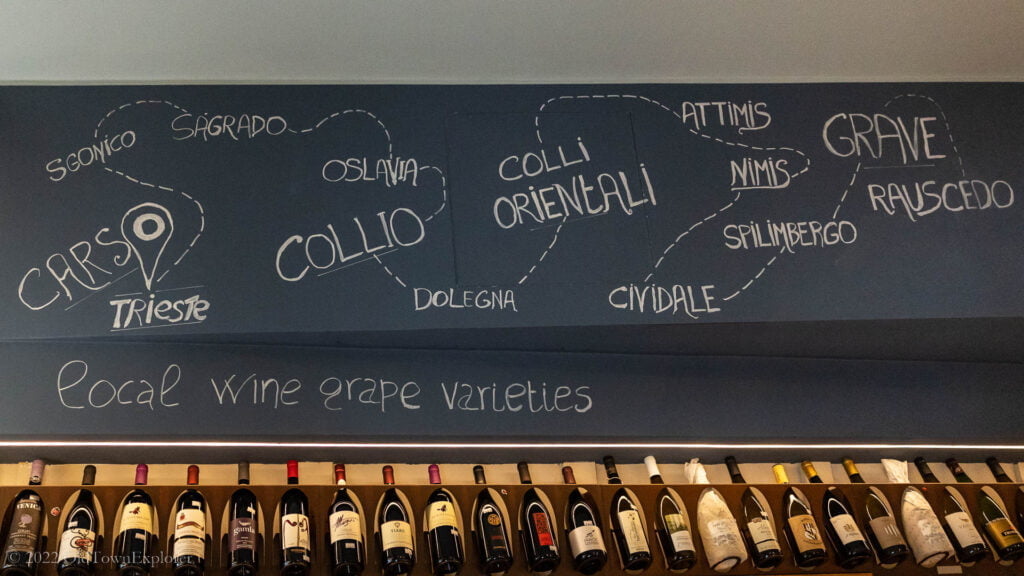
Friuli-Venezia Giulia
Friuli-Venezia Giulia sits between the Alps, Adriatic, Slovenia, and Austria. Dry whites are central, but the region also produces structured native reds, sparkling wine, and some of Italy’s clearest skin-contact and long-macerated whites.
Look for these bottle and route cues:
- Key grapes: Friulano, Ribolla Gialla, Malvasia Istriana, Pinot Grigio, Sauvignon, Refosco, Schioppettino, and Pignolo
- Main wines and styles: Collio, Colli Orientali del Friuli, Carso, Friuli Grave, dry aromatic whites, native reds, sparkling wine, and skin-contact whites
- Tasting base: Trieste for Carso and city tasting, or Udine and Cormons for Collio and Colli Orientali
Our Friuli-Venezia Giulia Wine page compares the Carso, Collio, Colli Orientali, the plains, native grapes, and borderland food pairings.

Lazio
Lazio surrounds Rome with volcanic lakes, hills, coastal plains, and northern landscapes around Tuscia. White wines based on Malvasia and Trebbiano are common, while Cesanese gives the region its clearest native red identity.
Start with these regional names:
- Key grapes: Malvasia del Lazio, Malvasia Bianca di Candia, Trebbiano, Bellone, Cesanese, and Aleatico
- Main wines and styles: Frascati, Cannellino di Frascati, Cesanese del Piglio, Est! Est!! Est!!! di Montefiascone, dry volcanic whites, sweet whites, and medium-bodied native reds
- Tasting base: Rome, with easy additions toward Frascati, the Castelli Romani, the volcanic lakes, and northern Lazio
Our Lazio Wine page compares Rome, Frascati, Cesanese, volcanic soils, Tuscia, and city-versus-countryside tasting.

Liguria
Liguria’s vineyards occupy narrow coastal slopes and inland valleys. Dry whites dominate many seaside meals, while Rossese and Ormeasco add lighter and medium-bodied reds and Sciacchetrà gives the Cinque Terre a distinctive sweet-wine tradition.
These names define the main choices:
- Key grapes: Vermentino, Pigato, Bosco, Albarola, Rossese, and Ormeasco
- Main wines and styles: Cinque Terre, Sciacchetrà, Colli di Luni, Riviera Ligure di Ponente, Rossese di Dolceacqua, dry coastal whites, light reds, and passito wine
- Tasting base: Genoa for the broad regional selection, or Cinque Terre for terraced vineyards and local coastal bottles
Our Liguria Wine page compares Genoa, the two Rivieras, Cinque Terre, inland valleys, Pigato, Vermentino, Rossese, and Sciacchetrà.
Lombardy
Lombardy contains several wine areas that do not form one simple route. Franciacorta produces traditional-method sparkling wine, Valtellina grows Nebbiolo on Alpine terraces, Oltrepò Pavese combines still and sparkling wines, and Lugana reaches the southern shore of Lake Garda.
Use these cues to choose the right part of the region:
- Key grapes: Chardonnay, Pinot Nero, Nebbiolo or Chiavennasca, Croatina, Barbera, Riesling, and Turbiana
- Main wines and styles: Franciacorta, Valtellina Superiore, Sforzato di Valtellina, Oltrepò Pavese Metodo Classico, Lugana, traditional-method sparkling wine, and Alpine reds
- Tasting base: Brescia for Franciacorta, Sondrio for Valtellina, Pavia for Oltrepò Pavese, and Como for city tasting near the lakes
Lombardy Wine compares the region’s sparkling, Alpine, lake, and Po Valley wine areas.
Marche
Marche runs from the Adriatic toward the Apennines. Verdicchio is the main white grape, but Montepulciano, Sangiovese, Lacrima, Pecorino, Passerina, and Vernaccia Nera give the region red, rosé, and sparkling choices.
These names organize the regional wine map:
- Key grapes: Verdicchio, Montepulciano, Sangiovese, Lacrima, Pecorino, Passerina, Bianchello, and Vernaccia Nera
- Main wines and styles: Verdicchio dei Castelli di Jesi, Verdicchio di Matelica, Rosso Conero, Rosso Piceno, Lacrima di Morro d’Alba, and sparkling Vernaccia di Serrapetrona
- Tasting base: Ancona or Jesi for Castelli di Jesi, Matelica or Macerata for the interior, and Ascoli Piceno for the southern Marche
Choose Marche when Verdicchio and Adriatic food are central to the trip, then add the inland wine areas only when the route already reaches the Apennine side of the region.
Molise
Molise has a small wine industry split between inland hills and the Adriatic side. Tintilia is the regional grape to learn first, supported by Montepulciano, Aglianico, Sangiovese, Trebbiano, and Falanghina.
Look for these local names:
- Key grapes: Tintilia, Montepulciano, Aglianico, Sangiovese, Trebbiano, and Falanghina
- Main wines and styles: Tintilia del Molise, Biferno, Pentro di Isernia, Molise wines, dry reds, rosato, and simple Adriatic whites
- Tasting base: Campobasso for the inland hills or Termoli for coastal meals and bottles from eastern Molise
Molise works best as part of a driving route through Abruzzo, Puglia, Campania, or the southern Apennines rather than as a separate first Italian wine trip.

Piedmont
Piedmont combines the Langhe, Roero, Monferrato, Alpine foothills, northern Nebbiolo areas, eastern rice country, and the hills around Asti. Nebbiolo gives the most structured reds, while Barbera, Dolcetto, Cortese, Arneis, and Moscato create very different bottles.
These are the principal first choices:
- Key grapes: Nebbiolo, Barbera, Dolcetto, Cortese, Arneis, Moscato Bianco, and Timorasso
- Main wines and styles: Barolo, Barbaresco, Roero, Barbera d’Asti, Barbera d’Alba, Dolcetto, Gavi, Roero Arneis, Asti, Moscato d’Asti, and Alta Langa
- Tasting base: Turin for city tasting, with Alba, Asti, Bra, or a Langhe village for winery routes
Piedmont Wine compares the Langhe, Roero, Monferrato, northern Piedmont, native grapes, sparkling wine, and practical routes from Turin.

Puglia
Puglia stretches from the Gargano and northern plains to the Valle d’Itria, Taranto, Manduria, and Salento. Primitivo, Negroamaro, and Nero di Troia lead the reds, while Bombino, Verdeca, Fiano, and other local grapes add whites, rosato, and sparkling wine.
These names clarify the main regional routes:
- Key grapes: Primitivo, Negroamaro, Nero di Troia, Bombino Nero, Bombino Bianco, Verdeca, Fiano, and Malvasia Nera
- Main wines and styles: Primitivo di Manduria, Gioia del Colle, Salice Salentino, Castel del Monte, Locorotondo, full-bodied reds, dry rosato, and fresh southern whites
- Tasting base: Lecce for Salento, Bari for northern and central Puglia, and Manduria for Primitivo-focused routes
Puglia Wine compares Salento, Manduria, Gioia del Colle, Castel del Monte, the Valle d’Itria, regional grapes, and food pairings.
Sardinia
Sardinia has its own grape vocabulary and widely separated wine areas. Cannonau and Carignano lead many reds, Vermentino is the main coastal white, and Vernaccia di Oristano and Malvasia di Bosa add distinctive oxidative and sweet traditions.
These names give the island its clearest wine structure:
- Key grapes: Cannonau, Vermentino, Carignano, Monica, Nuragus, Vernaccia di Oristano, and Malvasia di Bosa
- Main wines and styles: Cannonau di Sardegna, Vermentino di Gallura, Carignano del Sulcis, Vernaccia di Oristano, Malvasia di Bosa, Mediterranean reds, coastal whites, and oxidative wines
- Tasting base: Cagliari for the south, Oristano for Vernaccia, Alghero for the northwest, and Olbia or inland Gallura for Vermentino
Sardinia needs several bases or a car when wine is a major part of the trip; Cagliari alone cannot represent the island’s northern, western, and inland wine areas.
Sicily
Sicily combines Etna’s high volcanic slopes with warm inland areas, western coastal vineyards, southeastern red-wine country, and the smaller islands. The range covers pale volcanic reds, high-acid whites, richer Nero d’Avola, fortified Marsala, and sweet passito.
These are the principal island wine cues:
- Key grapes: Nero d’Avola, Nerello Mascalese, Frappato, Carricante, Catarratto, Grillo, Inzolia, and Zibibbo
- Main wines and styles: Etna Rosso, Etna Bianco, Cerasuolo di Vittoria, Sicilia wines, Marsala, Passito di Pantelleria, volcanic wine, dry coastal whites, and fortified wine
- Tasting base: Catania for Etna, Palermo for a broad city selection, Trapani or Marsala for the west, and Ragusa or Vittoria for the southeast
Sicily deserves its own wine itinerary when Etna, Marsala, Vittoria, and island food all matter; those areas are too far apart for one short city stay.

Tuscany
Tuscany is centered on Sangiovese but contains several distinct wine landscapes. Chianti and the central hills differ from Montalcino, Montepulciano, San Gimignano, the Maremma, Bolgheri, and the wider coast.
These names organize a first Tuscan wine trip:
- Key grapes: Sangiovese, Canaiolo, Colorino, Vernaccia di San Gimignano, Vermentino, Cabernet Sauvignon, and Merlot
- Main wines and styles: Chianti Classico, Brunello di Montalcino, Vino Nobile di Montepulciano, Morellino di Scansano, Bolgheri, Carmignano, Vernaccia di San Gimignano, and Vin Santo
- Tasting base: Florence or Siena, with Lucca for northwestern Tuscany and coastal routes
Our Tuscany Wine page compares Chianti, Montalcino, Montepulciano, San Gimignano, Bolgheri, the Maremma, and the strongest city bases.
Trentino-Alto Adige
Trentino and South Tyrol share an Alpine setting but have different grape and label traditions. Trentino is closely tied to traditional-method sparkling wine, Nosiola, and Teroldego, while South Tyrol adds Lagrein, Schiava, Gewürztraminer, and cool-climate international varieties.
Use these regional cues:
- Key grapes: Chardonnay, Pinot Grigio, Müller-Thurgau, Nosiola, Teroldego, Lagrein, Schiava, Gewürztraminer, Pinot Nero, and Kerner
- Main wines and styles: Trento DOC, Alto Adige or Südtirol wines, Teroldego Rotaliano, Trentino Nosiola, Santa Maddalena, dry Alpine whites, light mountain reds, and traditional-method sparkling wine
- Tasting base: Trento for Trentino and Bolzano for South Tyrol, with routes toward the Adige Valley, Val di Cembra, Merano, Bressanone, and the South Tyrol Wine Road
Choose one province first. Trento and Bolzano are connected by rail, but mountain wineries and side valleys need more deliberate transport.

Umbria
Umbria’s inland hills produce structured reds around Montefalco, central Italian blends around Torgiano, and white wines around Orvieto and Spoleto. Sagrantino gives the region its firmest reds, while Grechetto and Trebbiano Spoletino lead much of the white-wine choice.
These names provide the clearest route:
- Key grapes: Sagrantino, Sangiovese, Grechetto, Trebbiano Spoletino, and Procanico
- Main wines and styles: Montefalco Sagrantino, Montefalco Rosso, Orvieto, Torgiano Rosso Riserva, Spoleto Trebbiano Spoletino, structured reds, and dry hill-town whites
- Tasting base: Perugia for central Umbria, Orvieto for western whites, and Bevagna or Montefalco for Sagrantino
Umbria Wine compares Montefalco, Orvieto, Torgiano, Spoleto, Perugia, grapes, styles, and driving choices.

Veneto
Veneto combines the Prosecco hills, Soave, Valpolicella, Lake Garda, the eastern plains, and Alpine-edge vineyards. It is one of Italy’s broadest regional comparisons, moving from light sparkling wine and dry whites to fresh reds, Amarone, Recioto, and lake rosato.
These grapes and wines define the main routes:
- Key grapes: Glera, Garganega, Corvina, Corvinone, Rondinella, Molinara, Turbiana, and Raboso
- Main wines and styles: Prosecco, Conegliano Valdobbiadene, Soave, Valpolicella, Amarone della Valpolicella, Recioto, Bardolino, Lugana, Chiaretto, and dried-grape wine
- Tasting base: Verona for Valpolicella and Lake Garda, Treviso for the Prosecco hills, and Venice for regional bottles, bacari, and vino sfuso
Veneto Wine compares Prosecco, Soave, Valpolicella, Verona, Venice, Lake Garda, and the eastern wine areas.
Grape Varieties in Italy
Italian labels do not always state the grape prominently. Barolo, Chianti Classico, Soave, Taurasi, and Etna Rosso are place or appellation names, so grape vocabulary works best when it is learned with the region and bottle style.
Red Grapes
These red grapes appear often enough on regional labels, wine lists, and enoteca shelves to learn before the trip:
- Sangiovese: Central to Tuscany and important in Emilia-Romagna, Umbria, and Marche; it produces bright, savory reds ranging from everyday Chianti to cellar-aged Brunello.
- Nebbiolo: Piedmont and Valtellina’s high-acid, tannic red grape; look for Barolo, Barbaresco, Roero, Gattinara, Ghemme, and northern Lombardy labels.
- Barbera: Most closely tied to Piedmont, with high acidity and softer tannin than Nebbiolo; Barbera d’Asti and Barbera d’Alba are useful first names.
- Dolcetto: Piedmont grape for dry, generally earlier-drinking reds, especially around Alba, Dogliani, and other Langhe or Monferrato areas.
- Aglianico: Campania and Basilicata’s main structured red grape, used for Taurasi and Aglianico del Vulture.
- Montepulciano: Central and Adriatic grape associated especially with Montepulciano d’Abruzzo and Cerasuolo d’Abruzzo; it is unrelated to the Tuscan town of Montepulciano.
- Primitivo: Puglian grape for ripe, full-bodied reds around Manduria and Gioia del Colle.
- Negroamaro: Salento grape used for dry reds and rosato, especially around Lecce and the southern part of Puglia.
- Nero di Troia: Northern Puglian grape associated with Castel del Monte and more structured regional reds.
- Nero d’Avola: Widely planted Sicilian red grape used alone and in blends, from fresh regional wines to fuller bottles.
- Nerello Mascalese: Main red grape on Etna, producing pale but structured volcanic reds with high acidity.
- Corvina: Central to Valpolicella, Amarone, Recioto, and Bardolino, generally blended with Corvinone, Rondinella, or other Veneto grapes.
- Sagrantino: Umbrian grape behind Montefalco Sagrantino, known for firm tannin and substantial structure.
- Lambrusco: A family of Emilia grapes used for sparkling red and rosato wines ranging from dry to sweet.
- Cannonau: Sardinian red grape used for Mediterranean reds from several parts of the island.
- Frappato: Fragrant Sicilian red grape found alone and in Cerasuolo di Vittoria blends with Nero d’Avola.
- Gaglioppo: Calabrian red grape associated especially with Cirò and the Ionian side of the region.
- Lagrein and Schiava: South Tyrolean grapes that produce darker, firmer reds and pale, lighter Alpine reds respectively.
Begin with Sangiovese, Nebbiolo, Barbera, Aglianico, and one southern or island grape. That set makes the regional differences clearer before smaller local varieties are added.
White Grapes
Italian white grapes range from light sparkling-wine varieties to high-acid coastal, Alpine, Adriatic, and volcanic whites:
- Glera: Main grape used for Prosecco in Veneto and Friuli-Venezia Giulia.
- Garganega: Veneto grape behind Soave and Recioto di Soave, capable of both fresh and more substantial dry whites.
- Verdicchio: Marche grape behind Verdicchio dei Castelli di Jesi and Verdicchio di Matelica.
- Vermentino: Coastal grape associated especially with Liguria, Sardinia, and Tuscany; Pigato is closely tied to western Liguria.
- Fiano: Campanian grape behind Fiano di Avellino and other textured, high-acid southern whites.
- Greco: Campanian grape associated most clearly with Greco di Tufo and firm dry white wine.
- Falanghina: Campanian grape used for fresh dry whites around Benevento, the coast, and volcanic areas near Naples.
- Trebbiano: A broad family rather than one uniform grape; important regional forms include Trebbiano d’Abruzzo, Trebbiano Toscano, Trebbiano Spoletino, and Trebbiano Romagnolo.
- Cortese: Piedmont grape behind Gavi and other dry whites from the southeast of the region.
- Arneis: Piedmont grape associated with Roero and dry, aromatic white wine.
- Friulano: Friuli-Venezia Giulia grape for dry whites with enough body for prosciutto, cheese, and regional dishes.
- Ribolla Gialla: Northeastern grape used for still, sparkling, and skin-contact wines in Friuli-Venezia Giulia.
- Pinot Grigio: International grape widely planted in the northeast and other northern regions, with quality and weight varying greatly by place and producer.
- Carricante: High-acid Sicilian grape central to Etna Bianco and other whites from the volcano’s slopes.
- Grillo: Sicilian grape used for dry whites and as an important part of Marsala production.
- Catarratto: Widely planted Sicilian white grape used for still wine and blends.
- Pecorino: Adriatic white grape associated especially with Abruzzo and Marche, producing fresh to structured dry wines.
- Nosiola: Trentino grape used for dry Alpine whites and the region’s traditional Vino Santo style.
Start with Soave from Garganega, Verdicchio from Marche, Vermentino from Liguria or Sardinia, Fiano or Greco from Campania, and Carricante from Etna. Those bottles cover five distinct white-wine landscapes.
Wine Styles in Italy
After the regions and grapes, choose the style in the glass. Italy produces dry white, red, rosé, sparkling, sweet, fortified, dried-grape, oxidative, and skin-contact wines, but no trip needs every category.
Dry White Wines
Dry whites change sharply between Alpine valleys, the Adriatic, volcanic areas, and Mediterranean coasts:
- Soave: Garganega-based Veneto white ranging from light and fresh to fuller, more textured bottles.
- Verdicchio: High-acid Marche white from Castelli di Jesi or Matelica, often suited to seafood and capable of bottle aging.
- Gavi and Roero Arneis: Two Piedmont whites that give a lighter opening before Nebbiolo or Barbera.
- Fiano di Avellino and Greco di Tufo: Structured Campanian whites from inland areas around Avellino.
- Vermentino and Pigato: Coastal whites associated with Liguria, Sardinia, and Tuscany.
- Etna Bianco: High-acid volcanic Sicilian white based mainly on Carricante.
- Friulano and Ribolla Gialla: Northeastern whites found in still, sparkling, and more textured forms.
Compare one northern or Adriatic white with one coastal or volcanic white. Soave beside Etna Bianco, or Verdicchio beside Vermentino, makes geography easier to taste.
Red Wines
Italian reds range from pale, high-acid mountain wines to tannic cellar wines and ripe southern bottles:
- Nebbiolo reds: Barolo, Barbaresco, Roero, northern Piedmont, and Valtellina combine high acidity, firm tannin, and aromatic complexity.
- Sangiovese reds: Chianti Classico, Brunello di Montalcino, Vino Nobile di Montepulciano, and other central Italian wines place acidity and savory character ahead of simple fruit weight.
- Aglianico reds: Taurasi and Aglianico del Vulture are structured southern wines suited to longer meals and richer meat dishes.
- Valpolicella styles: Fresh Valpolicella, richer Ripasso, dry dried-grape Amarone, and sweet Recioto share related Veneto grapes but drink very differently.
- Southern reds: Primitivo, Negroamaro, Nero di Troia, Nero d’Avola, and Gaglioppo range from ripe and full-bodied to fresher regional styles.
- Etna Rosso: Pale, high-acid volcanic red based mainly on Nerello Mascalese.
- Montefalco Sagrantino: Firm, tannic Umbrian red that normally needs substantial food or bottle age.
Choose Barbera or a young Sangiovese when you want an easier first red. Choose Nebbiolo, Aglianico, Sagrantino, or Amarone when the wine should carry a slower meal.
Rosé Wines
Italian rosato is regional rather than one national style:
- Cerasuolo d’Abruzzo: Deeply colored Montepulciano rosato that can carry pork, tomato dishes, and substantial seafood.
- Chiaretto: Pale rosato associated especially with Lake Garda and grapes used around Bardolino.
- Puglia rosato: Negroamaro, Bombino Nero, and other southern grapes produce dry rosato suited to vegetables, seafood, and grilled meat.
- Sicilian rosato: Nero d’Avola, Nerello Mascalese, and other island grapes produce styles ranging from ripe coastal rosé to pale volcanic wine.
Choose rosato when the meal moves between seafood, vegetables, cured meat, and lighter grilled dishes and one red or white would be too narrow.
Sparkling Wines
Production method matters as much as grape or region when choosing Italian sparkling wine:
- Prosecco: Usually fresh and fruit-led, made mainly from Glera in Veneto and Friuli-Venezia Giulia.
- Franciacorta: Traditional-method sparkling wine from Lombardy, commonly based on Chardonnay and Pinot Nero.
- Trento DOC: Traditional-method Alpine sparkling wine from Trentino.
- Alta Langa: Traditional-method Piedmont sparkling wine based on Pinot Nero and Chardonnay.
- Lambrusco: Sparkling red or rosato from Emilia, ranging from dry to sweet and particularly suited to the region’s food.
- Asti and Moscato d’Asti: Sweet sparkling or lightly sparkling Moscato Bianco wines from Piedmont.
Start with Prosecco for a light aperitivo, Franciacorta or Trento DOC for traditional-method structure, and dry Lambrusco when salumi, filled pasta, or fried food is on the table.
Sweet, Fortified, and Dried-Grape Wines
These wines depend on grape drying, late harvest, fortification, oxidative aging, or retained sweetness:
- Amarone della Valpolicella: Dry, powerful Veneto red made from partially dried grapes.
- Recioto: Sweet dried-grape wine found in red and white Veneto forms.
- Vin Santo: Central Italian dried-grape wine, often sweet and commonly served in small pours.
- Passito di Pantelleria: Sweet Sicilian island wine made from dried Zibibbo grapes.
- Marsala: Fortified Sicilian wine produced in dry and sweet styles with different aging categories.
- Malvasia delle Lipari: Sweet or passito wine from the Aeolian Islands.
- Vernaccia di Oristano: Sardinian wine with a distinctive oxidative aging tradition.
Read the style word carefully. Amarone is dry, Recioto is sweet, Marsala may be dry or sweet, and passito identifies a dried-grape method rather than one uniform dessert flavor.
Orange and Skin-Contact Wines
Skin-contact white wine is most visible in northeastern Italy but appears elsewhere through individual producers:
- Friuli-Venezia Giulia: Ribolla Gialla, Friulano, Malvasia Istriana, and other whites may spend extended time on their skins, especially around Collio, Colli Orientali, and the Carso.
- Sicily: Catarratto, Grillo, Carricante, and other island grapes may appear as textured skin-contact wines.
- Producer-led regional wines: Tuscany, Emilia-Romagna, Veneto, and other regions also produce orange or amber wines outside one national style.
Choose skin-contact wine with cheese, mushrooms, pork, roasted vegetables, or stronger seafood dishes. Ask how long the wine stayed on the skins when tannin and texture matter to the choice.
How to Choose and Taste Italy Wine
Choose by region or appellation first, then check the grape, producer, vintage, and style. Taste in a city when the trip is built around rail travel; add a winery day when a rural wine area already fits the route.
Wine Labels, Classifications, and Appellations in Italy
Italian labels may use EU categories and Italian traditional terms. The MASAF DOP and IGP records are the legal reference, while the Federdoc Italian wine booklet explains the hierarchy and regional names in a more compact form.
These are the most useful terms to recognize:
- DOP: The EU protected designation category that includes Italian wines using the traditional DOCG or DOC terms.
- DOCG: Denominazione di Origine Controllata e Garantita, an Italian traditional term within the DOP system.
- DOC: Denominazione di Origine Controllata, another traditional Italian term within DOP.
- IGP: The EU protected geographical indication category.
- IGT: Indicazione Geografica Tipica, the Italian traditional term connected to IGP.
- Classico: Usually identifies the historic core production area within a larger appellation.
- Riserva: Indicates that the wine followed the appellation’s longer aging requirements.
- Superiore: Signals additional appellation requirements that vary by wine, commonly involving yield, strength, or aging.
- Spumante and frizzante: Fully sparkling and lightly sparkling wine respectively.
- Passito: Wine made from grapes that have been dried before fermentation.
Classification identifies origin and production rules, not whether one bottle will suit your taste. Barolo, Chianti Classico, Soave, Taurasi, Prosecco, and Etna often tell you more quickly about the bottle than the letters alone.
Wine Tasting in Italy
City tasting is the simplest starting point. Turin works for Piedmont, Florence or Siena for Tuscany, Bologna for Emilia-Romagna, Naples for Campania, Rome for Lazio, Venice for Veneto, Lecce for Puglia, Trieste for Friuli-Venezia Giulia, and Genoa for Liguria.
Wine bars and enotecas let you compare regions without arranging rural transport. Vino sfuso shops are useful when you want inexpensive local wine sold from a tank or larger container rather than a formal appellation tasting.
Check with each winery before traveling. Rural estates may be far from railway stations, and one day of tasting may need a rental car with a non-drinking driver, a hired driver, a tour, or a train followed by a taxi. The Italian wine-route overview gives a starting point for routes and wine towns across the country.
Food Pairings with Italy Wine
Match acidity, tannin, sweetness, and weight to the meal rather than looking for one national pairing:
- Sangiovese: Tomato pasta, grilled pork, bistecca, ragù, pecorino, beans, and Tuscan roasted meat
- Nebbiolo: Truffles, braised beef, tajarin, risotto, mushrooms, game, and aged cheese
- Barbera and Dolcetto: Salumi, pizza, pasta, pork, veal, antipasti, and everyday Piedmont meals
- Aglianico: Lamb, beef, pork, ragù, stews, mushrooms, and aged cheese
- Primitivo and Negroamaro: Grilled meat, sausages, orecchiette, ragù, roasted vegetables, and southern cheese
- Montepulciano d’Abruzzo: Lamb, grilled meat, tomato pasta, pork, and pecorino
- Vermentino and Pigato: Seafood, pesto, anchovies, focaccia, shellfish, and vegetable dishes
- Fiano, Greco, and Falanghina: Seafood, mozzarella, fried food, vegetables, poultry, and Campanian dishes
- Verdicchio: Adriatic seafood, brodetto, roast chicken, pork, vegetables, and cheese
- Lambrusco: Mortadella, salumi, tortellini, lasagne, Parmigiano Reggiano, and fried dough
- Prosecco, Franciacorta, and Trento DOC: Aperitivo snacks, seafood, fried food, cheese, salumi, and opening courses
- Vin Santo, Moscato d’Asti, Recioto, and passito: Almond biscuits, fruit desserts, pastries, nuts, blue cheese, and small sweet courses
Match the bottle to the region on the plate. Italy Food compares the products and dishes behind these pairings, from Piedmont truffles and Emilia-Romagna salumi to Campanian seafood and Puglian vegetables.
FAQs About Italy Wine
What wine is Italy known for?
Italy is known for regional wines rather than one national style. The main names include Barolo, Barbaresco, Chianti Classico, Brunello di Montalcino, Vino Nobile di Montepulciano, Amarone, Prosecco, Soave, Franciacorta, Taurasi, Primitivo di Manduria, Etna Rosso, Verdicchio, and Vermentino.
What Are the Main Italian Wine Regions?
Piedmont, Tuscany, Veneto, Sicily, Campania, Puglia, Lombardy, Friuli-Venezia Giulia, Emilia-Romagna, Abruzzo, Umbria, and Marche give the broadest first comparison. Italy produces wine in all 20 regions, including smaller areas such as Aosta Valley, Molise, and Basilicata.
Where Should I Start With Italian Wine?
Start with Sangiovese from Tuscany, Nebbiolo or Barbera from Piedmont, Aglianico from Campania, Primitivo or Negroamaro from Puglia, Soave or Prosecco from Veneto, Verdicchio from Marche, and one Etna wine from Sicily.
Which Italian Wine Region Is Best for a First Trip?
Choose Piedmont when Nebbiolo, Barbera, truffles, and vineyard villages are the priority. Choose Tuscany for Sangiovese, hill towns, and a Florence or Siena base. Veneto fits a broader comparison of sparkling, white, fresh red, and dried-grape wine, while Campania and Puglia work well when the trip already centers on southern Italy.
What Italian Red Wine Should I Try First?
Try Chianti Classico or another young Sangiovese when you want an accessible first red. Choose Barbera for bright acidity with softer tannin, Barolo or Barbaresco for structured Nebbiolo, Taurasi for Aglianico, Primitivo for a fuller southern wine, or Etna Rosso for a lighter volcanic style.
What Italian White Wine Should I Try First?
Start with Soave from Garganega, Verdicchio from Marche, Vermentino from Liguria or Sardinia, Fiano or Greco from Campania, Gavi from Cortese, Friulano from Friuli-Venezia Giulia, or Etna Bianco from Carricante.
What Is the Difference Between DOCG, DOC, DOP, IGT, and IGP?
DOP and IGP are EU protected-origin categories. DOCG and DOC are Italian traditional terms used within DOP, while IGT is the Italian traditional term connected to IGP. These terms identify origin and production rules, but region, grape, producer, vintage, and style still decide whether the bottle suits the meal.
Where Can You Taste Wine in Italy Without a Car?
Start in Turin, Florence, Siena, Bologna, Naples, Rome, Venice, Lecce, Trieste, Genoa, Orvieto, or Perugia. These cities have enotecas, restaurants, wine bars, and bottle shops where regional wines can be compared before arranging a rural winery route.
Do You Need Reservations for Winery Visits in Italy?
Contact each winery before setting out. Some estates accept visitors only at arranged times, and rural tasting often requires a car, driver, tour, or taxi connection even when the nearest city is well served by train.
What Food Pairs With Italian Wine?
Sangiovese fits tomato dishes and grilled meat; Nebbiolo suits truffles, braised meat, and aged cheese; Aglianico works with stews and roasted meat; Vermentino, Verdicchio, Fiano, Greco, and Falanghina suit seafood and vegetables; Lambrusco matches salumi, filled pasta, fried food, and hard cheese.
Use our Italy Food page to compare the regional dishes and products that pair with Italy’s main wine styles. For broader trip planning, our Italy page covers destinations, routes, transport, and where to stay.